
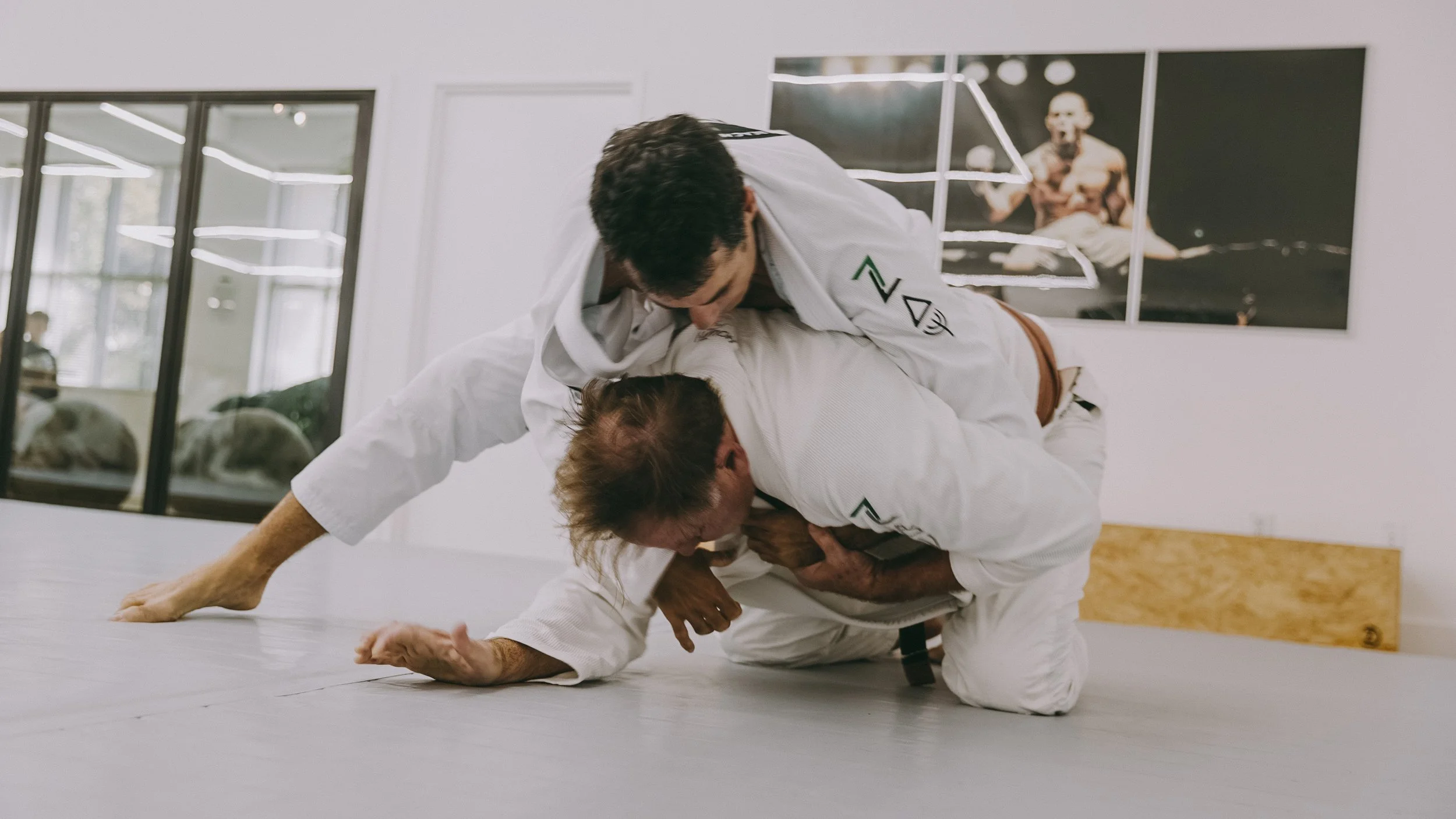
If you’re thinking about trying Brazilian Jiu Jitsu for the first time, you’re probably carrying a few normal questions with you. Will you feel out of place? Will you slow people down? Will you look clueless? Will it be awkward, or worse—intimidating?
Augie Moss is one of the teammates at Houzn Jiu Jitsu Academy who’s useful to know for exactly that reason. He’s been training a long time—since 1999—and he’ll still tell you that sometimes he feels nervous at the beginning of class. Sometimes he has to make himself show up. And he still chooses to step onto the mat anyway, even when he knows he’s going to spar with people who aren’t just strong, but better than him.
That honesty is a big part of what makes him a great teammate, and it’s also why his story lands with beginners. It quietly takes away the myth that you need to be fearless, super athletic, or “a fighter type” to belong in a jiu jitsu academy. You don’t. You just need to start, and then keep showing up long enough for the process to work.
Augie’s jiu jitsu story starts in Chicago, back when “content” meant VHS tapes. In 1999, he began training in a local high school. The spark was simple: he and a buddy were watching old Royce Gracie videos. If you’ve ever gone down a rabbit hole watching jiu jitsu online, you know the feeling—except this was grainier, slower, and involved rewinding a lot.
But the message came through clearly. Augie watched Royce, a skinny guy like him, beat bigger and stronger opponents. And it didn’t look like a movie. It looked like something real—something that shouldn’t work, but did. Augie describes it as being hooked right away, like it was magic.
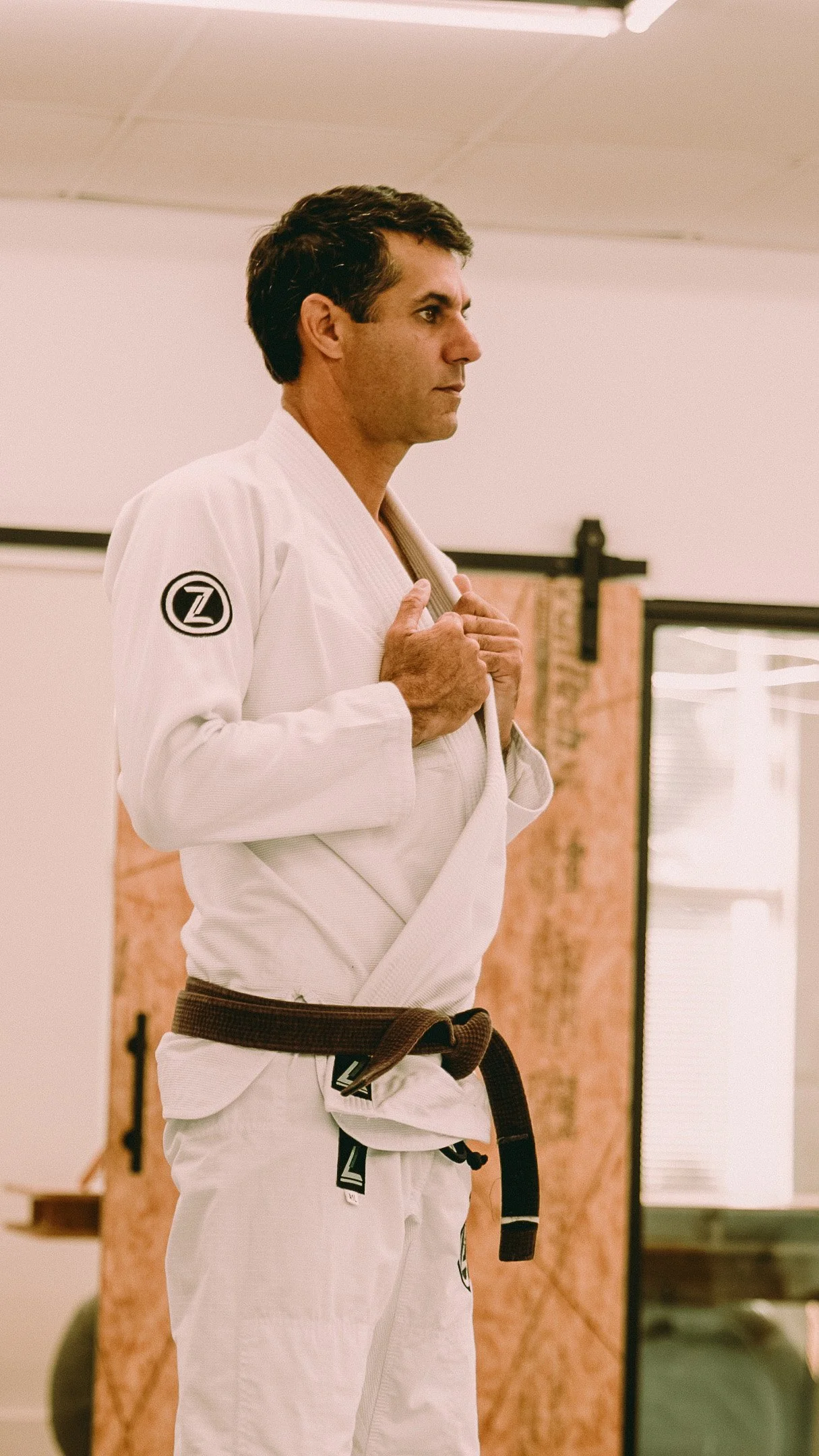
That moment is relatable for a lot of people, even now. Most of us grew up with the idea that size and strength decide everything physical. Brazilian Jiu Jitsu introduces a different reality: leverage matters, angles matter, timing matters, and knowing what you’re doing can change the outcome. For someone who doesn’t see themselves as naturally imposing, that can feel like a door opening. Not a door to aggression, but a door to capability.
Fast forward to today, and Augie is still doing what he started back then: choosing challenge on purpose. He’s been a student at Houzn about two years now. When he joined, he came in as a brown belt, which means he didn’t show up looking for “a first gym.” He showed up with experience, with a clear sense of what good training feels like, and with perspective on the kind of culture that makes people better.
What he says about Houzn is simple and important: it’s a great place to start.
That statement matters even more coming from someone advanced, because experienced people know the difference between a room that’s welcoming and a room that just says it is. Augie points to the way people help each other here, and the way the environment lowers the temperature for new people. He also points to something every beginner worries about but rarely hears said out loud: everyone knows how it feels to be the new guy in the room, and everyone remembers how intimidating it can be.
That’s not theory. It’s lived experience. And it’s why, at Houzn Jiu Jitsu Academy in Mount Pleasant, SC, we take the first couple of classes seriously. We coach the fundamentals clearly, we pair people intentionally, and we keep the room respectful. We train jiu jitsu for beginners and advanced levels, and that only works when beginners feel safe enough to come back and advanced students can trust the room.
If you’re reading this from Park West, Old Village, Daniel Island, Carolina Park, Belle Hall, or I’On, and you’ve been debating whether to try a class, the most accurate thing we can tell you is this: intimidation is common, and it doesn’t mean you’re not cut out for jiu jitsu. It usually means you’re about to do something new in front of other people, and your brain is doing normal brain stuff.
Augie will even tell you that intimidation doesn’t always go away with time. Even training for 30 years, sometimes he still feels it. That line is one of the most helpful permissions a newer student can receive. Because it reframes the goal. The goal isn’t to never feel nervous. The goal is to learn how to move forward while nervous, and to get good at meeting discomfort without making it a crisis.
That’s what jiu jitsu teaches, if you let it. You feel nervous at the beginning. You warm up. You drill. You start to understand one small detail. You survive a round. You tap, reset, breathe, try again. And then you notice something subtle: you’re okay. You can be uncomfortable and still be okay. Over time, that becomes a skill you carry outside the academy.
When you ask Augie what translates most from training into his day-to-day life, he doesn’t talk about collecting submissions or chasing flashy techniques. He talks about self-confidence.
He’s direct about where that started. In high school, he didn’t have a lot of confidence. Jiu jitsu changed that, not overnight, but over years of getting better and better. That detail is important, because it’s an honest model for how confidence actually develops. Real confidence tends to be evidence-based. It comes from doing difficult things repeatedly, watching yourself improve, and learning that you can handle pressure without panicking.
Augie is also clear about what kind of confidence this is. It’s not the kind that turns you into someone looking for trouble. It’s the opposite. It’s a steadier, quieter confidence—the feeling that you can protect yourself if you had to, that you can stay composed, and that you’re not helpless.
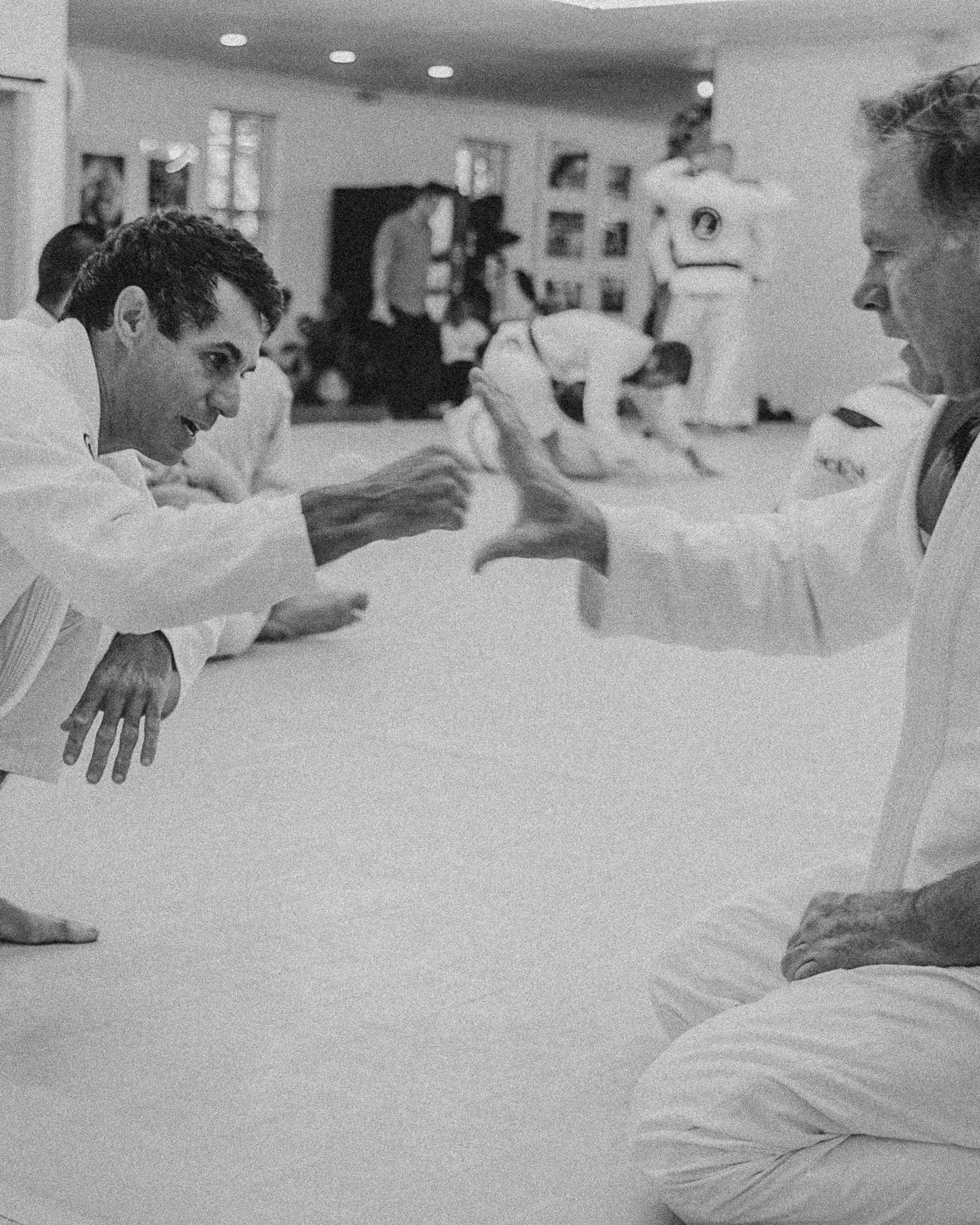
For a lot of people, that kind of confidence changes how they show up at work, in relationships, and in stressful moments. It doesn’t make life easy, but it makes you feel more capable inside your own skin. That’s a big deal, and it’s one of the reasons Brazilian Jiu Jitsu sticks with people who never thought they’d be “martial arts people.”
Augie’s approach to the art is also refreshingly simple. His philosophy is that the guys who are really good in jiu jitsu have really good fundamentals. The simple things really work.
If you’re a beginner, you should take that to heart, because it protects you from the most common early mistake: trying to skip the foundation. The fundamentals are what keep you safe, help you breathe, and give you options when things feel chaotic. They’re the difference between guessing and problem-solving. They’re also what makes training sustainable, because they reduce the panic factor that can make people quit early.
That mindset fits what we value at Houzn. We want students to build a base they can rely on. We want you to understand why something works, not just memorize steps. And we want you to feel supported while you’re learning—because nobody learns well when they feel judged.
If you’re already part of the Houzn Jiu Jitsu Academy community, Augie’s story is a good reminder of what you may not see on the surface: even the experienced teammates are still working through the same human stuff. Nerves. Doubt. Showing up anyway. It’s worth saying hi to him this week and asking what fundamentals he’s been focusing on lately. Those conversations are part of what makes a room stronger.
If you’re brand new, consider this your simple invitation. Come try one or two classes. You don’t need to get in shape first. You don’t need to know the rules. You don’t need to be confident yet. Just show up, and let the process do what it’s designed to do.
If you want to take the next step, follow Houzn Jiu Jitsu Academy on social media, leave a comment or send a DM, or visit our website to book a trial class in Mount Pleasant, SC. And if you’re unsure what to wear or how a first day works, tell us that in the message—we’ll walk you through it so you can arrive without overthinking it.