
A tough moment in kid’s Jiu Jitsu can feel bigger than it looks from the outside. A child gets swept, stuck, or tapped, and suddenly the energy changes. They might go quiet. They might get angry. They might say they hate Jiu Jitsu or that they want to quit. Parents often assume the problem is motivation, attitude, or “not being tough enough.” In reality, many kids are dealing with something much simpler: they don’t have a reliable way to reset after frustration.
This week in our parent series at Houzn Jiu Jitsu Academy in Mount Pleasant, SC inspired by Raising Mentally Strong Kids by Daniel G. Amen and Charles Fay. The theme is bounce back skills. We’re not trying to turn kids into robots who never feel upset. We’re trying to give them a repeatable process for recovery so they can stay engaged when things don’t go their way.
Brazilian Jiu Jitsu for kids is a unique training environment because it includes constant feedback. If your grips are wrong, you feel it. If you stop moving, you get pinned. If you hold your breath, you gas out. That feedback is part of why Jiu Jitsu can build confidence over time, but it’s also why some kids struggle at first. There’s no way to “hide” from a hard moment on the mat. Something goes wrong, and they feel it immediately in their body. For a child who is sensitive, perfectionistic, or simply tired that day, one bad moment can quickly become a story: “I’m losing,” “Everyone is better,” “Coach is mad,” “I’m embarrassing myself.” Once the story takes over, the body escalates, and learning shuts down.
A bounce back skill is what stops that slide. It’s not a speech and it’s not a big emotional conversation in the middle of class. It’s a small routine that helps the body calm down and helps the mind return to the task. For kids, the best resets are short and physical. That might be one slow breath in and out, relaxing the shoulders, fixing posture, and returning to a single “first job,” like framing, making space, or getting back to guard. The point is to reduce the problem to something manageable. When kids learn that they can do one small thing right away, they regain a sense of control, and the emotion usually softens on its own.
Parents can support this best by staying steady when a class is rough. The most common unhelpful patterns are jumping into criticism or jumping into rescue. Criticism can sound like pushing, even if you mean well: “You know that escape,” “You weren’t listening,” or “You need to try harder.” Rescue can sound caring, but it teaches a different lesson: “Let’s skip rolling,” “Do you want to quit?” or “That partner was too mean,” when the partner wasn’t actually doing anything unsafe. In both cases, the child doesn’t learn recovery. They learn that the hard feeling is the end of the process.
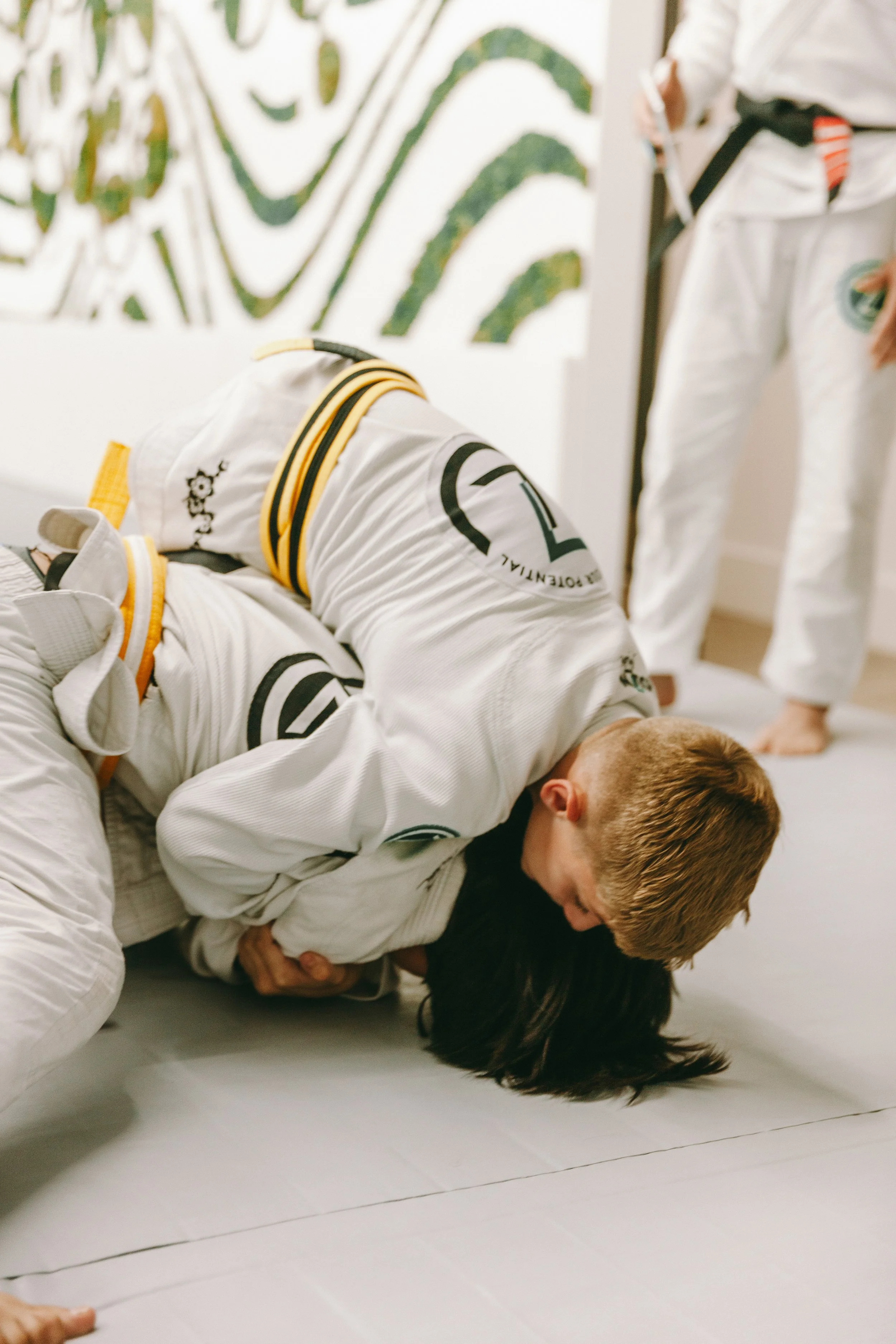
A steadier approach starts with recognition and a little space. If your child comes off the mat upset, it’s okay to say, “That looked frustrating.” Then give them a choice that keeps dignity intact: “Do you want a minute, or do you want to talk?” Some kids need quiet first. Others want to download everything. Either is fine. The key is that you are calm and present, not escalating with them.
When they’re ready to talk, help them separate the moment from their identity. Many kids jump straight to global statements: “I’m bad,” “I’m the worst,” “I can’t do this.” Those statements feel true at the moment, but they’re not useful. A more helpful frame is, “I had a hard round,” or “I got stuck in side control,” or “I forgot what to do when they grabbed my head.” That shift matters because it points toward a fix. Identity statements lead to quitting. Moment statements lead to learning.
Then keep the solution small. One of the best parent questions after a rough class is, “What happened right before you got upset?” That question helps the child locate the trigger moment. It might be being pinned, being corrected, losing to a smaller kid, or simply not knowing what to do next. Once you find that moment, the next question is, “What’s one thing you can try first next time?” If they don’t know, offer two simple options instead of a full lecture. “Do you think your first job is to breathe and frame, or to make space and turn to your side?” Your child doesn’t need a perfect answer. They need a first step they can actually remember.
It also helps to normalize that “resetting” is part of training, not a sign of weakness. In Jiu Jitsu, everyone gets put in bad spots. Everyone gets stuck sometimes. Kids who stick with the sport don’t avoid those moments; they learn to move through them. A good reset doesn’t remove difficulty. It changes what the child does when difficulty shows up. Over time, that becomes emotional resilience in everyday life too: making a mistake on homework, losing a game, getting corrected by a teacher, having a conflict with a friend. The skill isn’t “never feel bad.” The skill is “feel it, reset, and take the next step.”
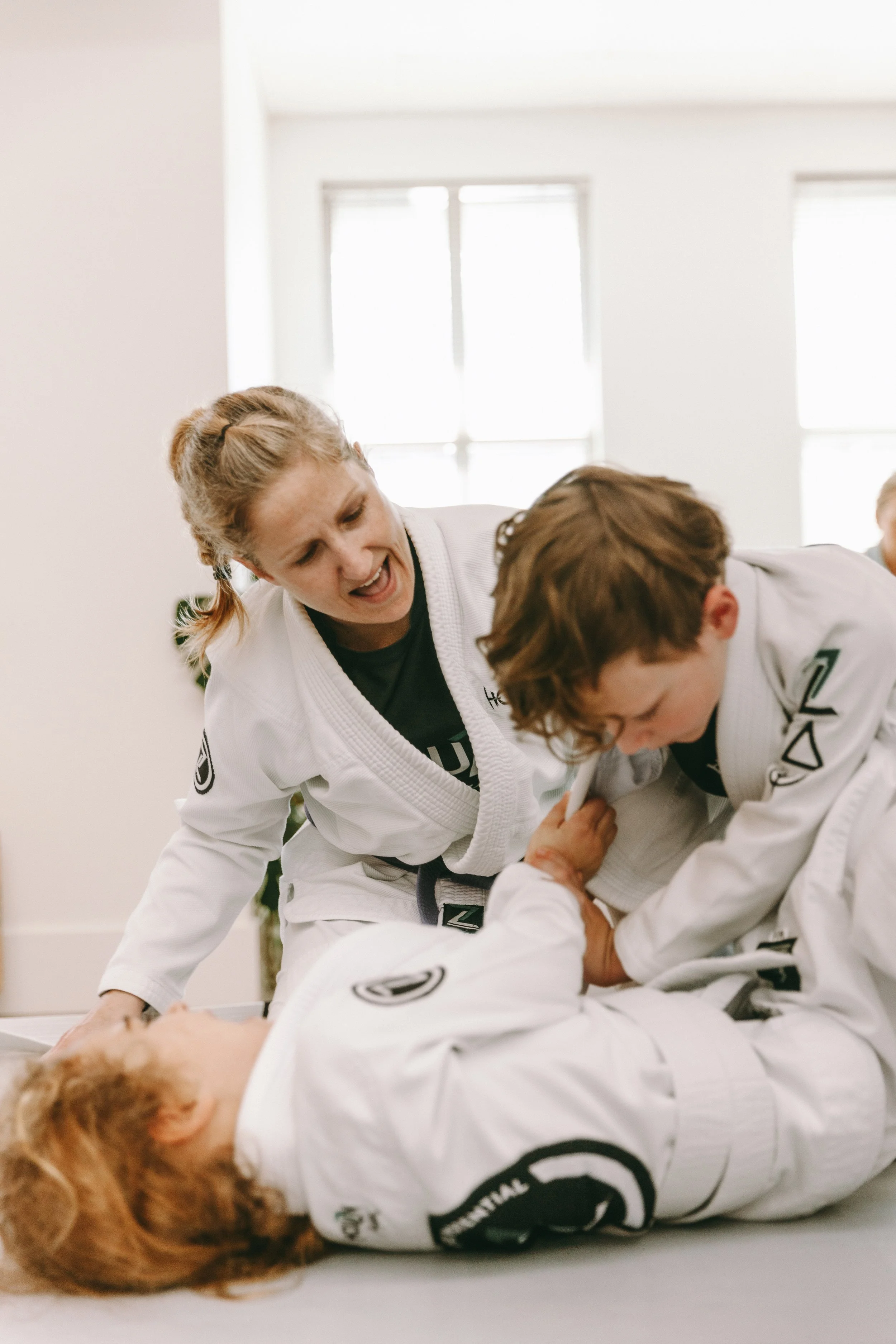
Another part of bounce-back skills is learning to re-enter the activity without negotiating the whole situation. Some kids try to reset by controlling everything around them: switching partners, changing rules, avoiding the drill that feels hard, or insisting that it wasn’t fair. Sometimes adjustments are appropriate, especially for safety, but often this is a child trying to reduce discomfort by rearranging the environment. A more durable reset teaches them to stay in the environment and adjust their own response. That might mean starting the next round with a simple goal like “survive and frame for ten seconds,” or “recover guard once,” rather than trying to win the whole round.
If your child tends to spiral, watch for the earliest sign and praise the smallest recovery. Progress might look like taking one breath before reacting. It might look like asking a coach a specific question. It might look like rejoining the line after sitting out for thirty seconds, instead of refusing the rest of class. Those are real wins. They’re the building blocks of confidence, because your child is experiencing themselves regain control.
It’s also important to keep guardrails in place. Recovery doesn’t mean pushing a child through panic, pain, or unsafe behavior from a partner. If your child is consistently anxious about a specific person, worried about getting hurt, or coming home with unexplained soreness, talk to a coach. A healthy kids Jiu Jitsu program adjusts pairings, intensity, and expectations so kids can learn safely. A bounce back routine works best when the environment is predictable and respectful.
If you’d like a simple home routine that matches what we teach in class, try this after a tough day: give your child a little quiet, then ask them to name one moment that was hard, one thing they did well anyway, and one “first job” they want to try next time. Keep it short. The goal is not to relive the whole class. The goal is to help their brain file the experience as learnable and manageable.
If you want help choosing a reset that fits your child, grab a coach after class. Tell us what the hard moment usually is, and we’ll give you one simple cue we’re already using on the mat so your child hears the same language at home. That consistency helps kids recover faster, and it keeps Jiu Jitsu feeling like a place where they can grow, even on tough days.