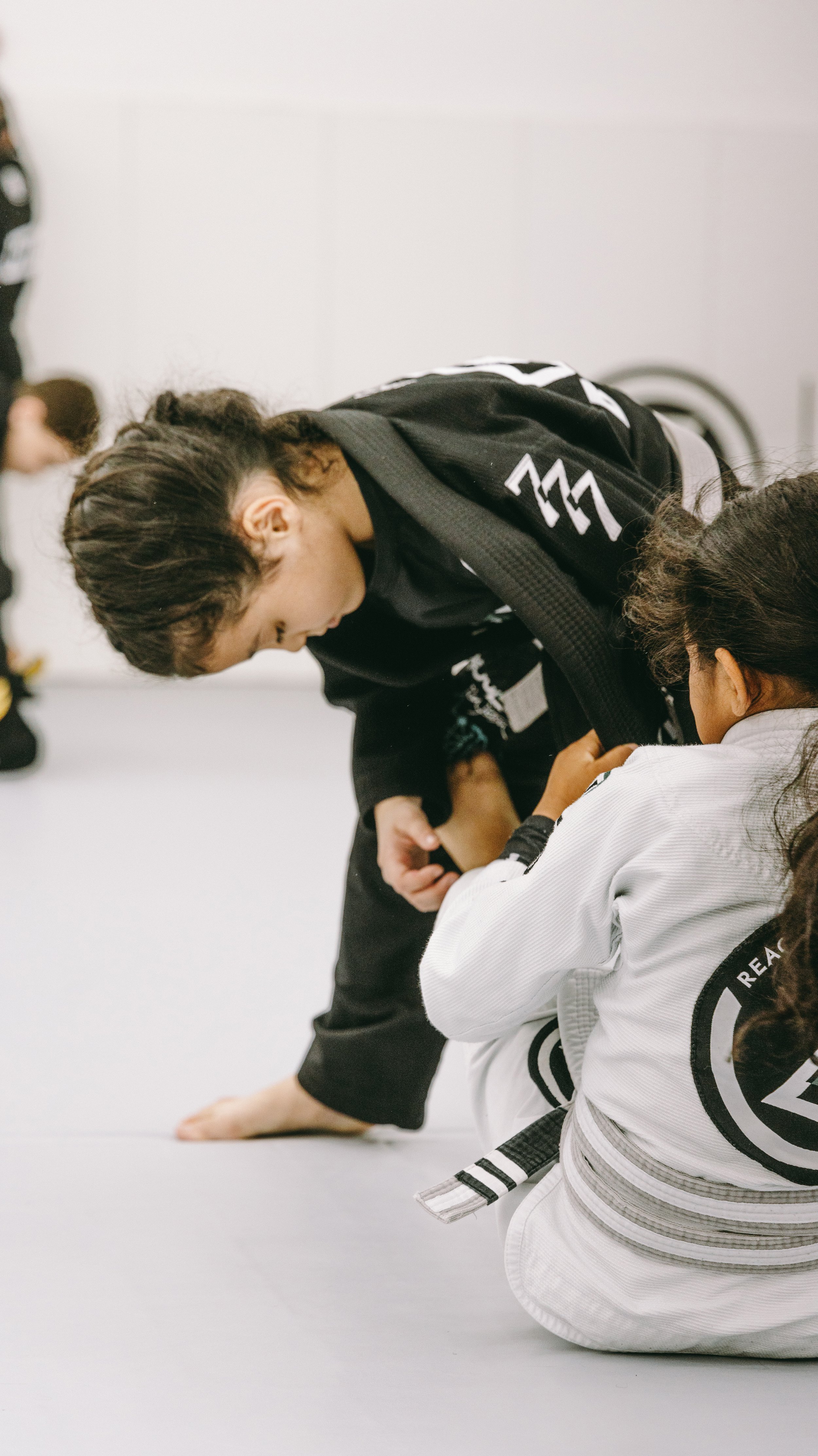
Kids don’t usually struggle with respect because they don’t really know what respect really is. Most kids can tell you the rules: listen to the coach, be kind to training partners, don’t argue, keep your hands to yourself, and stop when someone taps. The real challenge is following those rules when their body is activated. When they’re tired, excited, embarrassed, frustrated, or trying hard to win, the “knowing” part can disappear and you see the reactive version of your child for a moment.
This week in our Houzn Jiu Jitsu parent series in Mount Pleasant, SC, inspired by Raising Mentally Strong Kids by Daniel G. Amen and Charles Fay, is about building respectful self-control under pressure. This isn’t about raising quiet kids. It’s about raising kids who can feel strong emotions and still make safe, respectful choices with their bodies and their words.
Brazilian Jiu Jitsu for kids is a practical place to practice this because the pressure is real but controlled. Someone is in your space. You’re being squeezed. You’re trying to solve a problem while breathing hard. You might be losing. That combination can bring out a few common behaviors: a child grabs too hard, turns up intensity without noticing, refuses to tap because they don’t want to “lose,” argues about points or rules, uses a sharp voice with a partner, or melts down when they get corrected. None of those automatically mean a child is “bad.” They usually mean the child’s nervous system got overloaded and they didn’t have a practiced response.
Self-control is not a personality trait kids either have or don’t have. It’s a skill, and skills can be trained. On the mat, control shows up in small actions: choosing technique over strength, pausing instead of spiking intensity, tapping early instead of panicking, using words instead of hands when something feels off, and accepting correction without turning it into a conflict. Those are not just “martial arts manners.” They are life skills that transfer to school, sports, friendships, and home.
One important shift we try to make at Houzn is separating emotion from behavior. Emotions are allowed. A child can feel angry, disappointed, competitive, nervous, or embarrassed. The standard is that feelings don’t get to choose unsafe actions. Kids are still responsible for their bodies, their voices, and the way they treat training partners. This is where parents sometimes get stuck, because they want to be compassionate and they don’t want to shame their child. That’s a good instinct. The problem is that compassion without a clear boundary can accidentally teach a child that big feelings erase expectations. In real life, they don’t. A strong approach is both: “I believe you were frustrated” and “You still have to keep your hands safe and your voice respectful.”
In kids’ Jiu Jitsu, one of the fastest ways to build control is to give children simple rules they can remember when they’re activated. Long lectures don’t work mid-round. We use short cues: “Breathe,” “Easy hands,” “Match your partner,” “Tap early,” “Reset,” and “Be a good teammate.” These cues give kids something to do with their energy. When a child is reactive, they don’t need more words. They need a small action that lowers the temperature and puts them back in a learning state.
Parents can support this by keeping language consistent at home. If your child has a rough class, instead of asking ten questions right away or retelling the whole story, keep it simple. Start with something steady like, “Sounds like that was intense.” Then ask, “What was your job when it got intense?” If your child can name even one controllable behavior—breathe, tap, use a calm voice, ask the coach for help—that’s a win. You’re helping them practice responsibility without humiliation.
A common issue families run into is the idea that intensity equals toughness. Some kids think being tough means never tapping, never slowing down, and never admitting they’re uncomfortable. In reality, toughness in Jiu Jitsu is staying thoughtful while things are hard. Tapping is not losing. Tapping is how you train safely so you can come back tomorrow. Slowing down is not a weakness. Slowing down is how you stay in control and apply technique. Asking for help is not being soft. Asking for help is being mature.
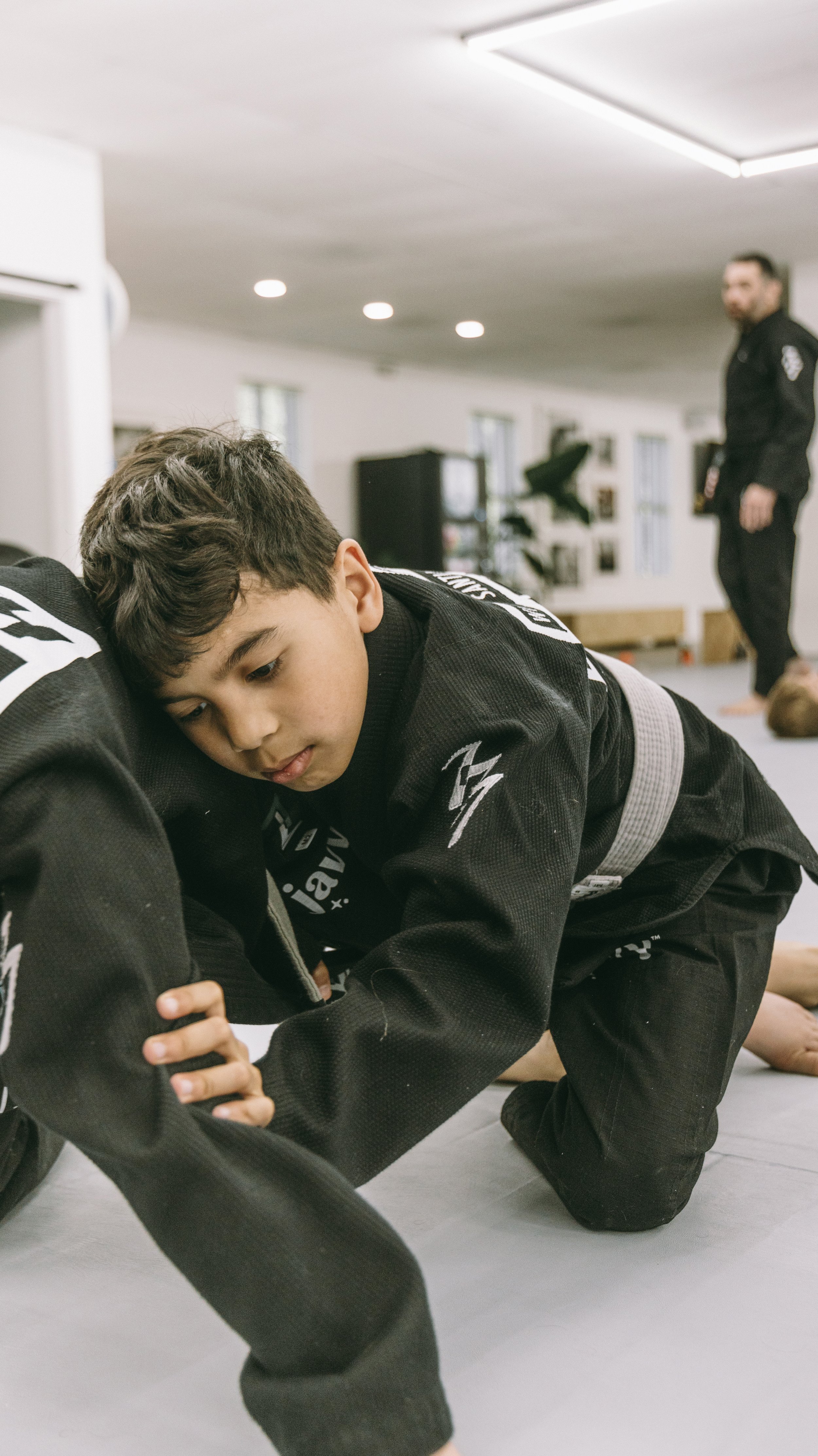
Another part of respectful control is learning how to train with different partners. Kids are not always paired with someone their exact size, strength, and skill. That’s normal in a kids program, and it can be a positive when coached well. But it means your child needs a skill set beyond “go as hard as you can.” They need to learn matching. Matching is the ability to adjust speed, pressure, and strength so both kids can learn safely. Some children do this naturally. Others need it taught directly, and they need immediate feedback when they miss it.
Respect also shows up in how kids handle small bumps and misunderstandings. Grappling is close-contact. Accidental collisions happen. A grip can feel rude even when it wasn’t intended that way. A child can interpret normal resistance as “being mean.” This week we’re reinforcing that kids should use words first and ask for adult help when needed, not retaliate physically or try to “get even.” That one habit protects the room and teaches a child how to handle conflict outside the academy too.
If you’re a parent watching from the side, it can be tempting to correct in the moment, especially if you see your child getting rough or getting overwhelmed. In most cases, the best support is letting the coach handle it. Kids respond better to one clear voice than to multiple adults calling instructions. After class, you can reinforce the same message without piling on. A helpful way to do that is to focus on one moment, not the whole identity of your child. “You had a moment where you got rough when you were frustrated” lands very differently than “You’re being rough” or “You’re not respectful.” We want kids to believe they can repair and improve.
Repair is actually one of the strongest forms of self-control. If your child has a disrespectful moment—arguing, refusing to slap hands, using a rude tone, or roughness after a stop—what matters next is whether they can take responsibility and restart. A simple apology, a reset, and a plan for next time is enough. The goal is not punishment. The goal is learning. When kids learn to repair quickly, they become more confident because they’re not trapped by their worst moment.
At Houzn, we also keep boundaries firm. Respectful training is not optional, and safety comes first. If a child repeatedly can’t control intensity, we slow the room down, change partners, reduce variables, and make the expectations very clear. For some kids, the answer is less live sparring and more guided rounds until the control skill catches up. That’s not a setback. It’s correct coaching.
If you want one simple way to reinforce respectful self-control under pressure at home, ask your child, “What did you do today to stay in control when it got hard?” If they don’t know, you can offer a menu of options: “Did you breathe, tap early, match your partner, or ask a coach for help?” Then pick one thing to praise and one thing to practice next time. Keeping it small prevents shame and builds a repeatable skill.
If you ever have questions about intensity, partner matching, or what “training hard safely” should look like for your child’s age, talk to us. We can explain what we’re looking for and help your child find the right balance between effort and control. If you’d like help choosing a simple cue phrase your child will actually remember, grab a coach after class and we’ll tailor it to them.