
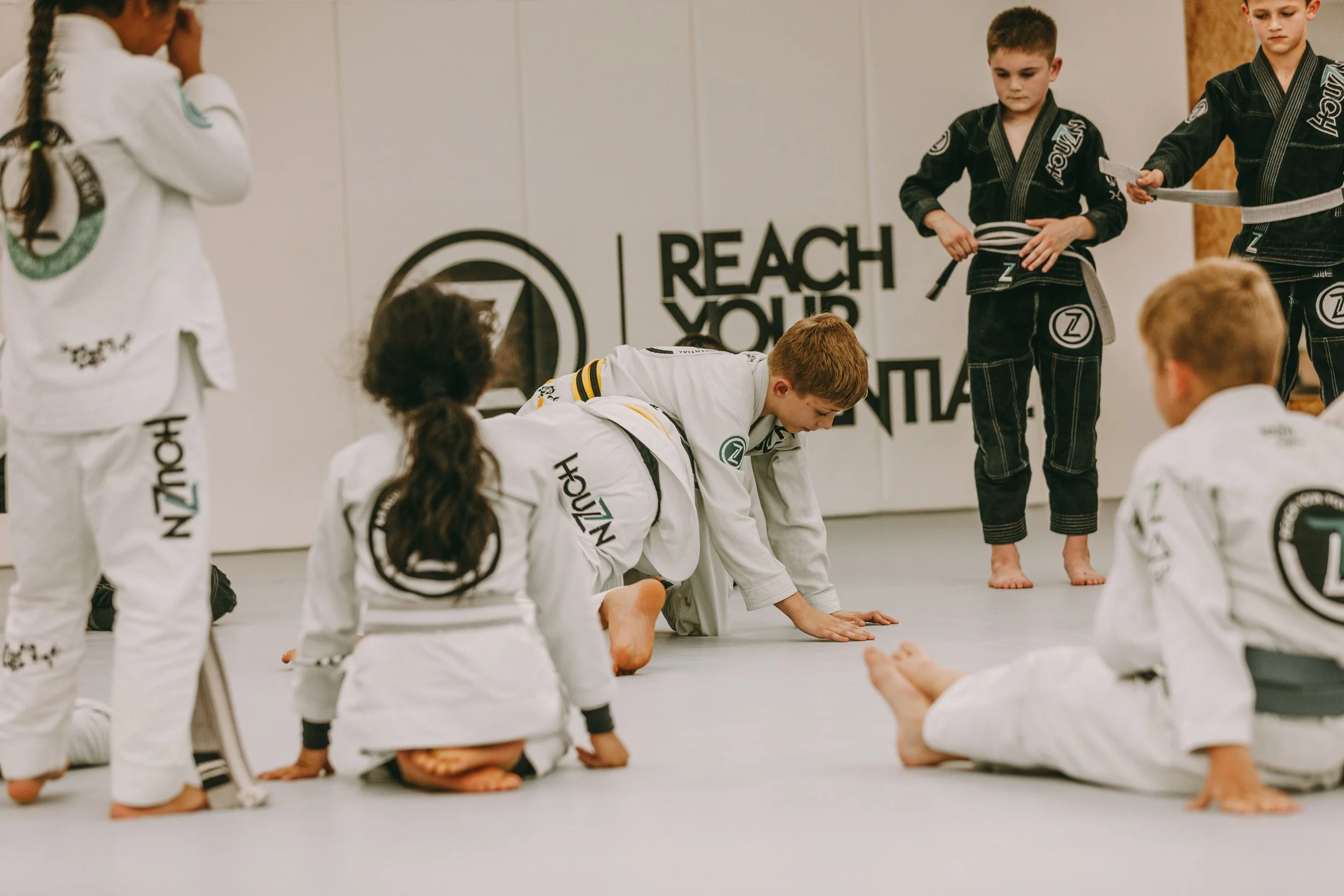
Kids Jiu Jitsu Leadership: How Training Builds Good Teammates
Leadership in Kids Jiu Jitsu isn’t about dominance—it’s about responsibility and being a good teammate. In Brazilian Jiu Jitsu for kids, students learn to partner safely, welcome new classmates, handle wins and losses with maturity, and set a positive tone in class. This post from Houzn Jiu Jitsu Academy in Mount Pleasant, SC (serving Charleston families) explains how coaches develop leadership across ages, what parents can look for, and how leadership shows up at home and school.
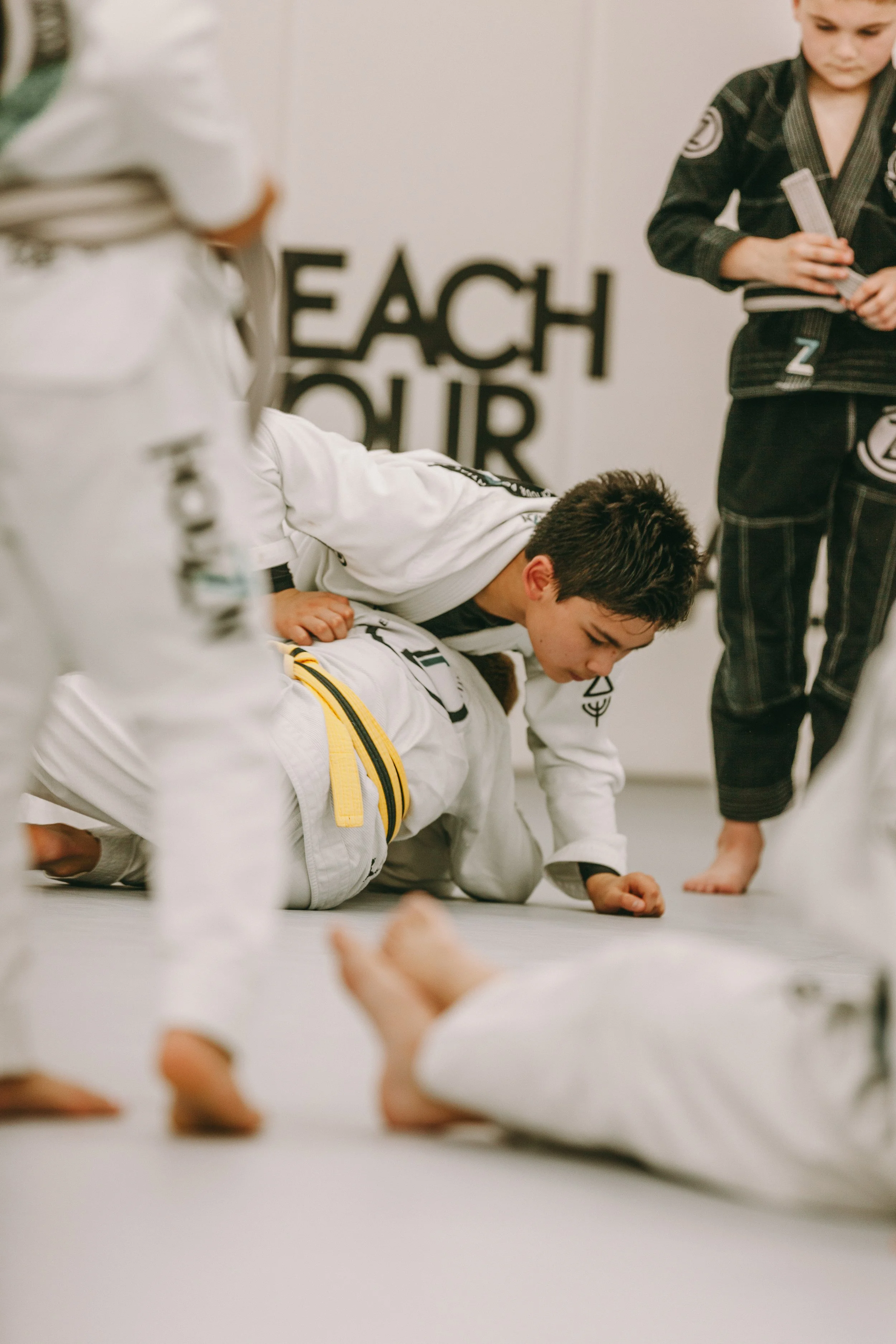
Parents tell us all the time that they want their child to be a leader. Not the “alpha kid” who has to be right, dominate the room, or control other people. They mean a child who can handle responsibility, treat others well, and stay steady when things get hard. That’s a healthy goal, and it’s one of the reasons Kids Jiu Jitsu works so well when it’s taught the right way.
At Houzn Jiu Jitsu, we think leadership is earned through behavior. It’s not a personality type. It’s not about being extroverted. It’s not even about being the most athletic kid in class. Leadership is about being trustworthy, and trust is built in small moments, repeated a lot.
Jiu Jitsu gives kids a clear pathway to that kind of leadership because the environment is real. The mat gives honest feedback. Your child can’t talk their way around it, and they can’t shortcut it. They have to learn to work with other kids, listen to a coach, manage emotions, and train safely with a partner. That’s leadership training, even if nobody uses the word.
When we talk about leadership in class, we put it into simple behaviors kids can understand and practice. Safety comes first, because if your child can’t be trusted to train with control, they can’t be trusted to lead. We teach them how to match intensity to the partner, how to move with awareness, and how to stop when they’re supposed to stop. That’s not just a Jiu Jitsu skill. That’s a maturity skill.
Humility is next. In Jiu Jitsu, everyone gets humbled. That includes the talented kid, the strong kid, and the kid who wins a lot. The question isn’t whether your child will face frustration. The question is what they do when they feel it. Humility shows up when a kid can learn without needing to prove something. It shows up when they can be corrected without arguing. It shows up when they can win without rubbing it in, and lose without shutting down.
Consistency matters because it’s the foundation of self-respect. A consistent kid is building a quiet kind of confidence. They show up. They try again. They accept that learning takes time. In a world where kids are surrounded by instant gratification, Jiu Jitsu teaches them that progress is something you build. When a child trains consistently, other kids notice. Coaches notice too. That child becomes dependable, and dependability is one of the most underrated forms of leadership.
Encouragement is a big one, and it’s often misunderstood. Encouragement isn’t cheerleading or being fake positive. It’s simply using your presence to make the room better. For kids, it can look like helping a new student find the right spot in line, giving a partner a high five after a round, or saying, “Good job” when someone finally gets a drill right. Encouragement takes the focus off ego and puts it on community. That’s directly in line with our values of giving before getting and treating others the way you’d like to be treated.
Emotional control is where you really see leadership developing. A child doesn’t need to be emotionless. They just need to be able to feel emotions without letting those emotions drive their behavior. Jiu Jitsu creates pressure in a safe, supervised way. Kids experience the discomfort of being stuck, the frustration of losing position, the disappointment of not getting the move, the excitement of success, and the temptation to get rough when they’re tired. We coach them through those moments. Over time, they learn how to breathe, reset, and keep going. That’s a skill they will use in school, at home, and in friendships.
Coachability might be the most important leadership behavior in the room. Coachable kids can take instruction, apply it, and adjust. They don’t take feedback as an insult. They see it as information. That’s what personal responsibility looks like for a child: “I can change my results by changing what I do.” When a kid gets coachable, their progress accelerates, but more importantly, their character strengthens. They become someone you can count on.
One reason leadership emerges naturally in Jiu Jitsu is that kids are constantly watching each other. They notice who stays calm. They notice who follows the rules when the coach isn’t looking. They notice who takes care of training partners. They notice who gets mad and quits. They notice who blames others. They notice who keeps trying. Even younger kids pick up on this.
Over time, peers start to respect the kids who make training feel safe and fair. That respect isn’t forced. It’s earned. And that’s the kind of leadership you want your child to have: the kind that comes from being solid, helpful, and accountable.
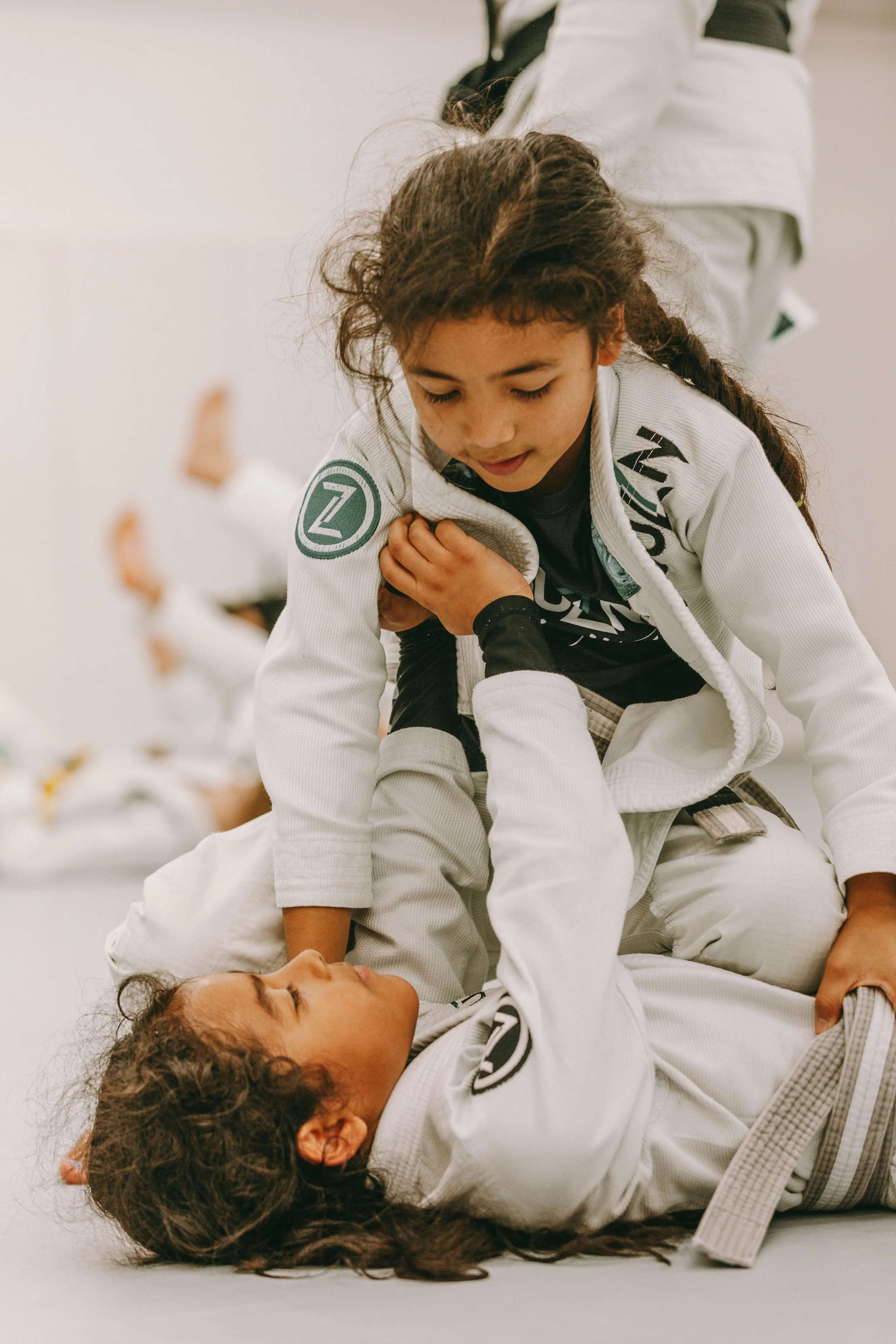
In a good Kids Program, leadership isn’t assigned through popularity. It’s built through habits. That’s why we don’t obsess over “who’s the toughest” or “who wins rounds.” We care about who is growing. A child who learns to lead on the mat is learning something deeper than technique. They’re learning how to be in a group without losing themselves and without trying to control everyone else.
As coaches, we also pay attention to the quieter forms of leadership, because a lot of great leaders don’t look like leaders at first. Some kids are naturally outgoing and confident. They’ll volunteer, answer questions, and speak up. That’s fine, as long as it’s paired with humility. Other kids lead by example. They line up quickly. They pay attention. They drill with focus. They tap early. They don’t get distracted. They make the room calmer. If you’re a parent, those quiet behaviors are worth noticing and reinforcing, because they’re the roots of real confidence.
A big part of our job is helping kids understand the difference between dominance and leadership. Dominance is about control. Leadership is about responsibility. Dominance needs an audience. Leadership shows up even when nobody is clapping. That distinction matters, because kids are constantly being taught to perform. Jiu Jitsu, when taught ethically, is a place where they can develop substance.
Parents can reinforce all of this at home without turning Jiu Jitsu into another pressure point. The simplest way is to praise the teammates' behaviors, not just the outcomes. If your child comes home excited because they “won,” you can still celebrate their effort, but bring it back to character. Ask how they trained. Ask if they were a safe partner. Ask if they helped anyone. Ask how they handled getting stuck. Those questions shape what your child values.
The language you use matters more than most people realize. When you say, “I noticed you helped someone,” you’re telling them that leadership is service. When you say, “I noticed you stayed respectful when you were frustrated,” you’re telling them that emotional control is strength. When you say, “I noticed you controlled your intensity,” you’re telling them that safety is part of mastery. Over time, that becomes their identity.
If your child is struggling with leadership behaviors, that’s normal too. Some kids get overwhelmed and act out. Some kids get competitive and start pushing too hard. Some kids get embarrassed and stop trying. Our approach isn’t to label the child as “bad” or “not a leader.” Our approach is to give them a clear standard, coach them toward it, and hold them accountable with care. Discipline is the road to achievement, but discipline without relationship doesn’t work with kids. They need to know we’re in their corner while we’re also holding the line.
One thing that helps is giving kids a specific leadership focus for a short period of time. Leadership gets easier when it’s concrete. “Be a better leader” is vague. “Be the kid who welcomes someone new this week” is clear. “Be the kid who taps early and resets without complaining” is clear. “Be the kid who listens the first time” is clear. When kids know what to aim at, they can actually practice it.
That’s why we like to work with parents on simple monthly goals. We can tell you what we’re seeing in class and where your child is strong. We can also tell you what to focus on next, based on their personality and training age. Some kids need more confidence. Some need more control. Some need to learn to speak up. Others need to learn to be patient and not rush. There isn’t one leadership path. There’s the right next step for your child.
If you’d like a clear, specific leadership goal for your child’s next month of training, grab your kids coach after class or ask for a conference. We’ll keep it simple, measurable, and age-appropriate, and we’ll make sure it supports the bigger mission: raising kids who are honest, responsible, and capable—on and off the mat.