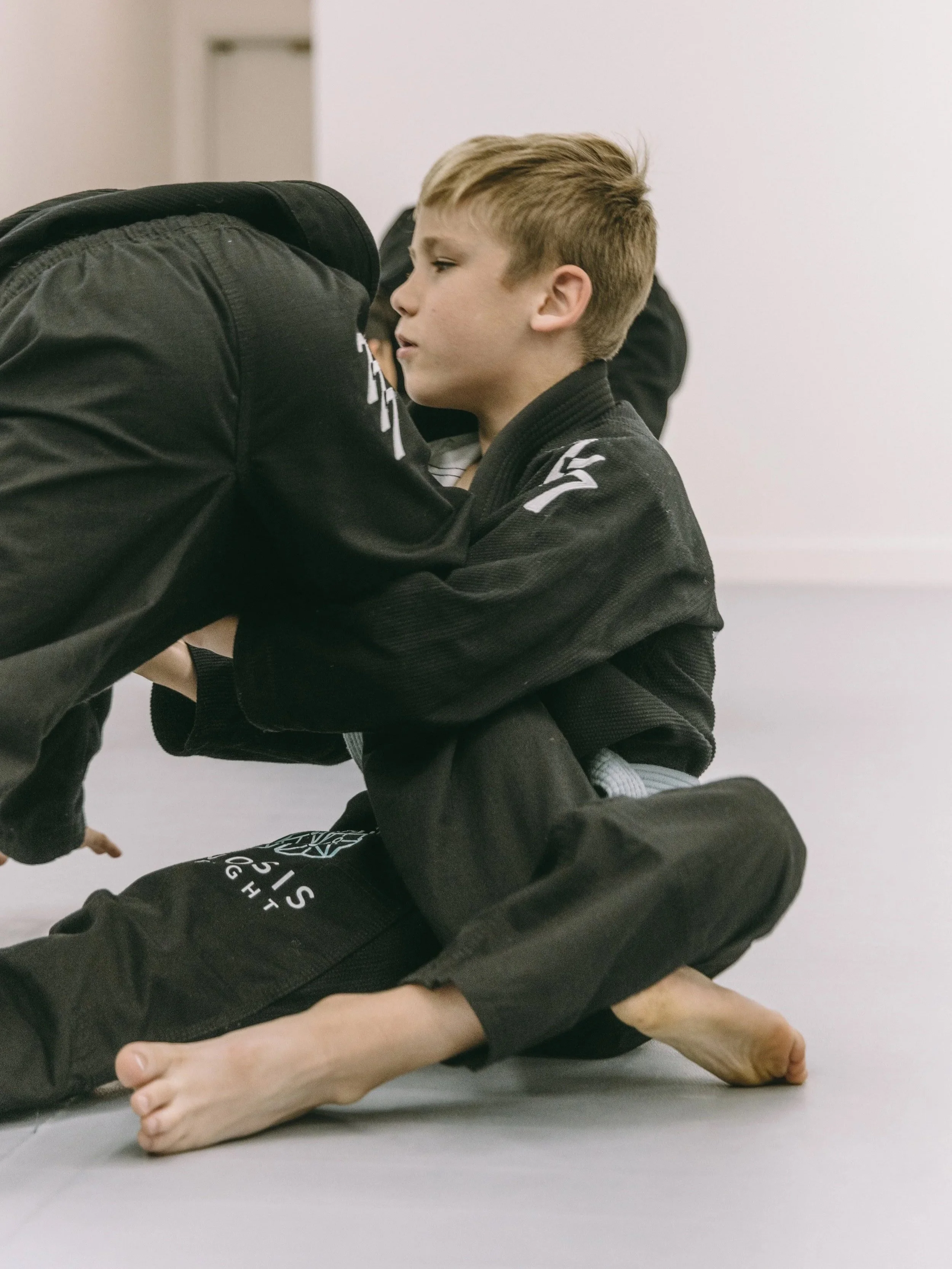
Kids Jiu Jitsu Confidence: How It Really Builds Over Time
Parents often tell me they want their child to be more confident. It’s one of the most common reasons families try kids jiu jitsu in the first place.
I get it. Confidence affects everything. It shows up in how your child walks into a new classroom, how they handle a mistake on homework, how they respond to a teammate who’s upset, and how they deal with a friend who pushes boundaries. When kids don’t feel confident, they tend to shrink, avoid, or lash out. When they do feel confident, they’re more willing to try, learn, and recover.
But confidence gets misunderstood. Some people picture a “tough kid” who talks big, never feels nervous, and isn’t afraid of anything. That’s not what we’re building at Houzn Jiu Jitsu Academy.
We’re building the kind of confidence you can trust. The kind that doesn’t disappear the second something gets hard. The kind that comes from competence, self-control, and real experience dealing with pressure.
In Brazilian Jiu Jitsu for kids, confidence is not a personality trait. It’s a skill. And like any skill, it’s trained.
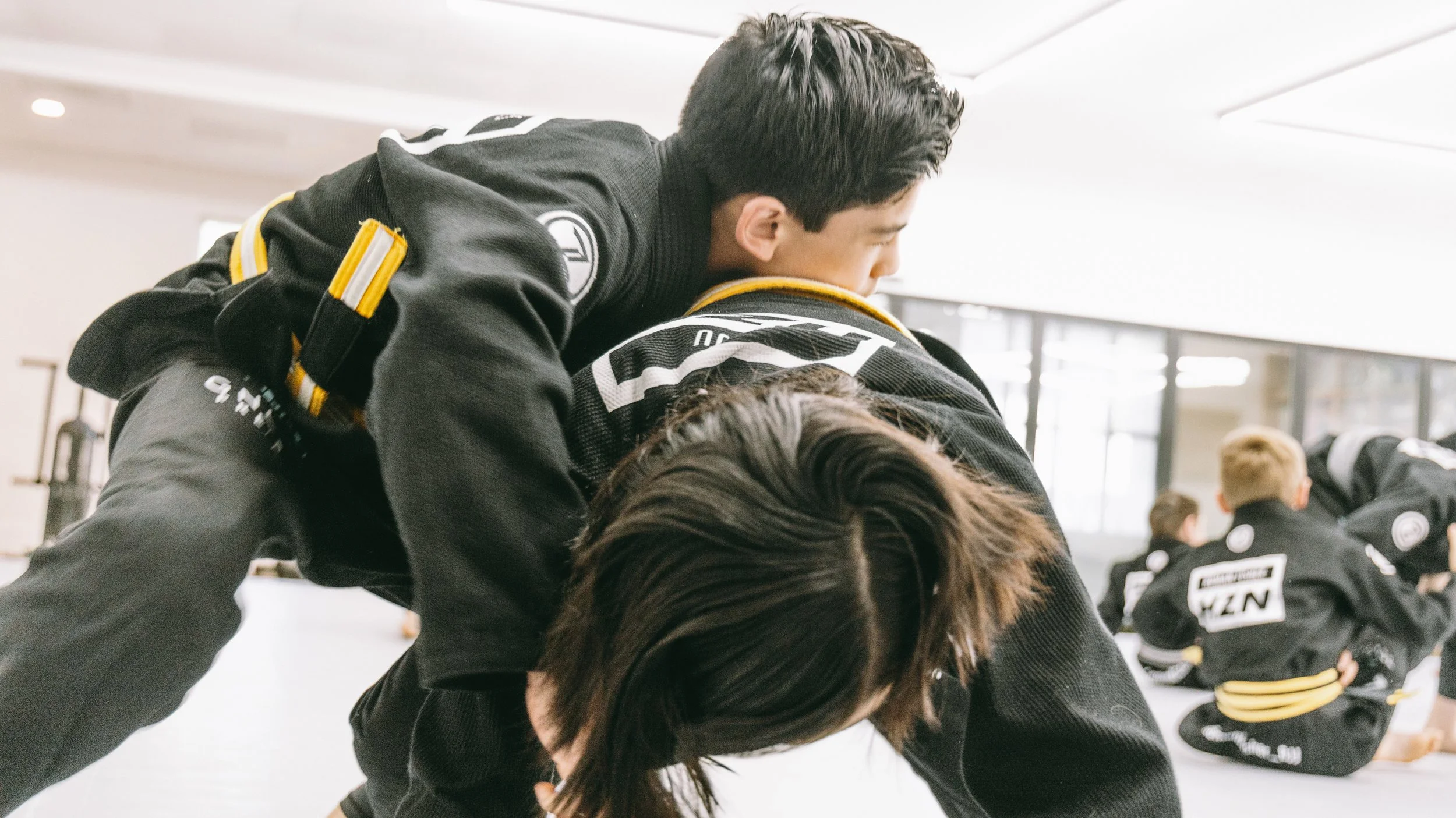
On the mat, confidence looks like the ability to stay engaged when things feel uncertain.
That might sound simple, but it’s a big deal for a child. Most kids are fine when they feel in control. The challenge is what happens when they don’t. When a technique doesn’t work the first time. When a training partner is stronger. When the coach gives a correction. When they lose a position. When they feel behind. When their heart rate goes up and their brain wants to panic.
A confident child is not the child who never struggles. A confident child is the child who struggles and keeps going.
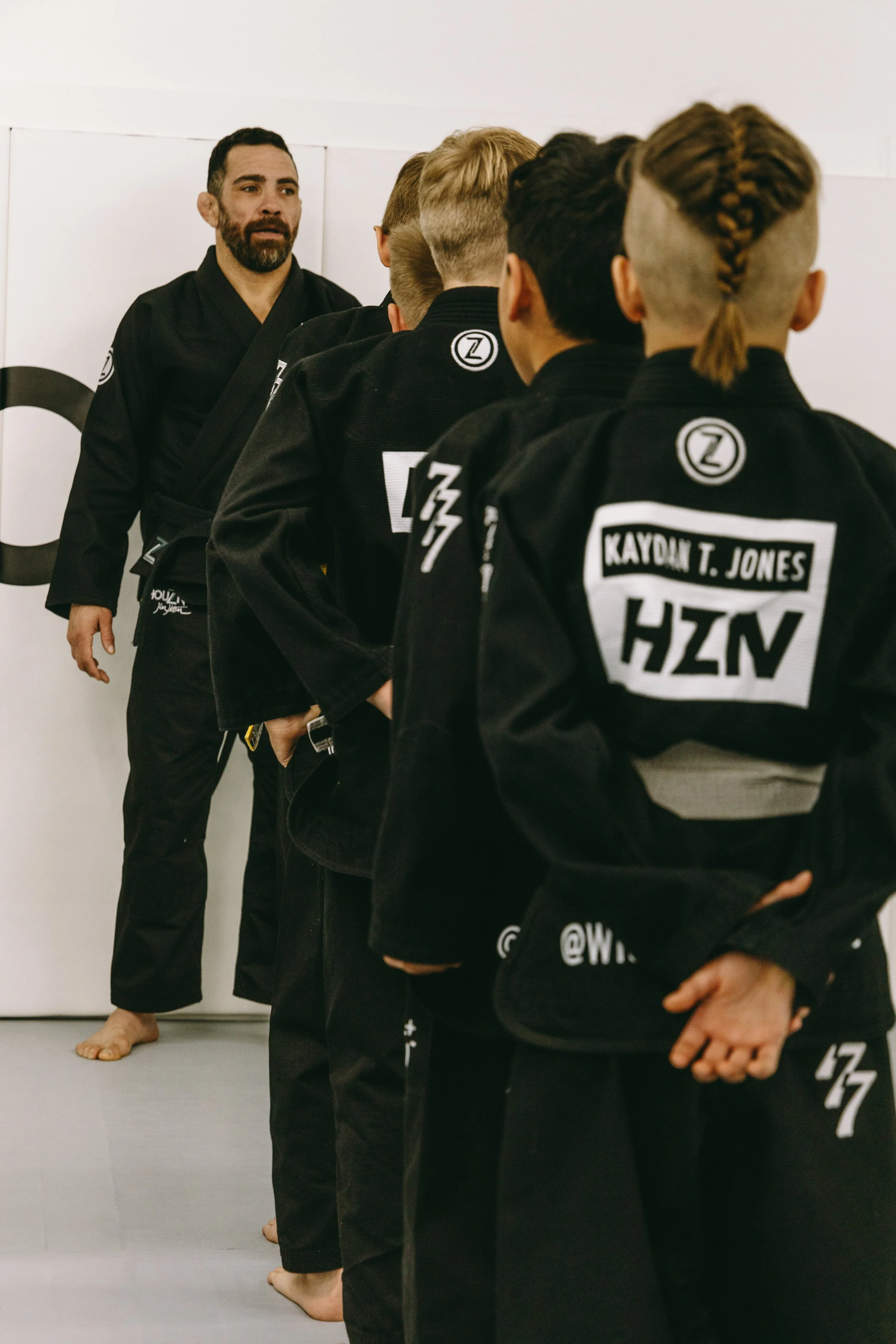
In a kids jiu jitsu class, you can see it in small moments. A child tries the move even though they’re not sure they’ll get it. They listen when a coach corrects them, even if it stings a little. They lose a position and keep working instead of freezing. They tap and reset without embarrassment because they understand tapping is how we train safely. They treat partners with respect, even when they’re frustrated, because they’re learning that self-control is part of the art.
That’s confidence built on something real.
It’s also why we don’t confuse confidence with being loud. Some confident kids are quiet. Some confident kids are high-energy. Some confident kids are intense. Some confident kids are sensitive. What they share is steadiness. They can feel a feeling without it driving the car.
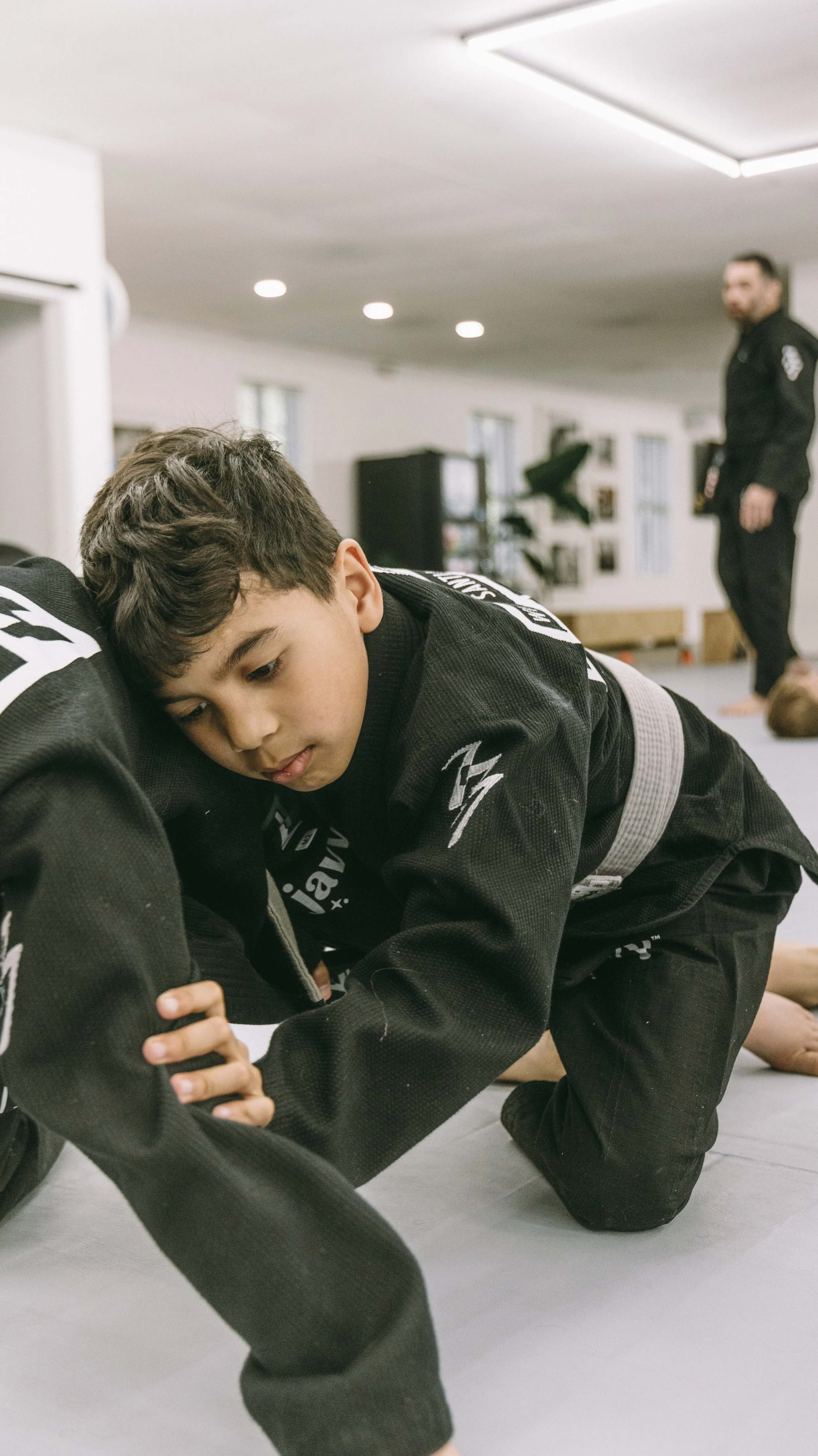
A lot of parents come in hoping jiu jitsu will “bring their kid out of their shell.” Sometimes that happens. More often, what happens is better. Their child becomes comfortable being themselves. They don’t need to perform. They don’t need to prove. They can just do the work.
That matters, because kids are smart. They can tell when confidence is fake. They can tell when a kid is acting tough to cover fear. Real confidence is quieter. It’s an internal posture. It’s, “I can handle this,” even if their voice shakes a little.
One of the reasons jiu jitsu is so effective for building that kind of confidence is that it gives immediate feedback. If you do the movement correctly, things start to work. If you forget the detail, things fall apart. That feedback loop is honest, and it makes progress visible. Kids start to trust the process because they can feel the difference in their body.
And in a good program, that honesty is paired with safety and structure. We don’t throw kids into chaos and call it growth. We give them a clear plan, we match partners carefully, and we teach them how to train with control. Confidence grows best when challenge is real but manageable.
This is also why jiu jitsu can be a great fit for kids who haven’t thrived in traditional sports.
A lot of sports reward early athleticism. If a child is fast, coordinated, or naturally aggressive, they get results quickly. If they’re not, they can feel behind from the start. They might spend an entire season chasing the game and never touching the ball, and the message they internalize is, “I’m not good at this,” or worse, “I’m not a sports kid.”
Kids jiu jitsu is different. Everyone is learning a new language at the same time. Balance, base, grips, positioning, timing, pressure, breathing. Even the “sporty” kids have to slow down and learn. Even the strong kids have to learn that strength without technique doesn’t last. The starting line is more even.
Shy kids often do well because they listen closely. They watch details. They tend to be respectful partners, and that helps them get good training reps. Uncoordinated kids often do well because jiu jitsu is built on repetition and specific movement patterns. We don’t just say, “Go play.” We teach a movement, then we practice it again and again, and the child’s coordination improves as a result.
Sensitive kids often do well too, even though parents sometimes worry they won’t. Sensitive kids notice things. They pick up on tone, pace, and pressure. With the right coaching, sensitivity turns into awareness instead of anxiety. They learn how to stay present when their body feels stress. They learn that discomfort is information, not danger.
One of the biggest mistakes parents make is looking for a personality change.
Your child doesn’t need a new personality. They need more capacity.
A shy child doesn’t need to become loud. They need to become steady. They need to know they can speak when it counts, hold eye contact when it matters, and make a decision under pressure.
A high-energy child doesn’t need to become calm all the time. They need to become controllable. They need to learn how to turn the volume knob down without being told ten times. They need to learn how to be intense without being unsafe.
A strong-willed child doesn’t need to become “easy.” They need to become coachable. They need to learn the difference between stubbornness and perseverance. They need to practice taking feedback without taking it personally.
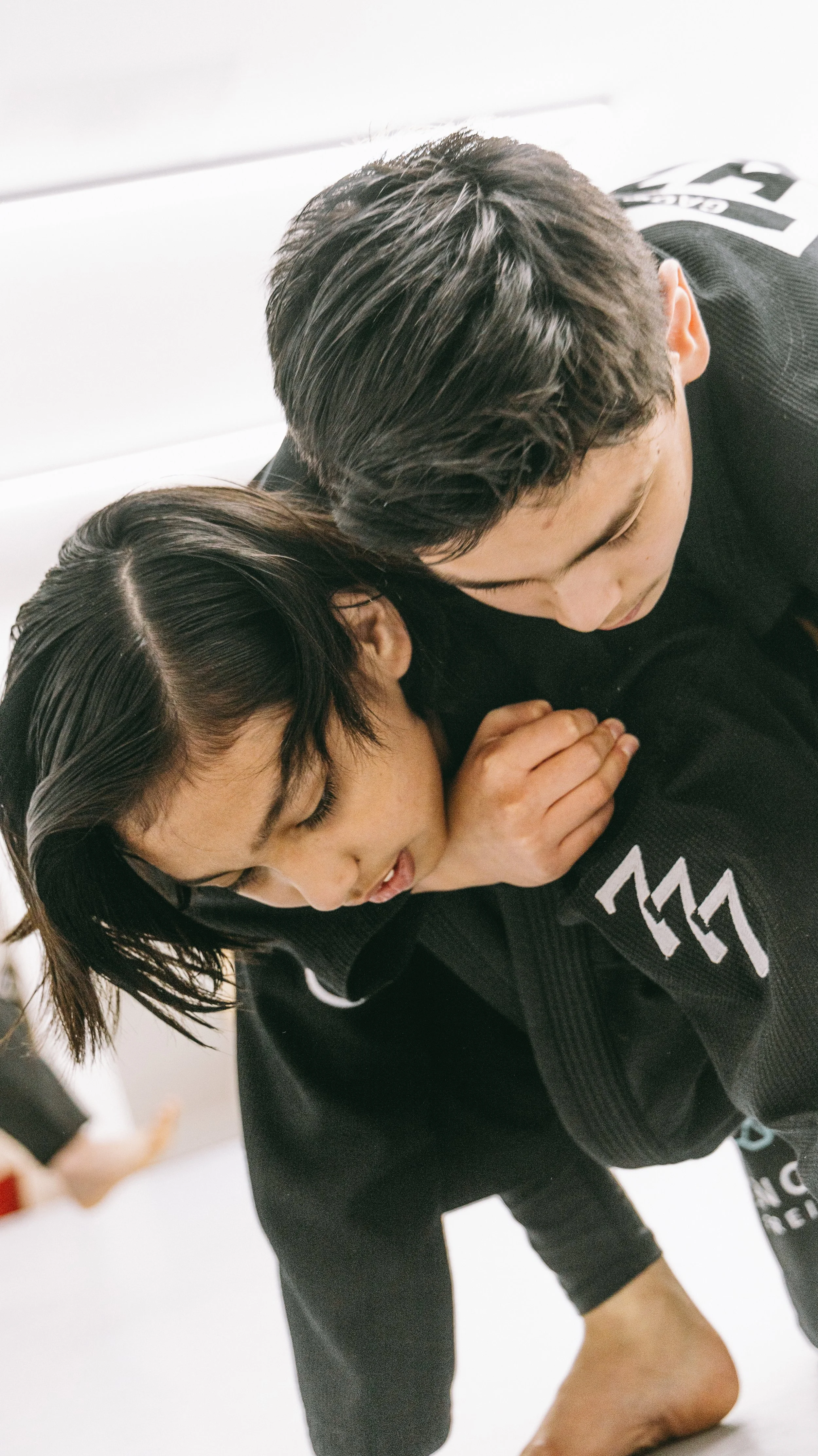
Jiu Jitsu gives kids a place to build that capacity in a structured way. The mat is a controlled environment where your child can test themselves, fail safely, and try again. It’s a place where they learn personal responsibility in a way kids can actually understand. If they don’t listen, they don’t improve. If they don’t show control, they don’t get trusted with harder rounds. If they don’t respect partners, the room doesn’t work.
Those are real lessons, and kids feel them.
At Houzn, we care a lot about culture because culture is the container that makes these lessons land the right way. We want kids to be tough in the sense that they can handle adversity, but we don’t want them to be hard in the sense that they become careless with others. Our goal is a kid who can hold their own and still treat people the way they’d like to be treated. That’s one of our core values for a reason.
When parents ask me what confidence looks like long-term, I tell them to watch for small, boring wins. The kind that don’t make for flashy videos, but make for a stronger kid.
It looks like your child being willing to try a new activity without needing to be “good” on day one. It looks like fewer tears after mistakes, or tears that come and go faster. It looks like them being able to speak up with adults, even if they’re nervous, because they’ve practiced doing hard things in front of a coach. It looks like less fear of looking silly. It looks like better recovery after setbacks.
That’s the dividend of learning to struggle safely.
Jiu Jitsu puts kids into “problem” positions on purpose. Not to scare them, but to teach them that there is a way forward even when the moment feels tight. When a child learns how to breathe in a bad position, build frames, make space, and escape, they’re also learning something deeper: “I can be uncomfortable and still think.”
That skill is rare now. A lot of modern life trains kids to avoid discomfort. If something is hard, we switch it. If something is boring, we scroll. If something is frustrating, we quit. Then we wonder why kids have such a low tolerance for challenges.
Jiu Jitsu is a counterweight. It teaches a child to stay with the problem long enough to solve it.
That doesn’t mean every class is heavy or intense. Kids classes should be fun. They should feel welcoming. But “fun” doesn’t mean “easy,” and it definitely doesn’t mean “no standards.” The fun in jiu jitsu comes from progress. It comes from the moment something clicks. It comes from realizing, “I couldn’t do that last month, and now I can.”
Confidence is built one rep at a time.
If you’ve never watched how a child changes over a few months of consistent training, it can surprise you. Early on, many kids rely on speed or excitement. They move a lot, but not on purpose. They hold their breath. They get frustrated quickly. Over time, with good coaching, you start seeing a different kid. They slow down. They listen. They choose better moments. They accept corrections. They tap without drama. They start taking pride in doing things the right way.
If your child is shy, you can also support them by not forcing them to perform socially right away. Let them build trust with the environment. Consistency is the best social lubricant. If your child shows up regularly, the room becomes familiar, and familiar reduces anxiety. Over time, they start talking more because they feel safe.
If your child is high-energy, you can support them by framing control as a skill, not a punishment. Instead of, “Stop being wild,” you can say, “Show me you can control your body the way coach asked.” That turns it into a challenge they can take pride in.
If your child is strong-willed, you can support them by framing coachability as strength. “Strong kids can take feedback.” “Leaders listen.” Again, you’re pointing their identity toward growth.
One more thing parents appreciate hearing is that confidence rarely grows in a straight line. Kids have seasons. Some weeks they feel unstoppable. Some weeks they feel behind. Sometimes they’re dealing with school stress, sleep changes, or friendship drama, and that shows up on the mat. That doesn’t mean they’re regressing. It means they’re human. Jiu jitsu gives them a stable place to practice showing up anyway.
That’s one of the reasons we talk about personal responsibility so much in our culture. Not responsibility as guilt, but responsibility as power. If your child learns, early, “My actions matter, my choices matter, my effort matters,” they become harder to break. They stop waiting for motivation. They build a relationship with discipline.
And discipline is the road to achievement. Not just on the mats, but everywhere.
If you want a clear picture of what confidence looks like for your child right now, grab your kids coach after class or ask for a conference with the coach. We’ll tell you what we’re seeing, what to expect next, and one simple focus that will make the next stage easier.
That pride is healthy. It’s not ego. It’s self-respect.
This is also where our approach to progress matters. In kids jiu jitsu, promotions should reflect more than attendance. At Houzn we follow the IBJJF kids belt system, and stripes are earned. Four stripes are needed before a belt change, and we look at a few simple things: whether your child has put in at least 24 hours of practice, whether they can apply what we teach with a real partner, and whether their behavior shows maturity and respect.
Why does that matter for confidence? Because when your child earns something that’s real, they feel it. They know the difference between a participation trophy and a hard-earned stripe. That stripe becomes a story they tell themselves: “I can work for something and get it.” That story is a big part of how confidence forms.
Now, there’s a parent side to this too. Sometimes parents unintentionally put pressure on confidence. They want to help, but the message lands wrong.
If a child says, “I lost,” and the parent responds with a long technical analysis or a frustrated tone, the child hears, “I’m disappointing you.” If the parent tries to rescue them by saying, “It doesn’t matter,” the child hears, “We don’t talk about hard things.” If the parent tries to pump them up by saying, “You’re the best,” the child hears something that doesn’t match their experience, and it can actually make them doubt themselves more.
A better approach is to praise the process.
When you praise effort, composure, and coachability, you build identity around things your child can control. You also teach them what confidence actually is. Confidence isn’t “I win.” Confidence is “I do the work.”
So after class, keep it simple. Tell them what you saw. “I liked how you kept trying.” “I liked how you listened when the coach corrected you.” “I liked how you stayed respectful even when you were frustrated.” That kind of feedback is powerful because it reinforces the behavior that leads to growth.