
Kids Jiu Jitsu Progress: Why Consistency Matters More Than Talent
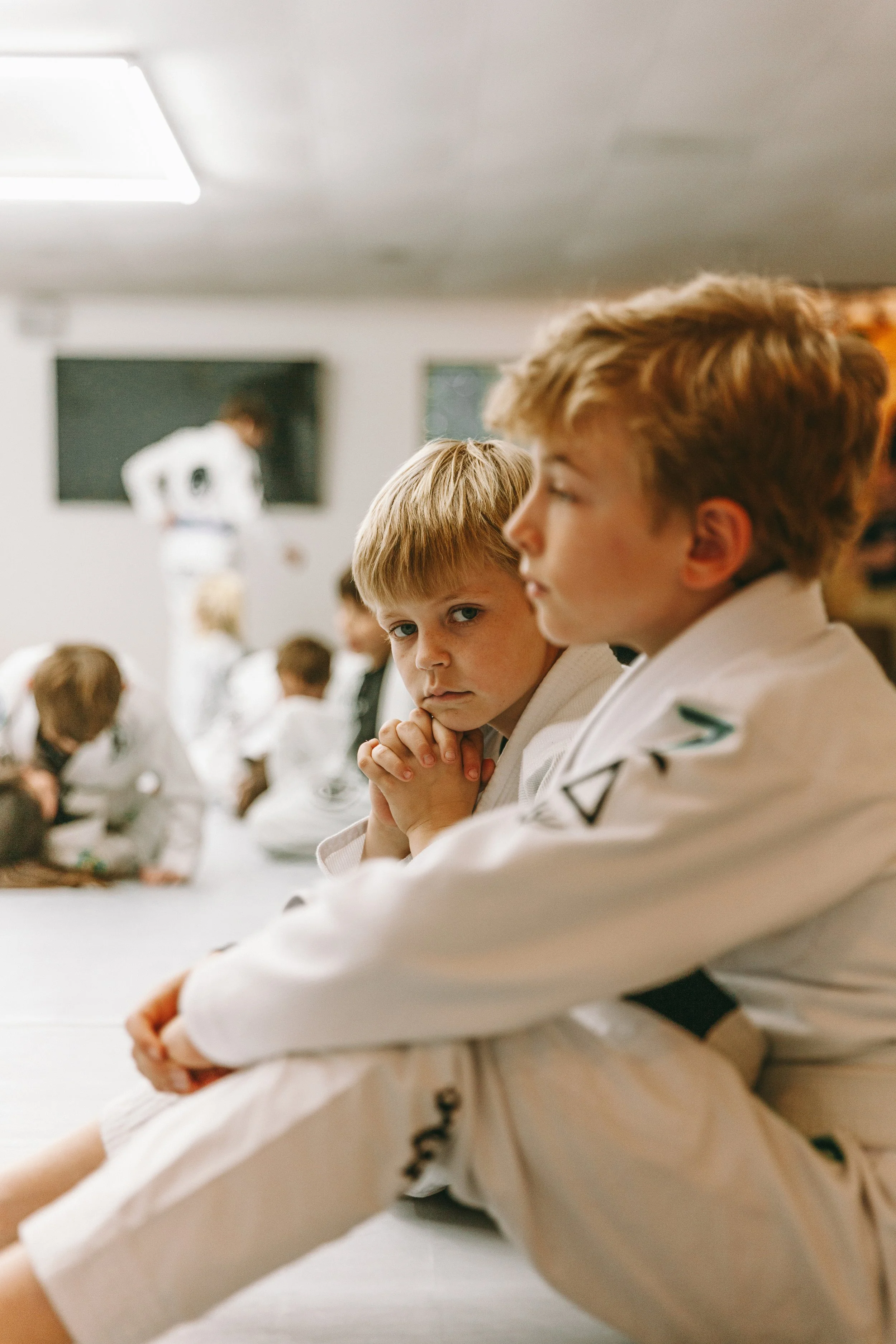
If you hang around a Kids Jiu Jitsu class long enough, you start to see the same story play out again and again.
The kid who looks like a natural in the first few weeks isn’t always the one still leading a year from now. And the child who struggles early, who feels “behind,” often ends up being the one who suddenly takes off later.
Most of the time, it isn’t because one kid is tougher or more athletic. It’s because one kid stayed consistent long enough for the work to turn into skill.
At Houzn Jiu Jitsu Academy, we see this across every age group. The kids who make real progress aren’t usually the most “motivated” kids. They’re the kids who simply keep showing up, even when their energy is low, even when they had a rough day at school, even when they’re in a phase where they’d rather be doing something else.
Consistency is not exciting, but it’s powerful. And for kids, it’s one of the healthiest lessons they can learn.
Consistency doesn’t mean training every day. It means having a simple routine that your child can follow for long enough that their body and brain can actually absorb what they’re learning.
Jiu Jitsu is not like memorizing spelling words. Your child isn’t just collecting information. They’re building a physical language. That language takes time, and it takes repetition.
Every time your child drills a movement, they’re not just “doing it again.” They’re building timing. They’re building balance. They’re learning where their weight goes. They’re learning how to breathe when someone is pressing into them. They’re learning how to stay calm when something feels uncomfortable.
That’s why consistent training works. It gives them enough reps for the movement to become natural, and it gives them enough different looks that they can adapt instead of freezing.
In Kids Jiu Jitsu, real skill is built through repetition, but also through variety. Your child needs exposure to different partners, different sizes, different energy levels. One day they’re working with a gentle partner and they can focus on the details. Another day they’re with someone stronger and they have to solve a different problem. Both are useful. That range of experiences is what turns a technique into a skill they can actually use.
Coaching feedback matters too, but feedback only sticks when a child comes back often enough to apply it. If a kid hears “keep your elbows in” once every two weeks, it’s hard for that to become a habit. If they hear it twice a week and they get corrected in the moment, that habit forms much faster.
There’s also a coordination piece that a lot of people underestimate. Kids are still learning how to control their own bodies. Some children have that coordination early. Some get it later. Neither one tells you much about where they’ll be in a year. Consistent training gives the body time to organize itself. It’s like watching handwriting improve over a school year. At first it’s messy. Then one day you realize it’s readable. Jiu Jitsu is similar. You’re not just learning moves, you’re learning control.
Confidence works the same way. Confidence under pressure isn’t something you can talk a child into. It’s something they earn through experience. They learn, slowly, that they can handle a bad position, that they can stay safe, that they can keep thinking while their heart rate goes up. That kind of confidence is quiet and real. It comes from training consistently enough that pressure stops feeling like panic.
This is why we tell parents not to judge progress week to week. Week to week, Jiu Jitsu looks messy. Month to month, it starts to make sense. And over six months or a year, you often see a completely different child on the mat.
When parents say, “My child is progressing slowly,” what they usually mean is, “I expected it to look smoother by now.”
But slow progress is often exactly what healthy progress looks like.
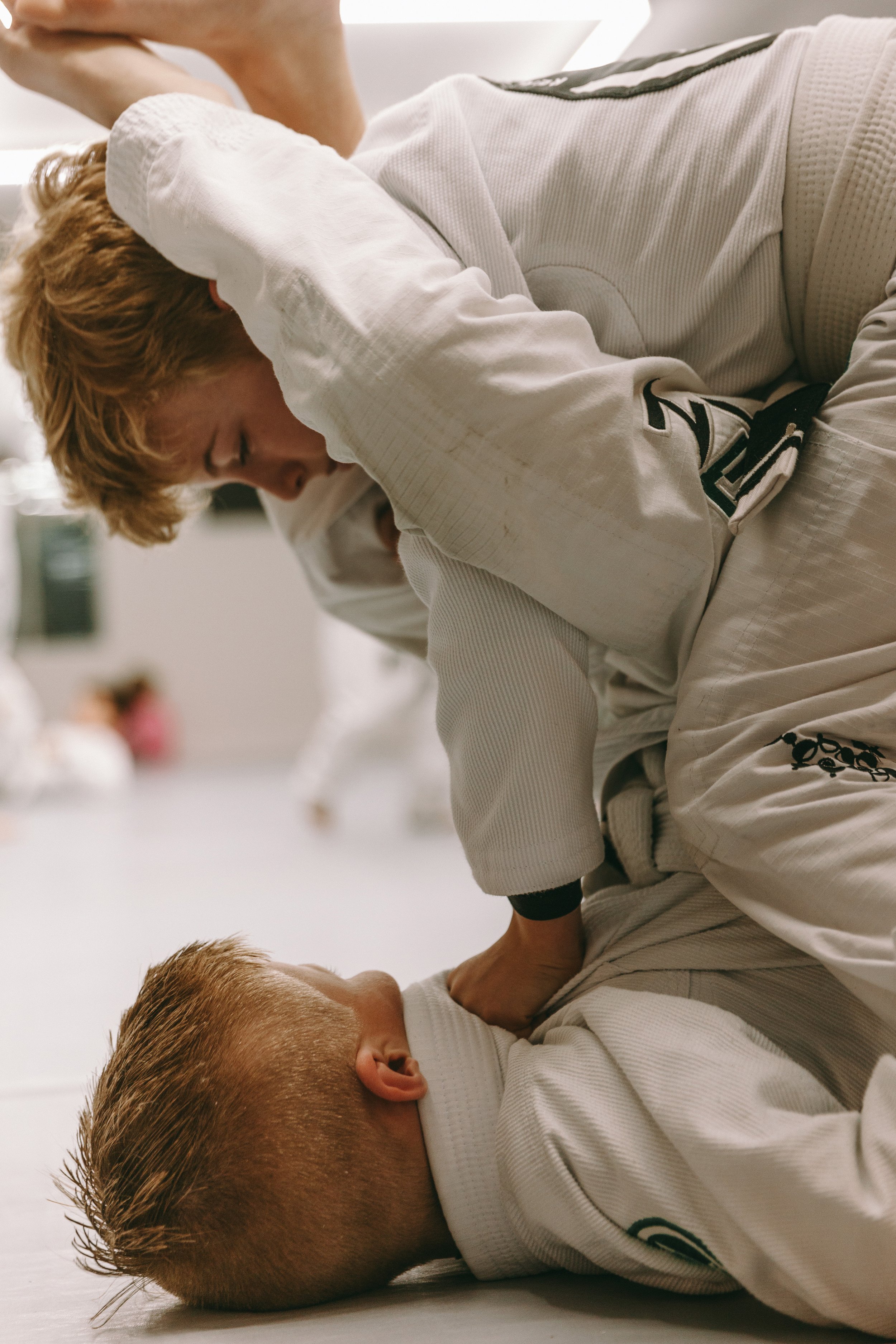
Sometimes “slow” means your child is learning foundational movement. They’re learning how to shrimp, how to bridge, how to base out, how to fall safely, how to get back up. Those fundamentals don’t look flashy, but they’re the root system. If the root system is weak, everything else breaks later.
Sometimes “slow” means they’re building balance and timing. Timing is not something you can force. It’s learned through thousands of little exchanges. Your child has to feel what happens when they move too early, too late, too hard, too soft. They have to learn the rhythm of another person. That takes time.
Sometimes “slow” means they’re transitioning from copying to understanding. In the beginning, most kids can mimic what the coach does. They can “perform” a technique in the air or with a compliant partner. The next stage is harder: they have to understand why the move works and when to use it. That stage often looks like a plateau because the child is thinking more. They’re not just moving. They’re processing.
That’s not failure. That’s development.
It also helps to understand that progress in Kids' Jiu Jitsu is not always linear. A child can look amazing for a few weeks and then look like they forgot everything. That doesn’t mean they lost skill. It usually means they’re being challenged in a new way. Maybe the partners changed. Maybe they moved up an age group. Maybe the coach started holding them to a higher standard. Maybe they’re growing fast and their coordination is temporarily off. Growth spurts can make kids look clumsy for a while. Then the body catches up.
The important thing is to keep the routine steady through those phases. That’s where parents make the biggest difference.
Parents don’t need to push. They need to support the routine.
In our experience, the best thing you can do is keep class days consistent. Same days each week. Predictable schedule. Kids do well with structure, and it reduces the daily negotiation. When training is “just what we do on Tuesdays and Thursdays,” it becomes normal, like brushing teeth.
Packing gear the night before sounds small, but it’s a big deal. A rushed, stressful exit can turn a child against class before they even get to the academy. When the bag is ready, the car ride is calmer, and the child arrives more open.
The way you talk about training matters too. Kids pick up quickly on what adults reward. If the only praise they get is for winning rounds or tapping someone, they start to chase outcomes. That creates anxiety and can make them want to quit when things get hard.
If you celebrate effort and consistency, you teach something more durable. You teach them that showing up counts, that trying counts, that being coachable counts. Those are the kids who stay in the sport long enough to become skilled.
One simple shift that helps is to ask better questions after class. Instead of “Did you win?” try “What did you work on today?” or “What was one hard thing you handled?” This keeps their attention on learning, not on comparison.
Another helpful piece is to let the coaches coach. If your child hears one set of instructions from the mat and another from the sidelines, they get confused. It’s also hard for a child to relax and learn if they feel like they’re being evaluated every second. Jiu Jitsu is a long game. The best growth happens when kids feel safe to make mistakes.
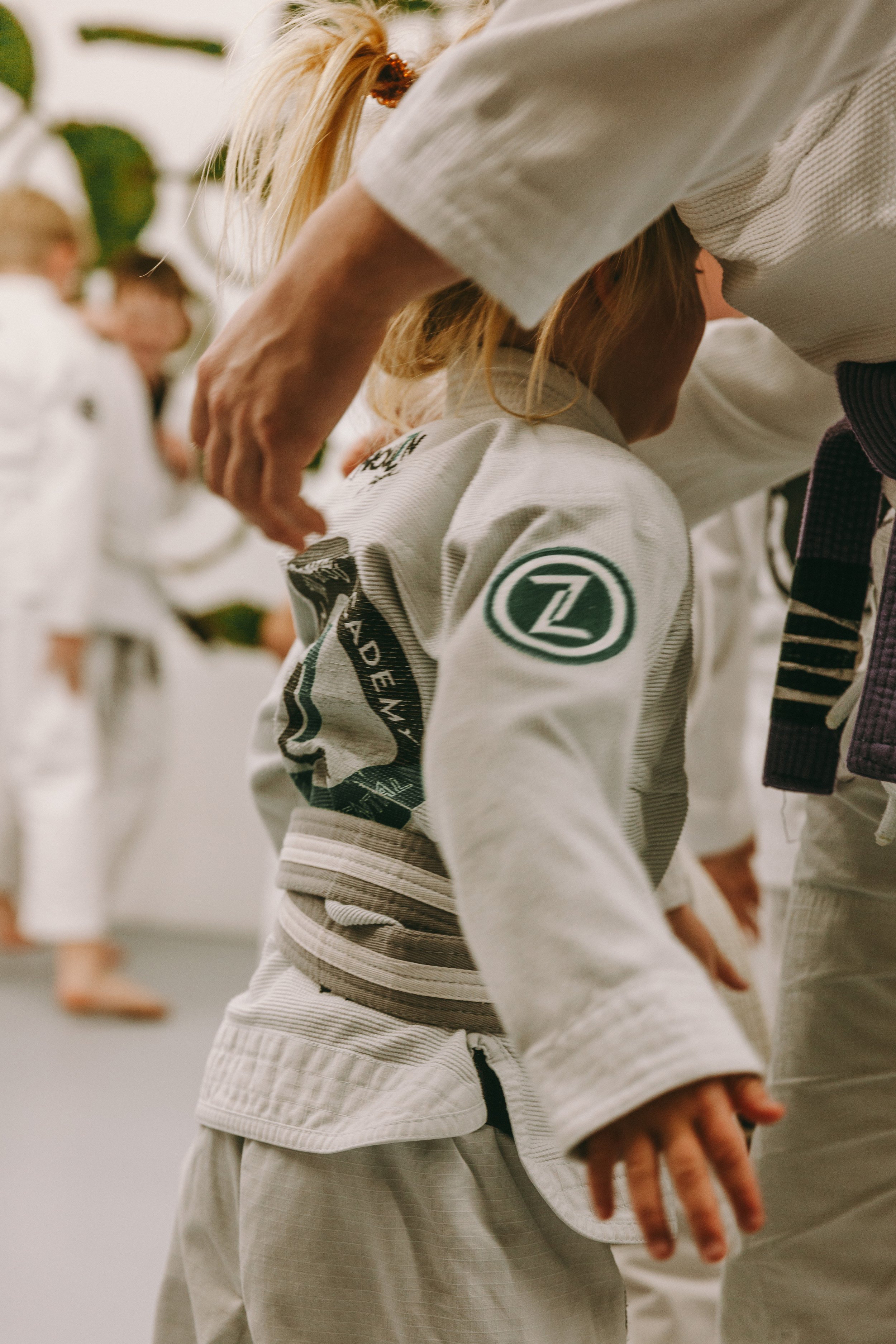
And yes, sometimes kids go through a dip in motivation. That’s normal. Adults do too. The goal isn’t to have a child who feels excited for every single class. The goal is to build the habit of following through even when they don’t feel like it. That’s a life skill, and Jiu Jitsu is one of the best places to learn it in a healthy way.
That said, there’s a difference between “not in the mood” and “something is wrong.” If your child is consistently anxious, dreading class, or talking about specific fears, that’s worth a conversation with the coach. Often it’s something simple that can be adjusted: pairing, intensity, expectations, or even just a confidence-building plan for a few weeks.
Training frequency is another place where parents sometimes feel unsure. More is not always better, especially for younger kids. The right schedule depends on age, temperament, school load, and your family’s bandwidth. A consistent two days a week can beat a random five days one week and none the next. Consistency wins.
If you’re unsure what a realistic training frequency is for your child’s age and goals, grab your kids coach after class or ask for a conference with the coach. We’ll recommend a simple plan you can actually stick to, and we’ll adjust it as your child grows.
If you want a practical next step as a parent, pick two class days you can realistically hold for the next eight weeks, set them on the calendar, and treat them like a standing appointment. Then after class this week, ask your child what they’re most proud of from today’s training, even if it’s something small. That small routine, repeated, is how momentum starts.