
Meet Van Barnhill: Black Belt, Pastor, and Still a Student of Jiu Jitsu
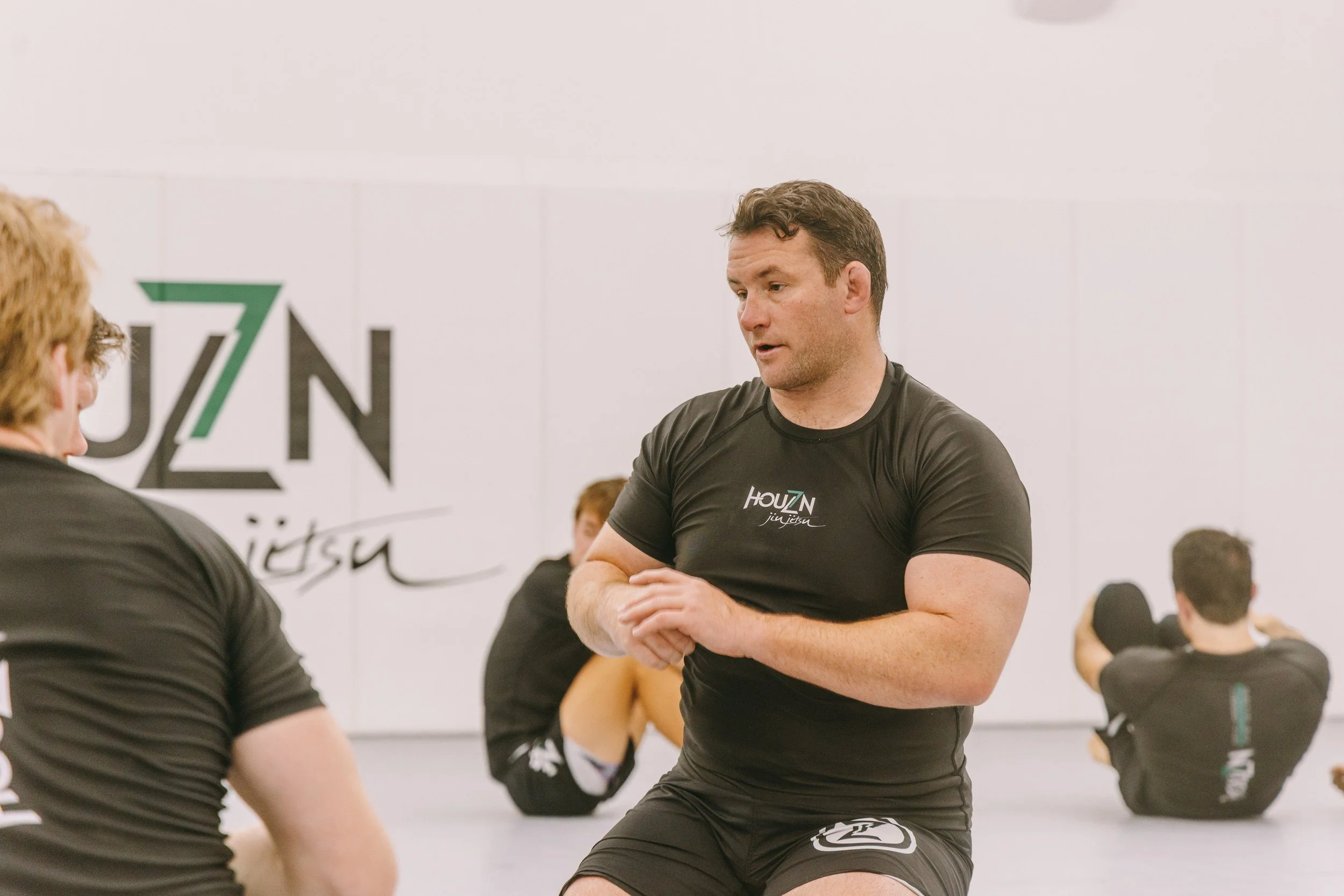
Van Barnhill’s first Jiu Jitsu class didn’t ease him in. It hit fast, and it hit often. Within the first few minutes, he tapped multiple times, caught in the same problem again and again. For some people, that kind of start feels like a warning sign. For Van, it felt like an invitation to figure something out.
He had wrestled in high school and loved it, so the basics of grappling weren’t foreign. Still, jiu jitsu made it clear right away that it was its own language, with its own rules. Instead of walking out frustrated, he left curious. He wanted to know why certain positions worked, why small mistakes got punished so quickly, and how someone could feel so controlled without throwing a single punch. That curiosity is what kept him coming back, and it still shapes the way he trains today.
Van is now a Brazilian Jiu Jitsu black belt with roughly eleven years of experience. Outside the gym, he is a Christian pastor in Mount Pleasant, South Carolina, as well as a husband and father to two daughters. He joined Houzn Jiu Jitsu Academy in February 2026, and since then he has become the kind of teammate who adds something valuable to the room: consistent, approachable, and quietly serious about improving. His story resonates because it is grounded and realistic. It is not about being naturally gifted or fearless. It is about staying willing to learn.
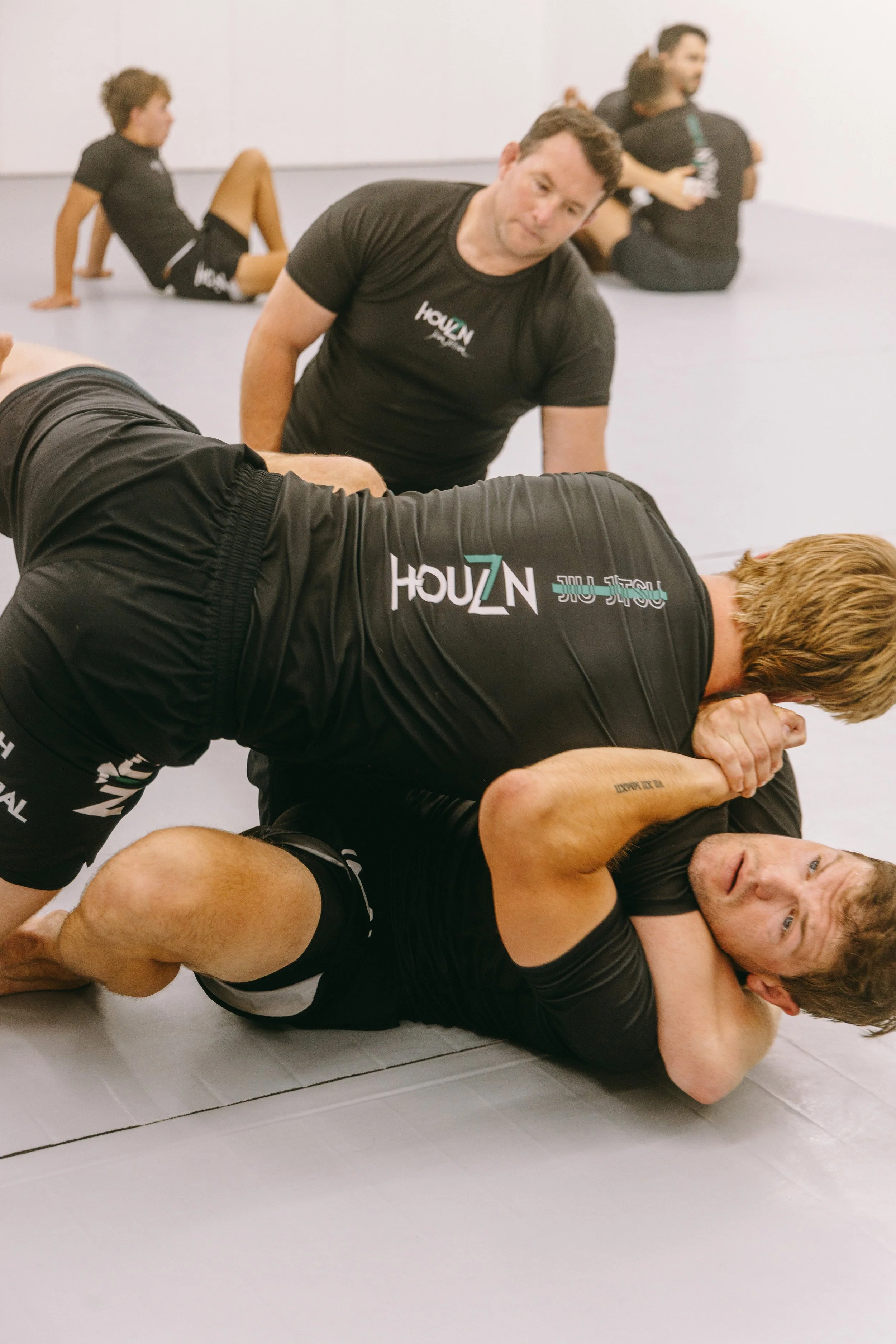
At the center of Van’s relationship with Jiu Jitsu is the challenge. The sport demands physical effort in a way that cannot be faked. There is pressure to carry, balance to manage, and fatigue to push through. Some days it feels like the hardest part is simply staying calm while the body is working. But Van also values that jiu jitsu does not stop at the physical. It forces attention, decision-making, and problem-solving in real time. The mind has to stay present while the body is under stress. A single round can feel like a moving puzzle where timing matters as much as strength, and patience matters as much as explosiveness. That blend of physical and mental challenge is a big reason he continues to train.
Van’s background in ministry also influences his approach on the mats. Pastoral work puts a person in constant contact with real life. People come with burdens, doubts, setbacks, and questions that do not have simple answers. Over time, that kind of work tends to form a steady perspective, and it shows up in the way Van talks about humility. He sees humility not as a personality trait that some people have and others lack, but as a posture a person chooses and practices.
Jiu Jitsu makes that posture necessary. It has a way of exposing ego quickly, whether someone is new or experienced. A smaller training partner can outmaneuver a stronger one. A familiar technique can stop working when another person’s timing improves. A moment of carelessness can lead to a quick tap. In that environment, it becomes difficult to pretend. Van believes the healthiest way to train is to stop trying to protect an image and to focus instead on learning. He is wary of the trap of comparison, where training becomes less about growth and more about keeping score. In his view, improvement accelerates when a person becomes willing to be a student again and again.
That mindset matters most during the stretches when progress feels slow. Van is clear that plateaus happen to everyone. Even when training is consistent, the results do not always feel immediate. The skills often develop quietly in the background, and a student may not notice the change until months later. Van encourages people to stay the course. He sees progress in the small shifts that are easy to miss at first, like recognizing a position earlier than before, staying calmer under pressure, or making a defensive movement at the right time instead of the wrong time. Those changes may not look dramatic, but over time they stack into real ability.
He also recognizes that consistency has to be realistic. Family responsibilities, work schedules, stress, and recovery all shape what training can look like in a given season. For Van, consistency is less about doing the maximum and more about doing what can be sustained. A steady rhythm tends to beat a short burst of intensity followed by burnout. That same principle applies to the mental side of training as well. Jiu Jitsu rewards patience. It rewards people who can keep returning to fundamentals, even when those fundamentals feel repetitive, because that is where the sport becomes reliable.
After more than a decade of training, Van still finds enjoyment in being challenged. That may sound surprising to someone who assumes a black belt has “figured it out,” but he does not view the belt as an ending. He views it as a foundation. The higher the skill level, the more the details matter, and the more the sport opens up. A small adjustment in posture can change an entire exchange. Timing can turn a defensive moment into an offensive one. A detail mentioned in passing can fix a problem that has lingered for months. Van appreciates that the learning never really stops. For him, that is not frustrating. It is the point.
Another part of Van’s story is the community that grows around Jiu Jitsu. Training partners are not background characters; they are essential to improvement. People learn by working with one another, troubleshooting positions, and sharing what they notice. Over time, that process builds trust. It also builds relationships that are hard to replicate in activities where people never have to rely on each other in a practical way. Van counts some of his closest friendships among the people he has trained with, and he values the kind of connection that forms when people work hard together.
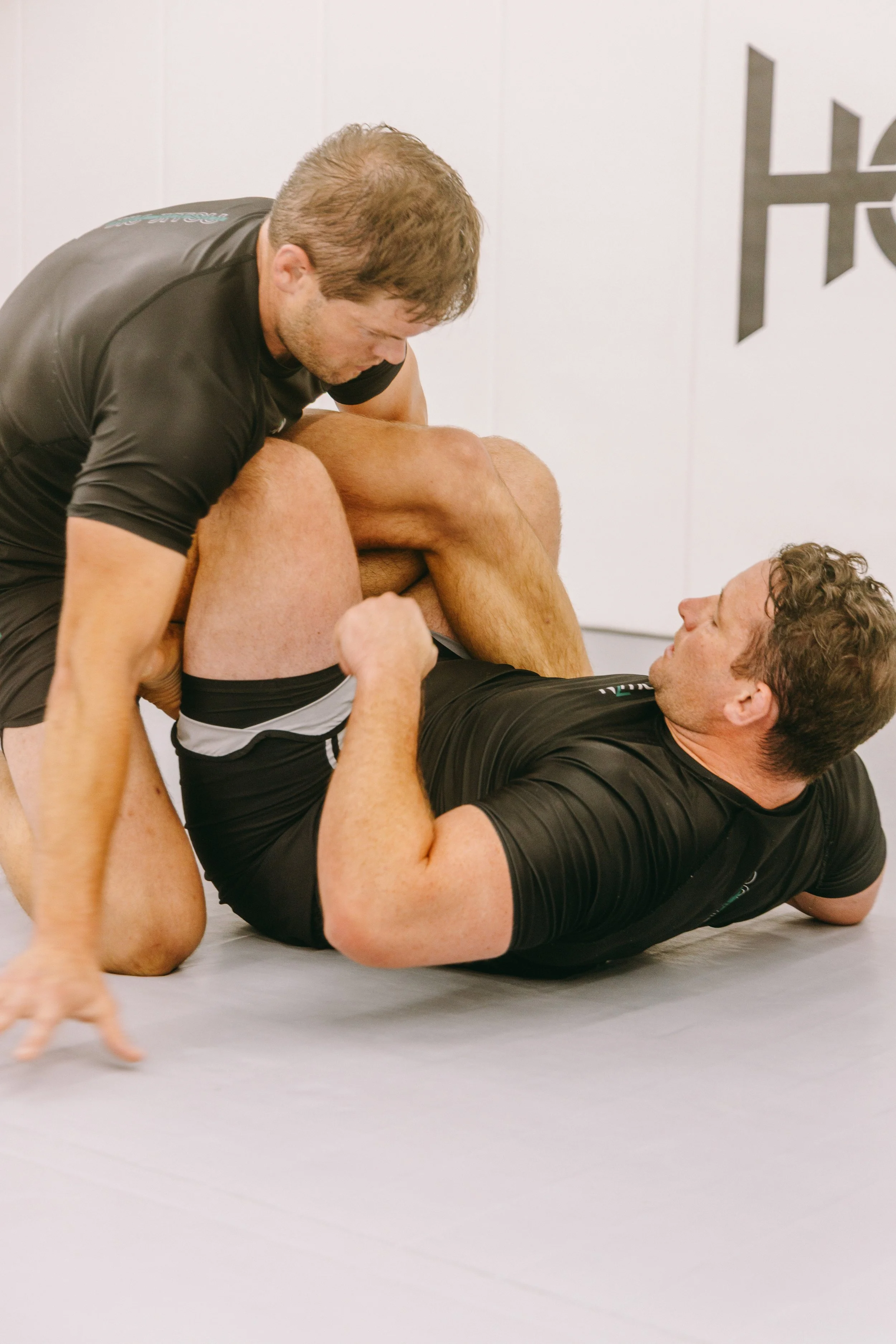
Since joining Houzn Jiu Jitsu Academy in February 2026, Van has noticed the intention behind the environment. He has pointed to the structure of classes, the tone on the mats, and the overall atmosphere as signs of a healthy academy. Those details matter, especially for beginners. A beginner does not just need good instruction; a beginner needs a place that teaches clearly and trains safely. Van believes the culture of a gym determines whether people can stay long enough to truly benefit from the art. When a school is organized and the training is respectful, students are more likely to relax, learn, and keep coming back.
Van’s example is also a helpful reminder for anyone who feels hesitant about trying Jiu Jitsu. His early days were not polished. He tapped repeatedly, felt confused, and had to learn the language from the beginning. The difference is that he did not treat confusion as proof that he did not belong. He treated it as part of the process. That approach is often what separates people who quit from people who grow. Jiu Jitsu does not require perfection on day one. It requires honesty, patience, and the willingness to be taught.
Houzn Jiu Jitsu Academy is located in Mount Pleasant, South Carolina, and serves students from Park West, Carolina Park, Belle Hall, Old Village, I’On, and Daniel Island. For anyone who has been curious, the simplest and most useful step is to try a class and experience the training environment firsthand. One visit tends to answer questions that weeks of online searching cannot.
To learn more or ask about a trial class, visit https://www.houznjiujitsu.academy/. If Van is on the mats, it is safe to assume he will still be working on something—because for him, that is the best part.