Brazilian Jiu Jitsu for Kids: A Safe Outlet That Builds Focus
Many parents come to us saying some version of: “My child has a lot of energy.”
Sometimes that’s said with a smile. Sometimes it’s said with exhaustion. And sometimes it’s said with a little worry behind it, because you’re not just trying to “wear them out.” You’re trying to help them feel settled in their own body, get through the day without constant battles, and build the kind of confidence that isn’t loud or reactive.
At Houzn Jiu Jitsu Academy, we see high-energy kids all the time. We also see the parents who are doing their best to guide that energy without crushing their spirit. That’s the real job. The good news is: movement helps, structure helps, and the right kind of training can do both at the same time.
Jiu Jitsu gives kids a place to move hard and learn boundaries in the same hour. It’s not “run until you drop.” It’s not “sit still and behave.” It’s controlled intensity, coached closely, with clear rules and a culture that rewards listening, respect, and self-control.
Exercise is good. Regulated exercise is better.
Any physical activity can tire a kid out. Most sports will burn energy. The difference with Jiu Jitsu is that it teaches kids to switch gears on purpose.
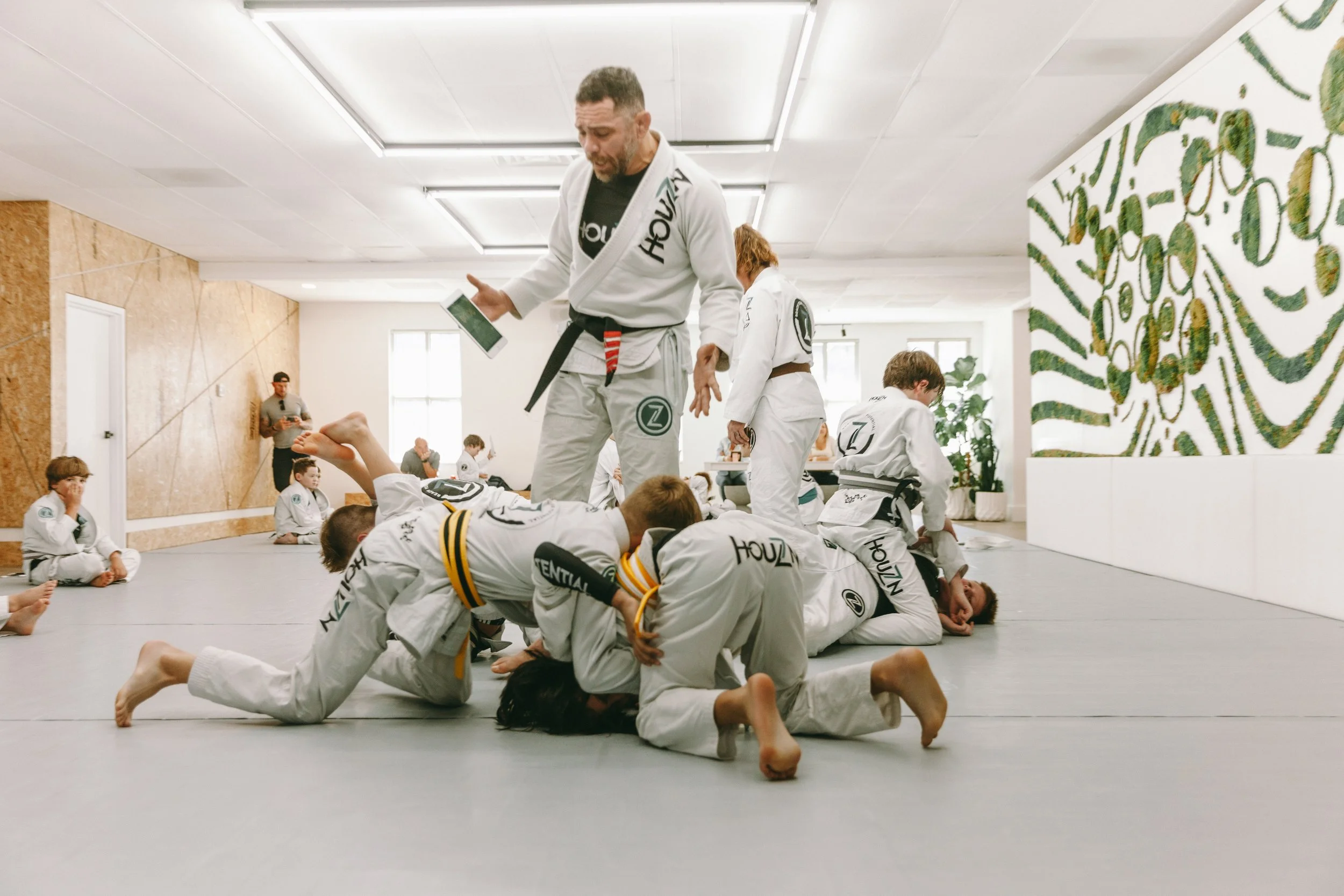
In one class, a child may go from playing a warm-up game, to standing in line and listening, to drilling a movement slowly, to doing a short round with a partner, then back to stillness while the coach explains what comes next. That constant change is not a flaw. It’s one of the benefits.
A lot of high-energy kids don’t struggle because they “have too much energy.” They struggle because they don’t yet know how to regulate it. They go from zero to one hundred and have a hard time finding the middle. Jiu Jitsu gives them practice living in that middle. They learn how to turn it on, and then turn it back down, without being shamed for being intense.
They learn to explode briefly, then slow down. They learn to listen even when their heart rate is up. They learn to control their hands and feet around another human being, which is a big deal. They learn to breathe under pressure, because if you hold your breath in Jiu Jitsu you get tired fast and you panic faster. These aren’t just “skills for the mat.” They’re nervous system skills. That’s why the effects can show up at home, at school, and in social settings.
Why Jiu Jitsu helps with transitions
Many kids struggle with transitions. Leaving the house can be a meltdown. Turning off screens can feel like you’re starting a fight. Shifting from play to homework can turn into stalling, arguing, or tears. Bedtime can drag on because their body is tired but their system is still “on.”
Transitions are a regulation skill. And in Jiu Jitsu, transitions are constant.
From the kid’s point of view, class is a sequence of “now we do this, now we stop, now we reset, now we listen, now we go again.” The coach gives simple instructions. The room has clear expectations. The child gets immediate feedback. If they jump ahead, they’re guided back. If they freeze, they’re coached forward. If they get frustrated, they’re taught how to pause and re-engage.
Over time, kids start to carry that rhythm into their day. They don’t become perfect, and we don’t expect them to. But many parents tell us they start seeing fewer “hard stops” and more “okay, what’s next?” That’s the shift we’re after.
There’s also something important here: in a good Kids Jiu Jitsu class, transitions aren’t punitive. A child isn’t being corrected because they’re “bad.” They’re being coached because they’re learning. That keeps the emotional tone healthy. It’s firm, but it’s not harsh. Kids can feel that difference. So can parents.
Why the close-contact part matters (and why we handle it carefully)
Some parents worry about the fact that Jiu Jitsu is close contact. That’s reasonable. It’s also one of the reasons it works so well when it’s coached the right way.
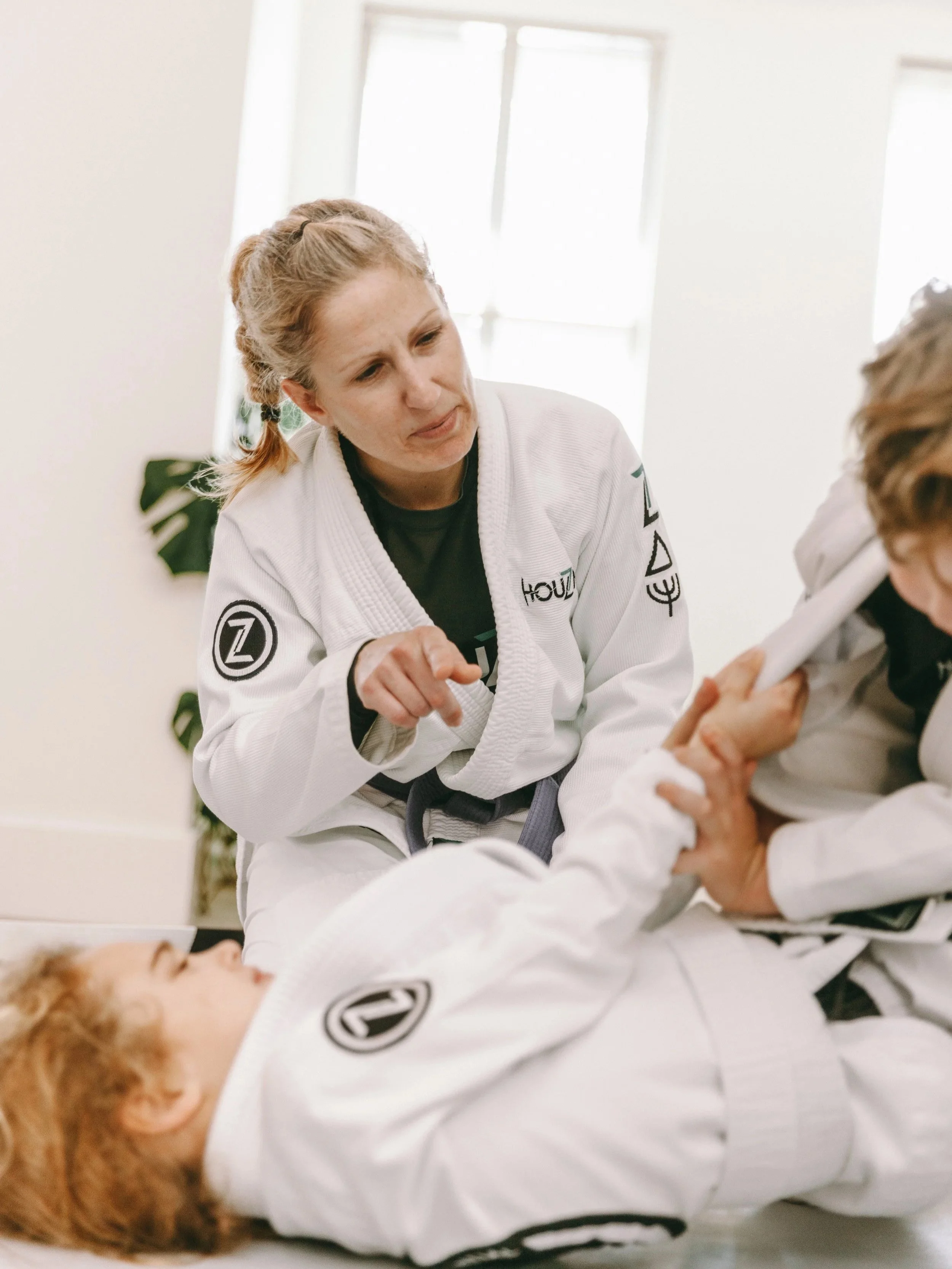
In Jiu Jitsu, a child has to become aware of their body in relation to someone else’s body. They have to learn personal space, pressure, balance, and control. They also have to learn consent and boundaries in practical terms. We match partners thoughtfully. We correct roughness immediately. We teach kids how to train safely and respectfully, not just how to “win.”
For high-energy kids, this is powerful because it channels intensity into control. They learn that strength without control doesn’t help. They learn that speed without awareness leads to mistakes. They learn that being “wild” makes things harder, not easier. And they learn it in a way that makes sense to them because it’s physical and immediate.
When kids start to understand that calm beats chaos, you’ll often see a different kind of confidence develop. It’s not the confidence of acting tough. It’s the confidence of knowing what to do.
The role of discipline (and what we mean by it)
Discipline gets misunderstood. Some people think discipline means punishment. Others think it means pushing a kid until they break. That’s not what we’re doing.
The kind of discipline we care about at Houzn is personal responsibility. It’s learning to show up, follow instructions, and keep trying. It’s learning to be coachable. It’s learning to be a good partner. For a high-energy kid, discipline is not about shrinking them down. It’s about giving their energy a direction.
A good kids program also teaches moral basics without preaching. Treat others the way you’d like to be treated. Take ownership for your actions. Be honest about what happened. Apologize when needed. Get back in line and try again. That’s real character training, and it happens through normal moments, not speeches.
What parents might notice at home
If your child’s energy feels hard to manage right now, it helps to know what change can look like. A lot of parents report improved sleep, especially on training days. Some notice an easier evening routine because their child’s body finally feels like it had a productive outlet. Some notice less “wired” behavior, where the kid is tired but still bouncing, still impulsive, still restless.
Appetite often improves when training becomes consistent, because the child is actually using their body in a meaningful way. Mood can improve too, not because Jiu Jitsu is magic, but because movement, belonging, and progress are good for a kid’s brain. The child starts to feel capable. They start to feel like part of something. They start to see that effort creates results.
This isn’t always immediate. Some kids need a few weeks just to get comfortable. Some kids have a “honeymoon phase” where they’re calm for a day, then they go right back to normal. That’s okay. We’re not chasing a quick fix. We’re building a long-term skill: regulation.
It’s also normal for kids to be a little more emotional after class early on. Training can bring up frustration. They’re learning new movements, being corrected, and dealing with small failures. For a child who isn’t used to structured struggle, that can spill out later. If that happens, it doesn’t mean Jiu Jitsu is harming them. It often means they’re finally practicing resilience in a real way. With consistent coaching and supportive parenting, those emotions usually settle into confidence.
What frequency works best for “high energy” kids
Parents ask us all the time how many days a week a child should train. The honest answer is: it depends on the child, the family schedule, and what you’re trying to improve first.
Some kids do great with one or two classes a week as a steady rhythm. Others need three classes a week because the consistency helps them regulate better. More is not always better, especially if the child is already overwhelmed. The right dose is the one that your family can sustain without constant stress.
When parents tell me they want “better behavior,” I usually steer them toward consistency over intensity. A predictable schedule and a clear routine around class helps more than trying to cram in a bunch of sessions and burning out. Jiu Jitsu works when it becomes part of the lifestyle, not a punishment or a panic move.
How we keep it safe and respectful
If you’re considering kids Jiu Jitsu in Mount Pleasant, or you’re already training with us and you’re trying to decide if it’s the right fit long-term, safety is not an afterthought. It’s the foundation.
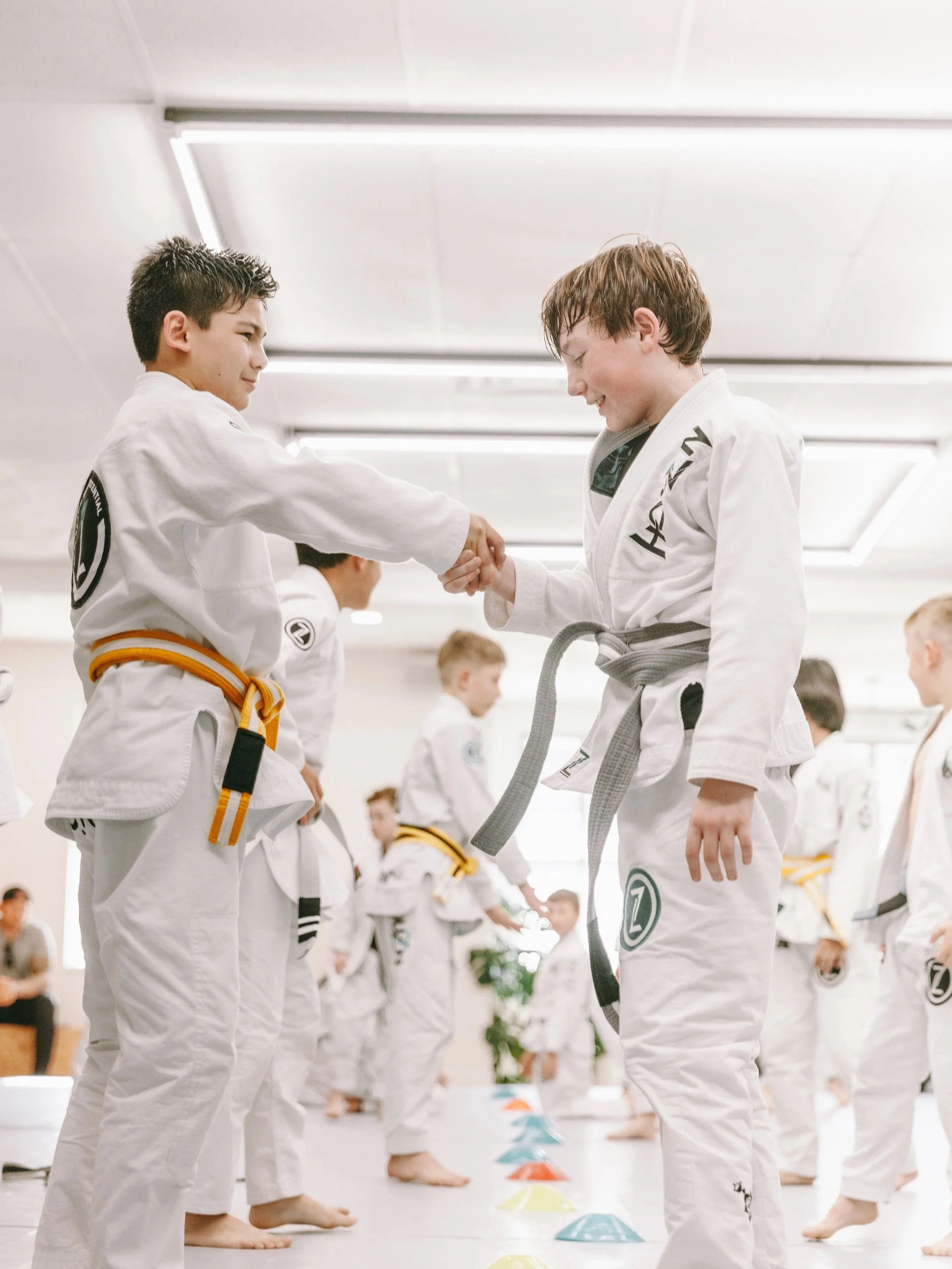
Kids need structure, and they need to know the room is controlled. That means we enforce rules, we coach the details, we stop unsafe behavior quickly, and we teach kids how to be good training partners. It also means we don’t confuse aggression with confidence. A confident child is not the one who dominates everyone. A confident child is the one who can stay calm, listen, and keep learning.
That culture matters as much as the techniques. You can get “tired” anywhere. What you’re looking for is a place where your child learns to handle pressure and responsibility in a way that makes them better outside the Academy, too.
If your child’s energy feels hard to manage, grab your kids coach after class to ask questions. We can help you choose the right class frequency and focus, and we’ll tell you honestly what we think will work best for your child and your family.