Kids Jiu Jitsu Builds Listening Skills: Following Directions Under Pressure
Parents sometimes tell us, “My child knows what to do. They just don’t do it.”
We hear that a lot, and we get why it’s frustrating. You’ve explained it. The teacher has explained it. They can repeat the rule back to you. And then, in the moment, it’s like it never existed.
The first thing I want you to know is this: for most kids, that gap between knowing and doing isn’t a character flaw. It’s a skill gap. Knowing is a thinking skill. Doing is a nervous system skill. Doing requires timing, attention, self-control, and the ability to stay steady when emotions spike. Those are trainable.
That’s one of the reasons Kids Jiu Jitsu works so well for listening and follow-through. Not because it’s “tough” or because we lecture kids about discipline. It works because the environment quietly trains the exact sequence your child struggles with: hear a cue, hold it in their mind, control their body, and apply it under a little bit of pressure.
If you’re in Mount Pleasant or nearby and you’re searching for Kids Jiu Jitsu that helps with behavior, focus, and listening, this is the heart of it. Jiu Jitsu doesn’t just tell kids what to do. It gives them thousands of reps at doing it.
Listening is harder than it looks
Most parents aren’t actually asking for perfect obedience. What you’re really asking for is something like this: “When it matters, I want my child to slow down, take in what I’m saying, and follow through.”
That is a high-level skill for a developing brain.
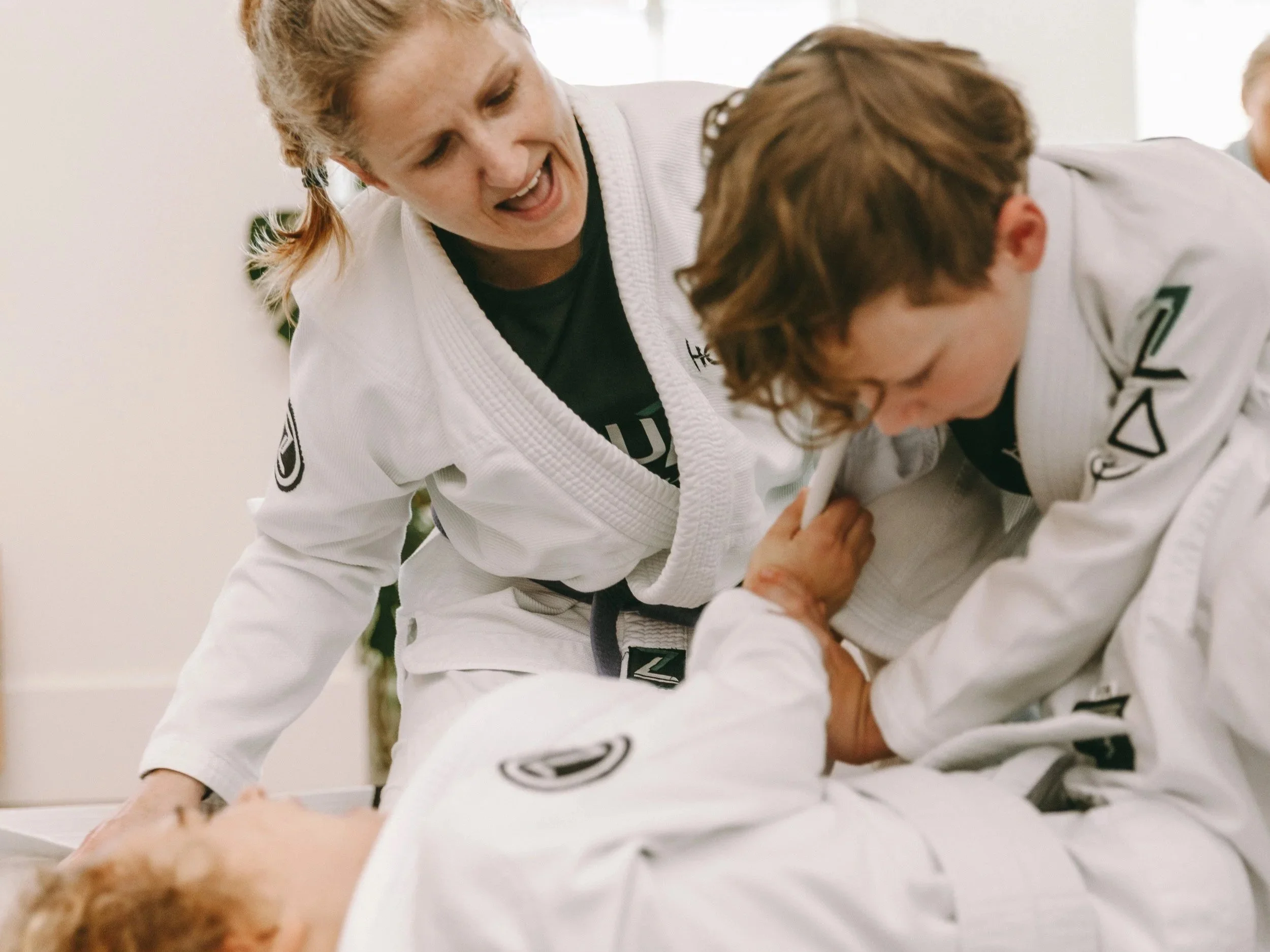
Kids struggle to listen when they’re excited, embarrassed, frustrated, tired, hungry, overstimulated, or trying to impress friends. Sometimes they struggle because they’re anxious and their mind is already racing ahead. Sometimes they struggle because they’ve had a full day of holding it together at school and they’re out of bandwidth by the time you pick them up. Sometimes they struggle because they’re still learning how to switch gears from play mode to instruction mode.
None of that means your child is “bad.” It means their attention and self-regulation haven’t been trained enough for the situations you’re putting them in. And that’s normal.
In kids classes, we see the whole range. We see kids who want to be the first to move, the first to answer, the first to show a friend what they know. We also see kids who freeze up when they’re unsure and then act silly to cover it. We see kids who do great one day and then struggle the next because they’re tired or their routine changed.
That’s not a reason to quit. That’s the training.
How Jiu Jitsu trains listening in a realistic way
At Houzn Jiu Jitsu, we don’t train “listening” as an abstract idea. We train it as a behavior that has consequences and rewards you can feel immediately.
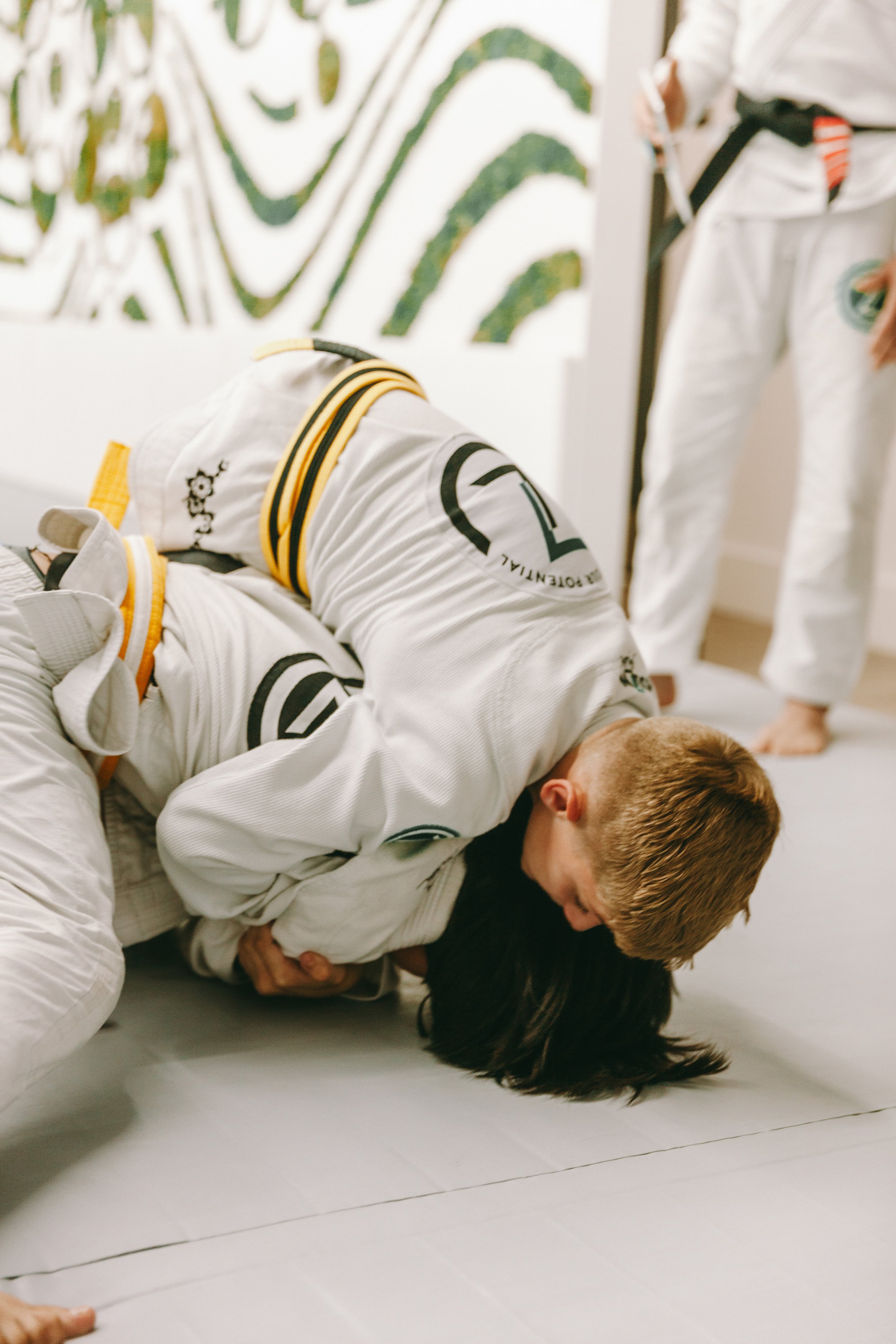
In a typical kids class, your child hears a safety rule. They hear a technical detail. They hear a timing cue. They hear an instruction about their partner. Then they have to apply it with their body, right away, in real time.
If they don’t listen, it shows up instantly. Not as punishment, not as shame, and not as a lecture. It shows up as the technique not working. Or the position falling apart. Or the partner escaping. That’s the feedback loop most kids need.
A lot of the world gives kids delayed feedback. “Stop doing that or you’ll get in trouble later.” “Do your homework because it matters for the future.” Those are true, but they’re too far away for many kids to feel in their body.
Jiu Jitsu gives immediate, clean feedback. If your hands go here, you can hold the position. If your hands go there, you can’t. If you keep your base, you don’t fall. If you reach too far, you get swept. If you breathe and slow down, you last longer. If you panic, you gas out.
That’s not just martial arts. That’s cause and effect training for the nervous system.
It also matters that Jiu Jitsu requires “dual attention.” Your child has to pay attention to the coach and to their own body at the same time. They have to notice where their knees are, where their hands are, where their partner’s weight is shifting. That kind of attention is different from sitting still and listening. It’s active listening. It’s embodied listening. And kids who struggle with passive listening often do surprisingly well with this, because it gives their brain something to do.
There’s another piece parents don’t always see at first: listening in Jiu Jitsu includes listening to the room. Kids learn that certain moments are for movement and certain moments are for stillness. They learn how to look at the coach when instruction starts. They learn how to wait their turn. They learn how to stop when told to stop, even if they’re in the middle of something fun.
That last part is big. Stopping on cue is one of the clearest signs of self-control. We practice it constantly, and we practice it without making it dramatic. It’s just part of the culture.
Why repetition matters (and why we don’t rush)
Parents sometimes worry we’re doing “the same stuff.” We understand that worry, especially if you’re used to sports where each week looks totally different.
Here’s what we know after years on the mat: basics are not “beginner stuff.” Basics are the stuff you can still do when you’re tired, nervous, or under pressure.
When a child is calm, they can do a lot. When they’re stressed, they can do what they’ve repeated.
That’s not a motivational quote. That’s how habits work. Under pressure, the brain doesn’t get more creative. It gets more efficient. It defaults to the pattern it knows best.
So when we repeat shrimping, base, posture, frames, and simple escapes, we’re not stalling. We’re building reliability. For kids who struggle with listening and follow-through, reliability is the goal.
Repetition also teaches something deeper: patience. Kids learn that improvement isn’t magic and it isn’t instant. They learn that showing up matters. They learn that you can be frustrated and still keep going. They learn you don’t need a new trick every week to grow. You need consistent practice and good coaching.
And repetition makes the coach’s cues more meaningful. The first time a child hears “elbows tight,” it’s just words. The fiftieth time, it becomes a physical feeling they can recognize and correct. That’s when listening becomes doing.
How we keep it disciplined without being harsh
A lot of parents are looking for structure, but they don’t want a harsh environment. We agree with that. There’s a difference between high standards and heavy-handed coaching.
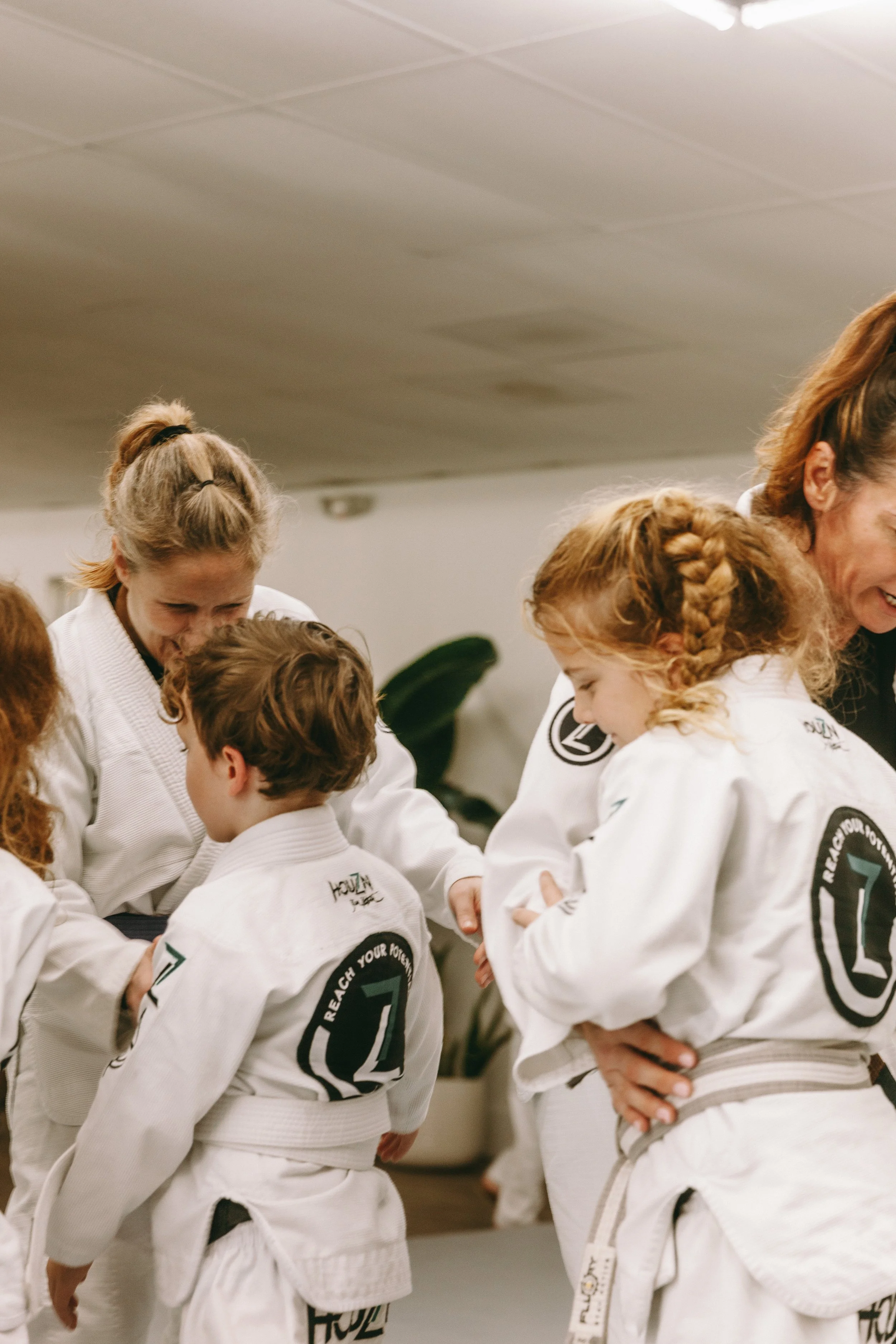
In our Kids Program, we keep the tone warm and clear. We correct behavior quickly, but we don’t label kids. We don’t call a child “lazy” or “bad.” We coach the action. We redirect. We reset. Then we let them succeed.
Kids need to feel safe to try. A child who is afraid of embarrassment will often stop listening because their brain is busy protecting them. When the room is respectful, kids take more responsibility. They settle faster. They recover from mistakes faster.
That’s also why we’re careful about partner pairings and intensity. When kids feel physically safe, their nervous system is more available for learning. If they’re worried they’ll get crushed or laughed at, they won’t absorb instruction. They’ll either shut down or act out.
Listening improves when the environment is both structured and safe.
What “better listening” looks like over time
Listening doesn’t usually improve in a straight line. It improves in moments. A child who used to ignore a cue starts catching it one out of five times. Then two out of five. Then they start self-correcting without being told. Then they start helping a newer kid remember the rule.
You might notice your child starts making eye contact more quickly when you give instructions. You might notice shorter recovery time after frustration. You might notice they can stop an impulsive action and reset. You might notice they can wait their turn without melting down. You might notice they can handle losing a round without spiraling.
Those are big wins, even if their room is still messy at home and they still argue about brushing teeth. Jiu Jitsu doesn’t turn kids into robots. It builds capacity. It gives them more “pause” between impulse and action.
And that pause is where listening lives.
What parents can do at home (that actually helps)
The best thing you can do at home is keep it simple and keep it positive. After class, instead of quizzing your child with a bunch of questions, ask them to teach you one cue.
Not a whole technique. One cue.
It could be “posture up.” It could be “elbows in.” It could be “base wide.” It could be “hips away.” Let them show you on the living room floor for 30 seconds. When kids teach, they have to organize the idea, find the words, and demonstrate with their body. That strengthens the same “knowing-to-doing” pathway we’re building on the mats.
If they don’t want to teach that day, don’t force it. Just try again another time. The goal is to make Jiu Jitsu feel like a place where they’re growing, not another place where they’re being tested.
Also, if listening is a major challenge, don’t carry it alone. A good kids coach wants to help. We can give you age-appropriate cues, simple goals, and a plan that matches your child’s temperament. Sometimes it’s as small as giving a child one focus point per class instead of five. Sometimes it’s adjusting where they stand in line so they’re less distracted. Sometimes it’s pairing them with a steadier partner. Those small changes can make a big difference.
If you want help with this, grab your kids coach after class or ask for a conference. Tell us what “not listening” looks like at home and at school. We’ll help you choose specific cues and goals for your child’s age group, and we’ll work together from there.
Because the point isn’t just that your child knows what to do.
The point is that, little by little, they become the kind of kid who can do it when it counts.