
From Sidelines to the Mat: Trey Harrell on Family, Fitness, and Jiu Jitsu
Trey Harrell didn’t walk into Houzn Jiu Jitsu Academy because he thought he’d be the next world champion.
He walked in because his son did first.
In early 2025, Trey’s son Ford joined our kids program here in Mount Pleasant, SC. Like a lot of parents, Trey started on the sidelines—watching, listening, learning the rhythm of the room. He saw his kid step onto the mats, bow in, fumble through the first warmups, and keep coming back. Over time, he watched something shift: posture changed. Eye contact changed. The way Ford handled frustration changed.
And Trey noticed something else, too: even the most athletic, outgoing kids still need a place where adversity is real—but controlled.
Not chaos. Not bullying. Not “toughen up” for the sake of ego.
Real pressure, guided by coaches, inside a culture that’s built on respect.
That’s what Brazilian Jiu Jitsu can do when it’s taught well. And it’s why Trey eventually decided to stop watching from the edge of the mat and start leading from the front.
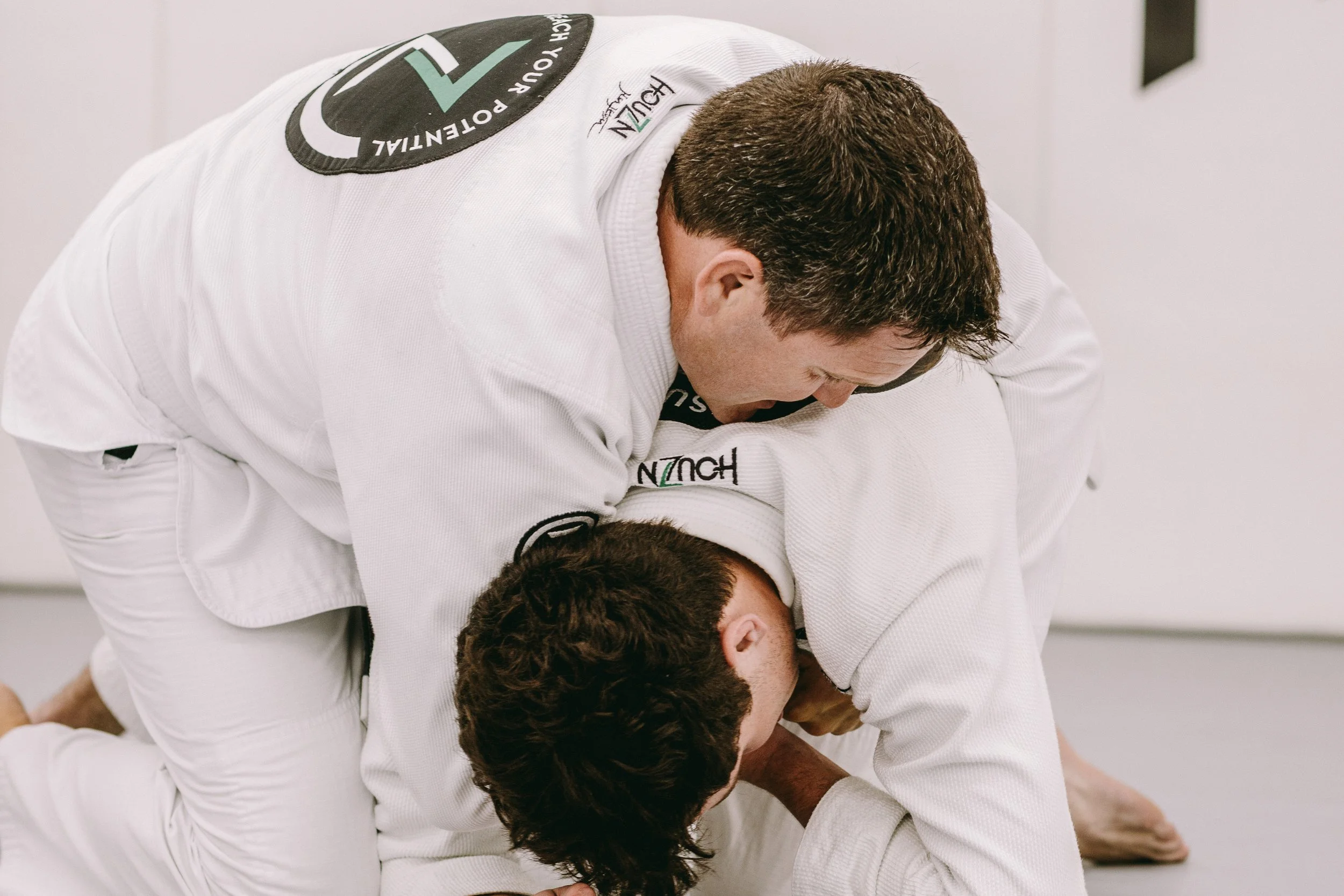
From “Ford’s thing” to a family on the mats
If you know Trey around Charleston, you’ve probably seen him in a few places.
He’s an auto accident attorney and the owner of Trey Harrell Law Firm. He’s active in the Charleston community, and “Trey Helps” goes way beyond car wrecks. He shows up. He gives back. He’s also a recurring guest on the Palmetto Life segment on Live 5 WCSC, and he’s consistently putting out helpful content on Instagram and TikTok—quick, practical tips about what to do (and what to avoid) if you’re involved in a car accident.
That same energy shows up at the Academy.
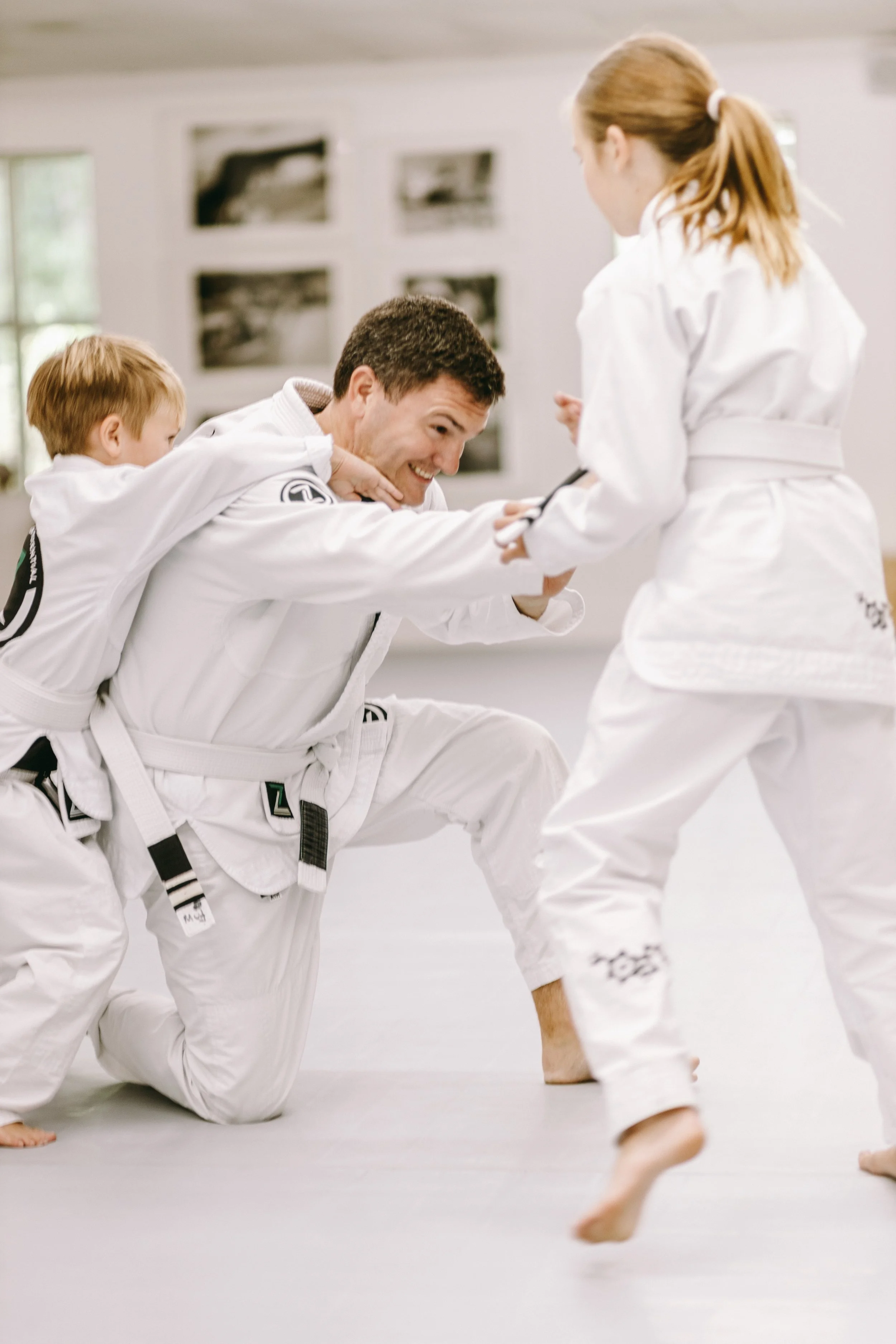
Less than a year after Ford started, Trey joined too. And then it became official: Houzn Jiu Jitsu wasn’t just a kids activity. It became a family affair.
Trey is fun to be around. He brings good vibes into the room without trying to “run the room.” Always in a good mood, always with something positive to say. He’s the kind of teammate who makes a hard class feel doable—especially for the person who’s nervous and standing near the wall wondering if they’re about to make a mistake.
Now Trey, Ford, and Lucy, his daughter are all training. And Trey’s got one more goal on the horizon: “I’m hoping one day I’ll have my wife on the mats too.”
If you’ve ever tried to build a healthy habit as a family, you know how rare that is. When the whole household shares a practice, it changes dinner conversations. It changes weekends. It changes the way kids see consistency, and the way parents stay accountable.
And in a time when everything pulls attention in different directions, that kind of shared momentum matters.
The part nobody admits: starting is intimidating
Trey will tell you straight: the biggest challenge is simply getting on the mat.
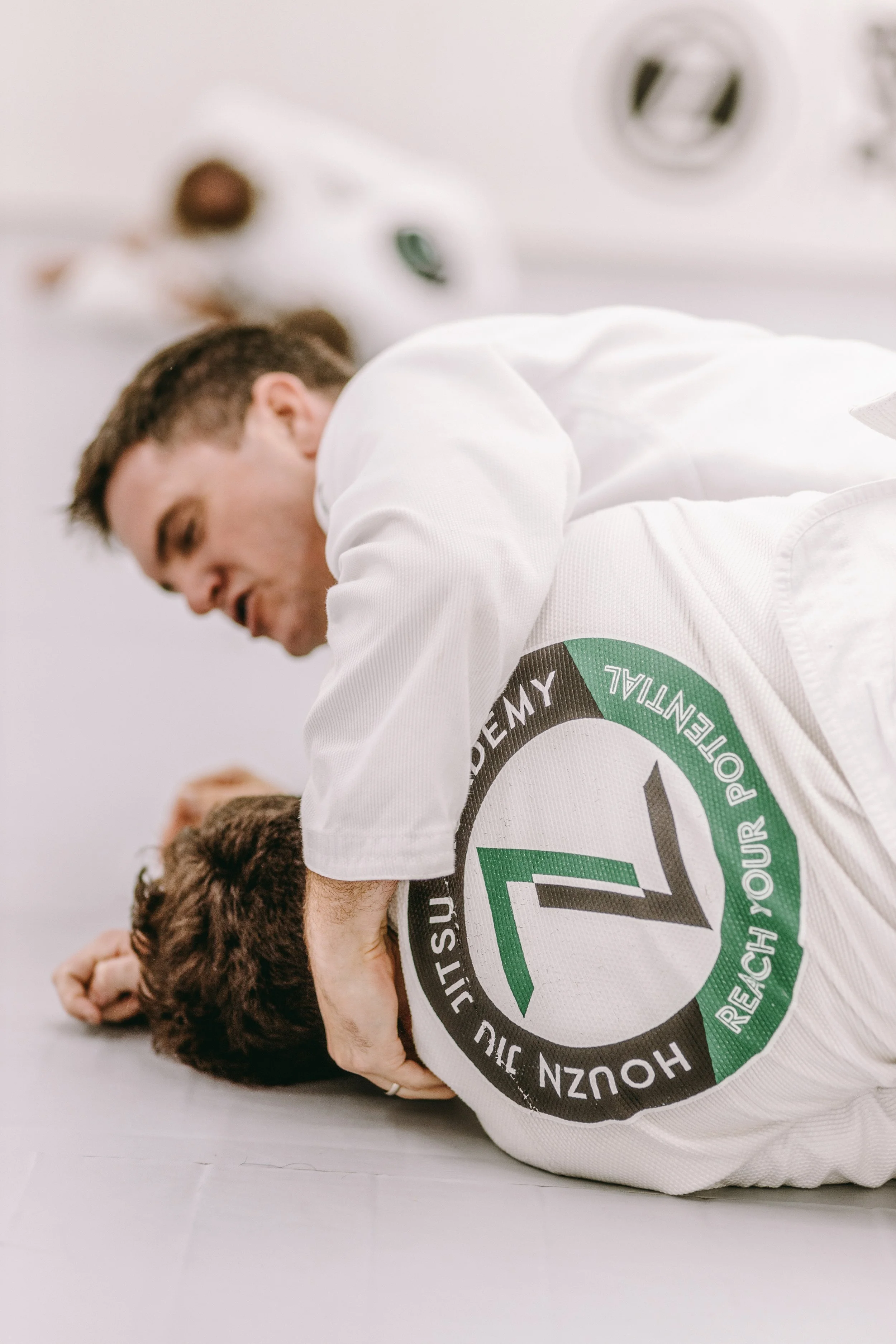
It’s intimidating to be the new person—especially walking into a room with bigger, stronger, more experienced practitioners. It’s not just physical. It’s psychological. Most adults are successful in their careers and used to being competent. Then they step into Jiu Jitsu and instantly feel like a beginner again.
That moment brings up a lot: self-consciousness, comparison, fear of embarrassment, fear of injury, fear of not “belonging.”
This is where most people quit—before they ever start.
And Trey’s perspective here is a big reason his story matters for beginners: he doesn’t pretend that feeling goes away overnight. He simply treats the willingness to put yourself out there as a win.
Because it is.
In psychology, we’d call that a healthy shift from outcome-focus to process-focus. Instead of measuring your worth by how you perform, you measure your growth by whether you showed up and engaged with the process. That creates momentum. And momentum creates identity: “I’m someone who does hard things.”
On the mat, that identity gets built one class at a time.
“Your job as a white belt is just to survive”
Someone once told Trey, “Your job as a white belt is just to survive.”
If you’re new to Brazilian Jiu Jitsu, that might sound funny. But it’s one of the most helpful beginner mindsets out there—because it gives you permission to be new. It also gives you a clear target in the early months: don’t win everything; don’t know everything; don’t rush.
Survive. Learn. Come back.
Trey took that idea and ran with it—not just as a Jiu Jitsu motto, but as a way to live. He believes that mentality helps you grow from someone who survives into a thriving individual. And that applies off the mats too: in business, in parenting, in stressful seasons where you just keep doing the next right thing.
At Houzn Jiu Jitsu, we see this in beginners all the time. The first phase isn’t glamorous. It’s learning how to breathe when you’re uncomfortable. It’s learning what “safe intensity” feels like. It’s learning how to tap early, how to reset, how to ask questions, how to trust your training partners.
It’s also learning that you can do something hard without being crushed by it.
Small wins that society doesn’t train us to notice
One of Trey’s favorite parts of Jiu Jitsu is how it teaches you to recognize small wins.
He’ll say it plainly: if you can keep from being submitted longer than 30 seconds when sparring with someone more experienced, that’s a big win. It means you’re learning.
That’s a mindset most adults don’t have anymore, because modern life trains us for instant gratification. We want fast results, quick validation, and clean progress.
Jiu Jitsu doesn’t work like that.
Progress is earned. Not given. You don’t get better because you “meant to.” You get better because you showed up, paid attention, asked for help, and did the reps—again and again—until something clicks.
Trey compares it to how things used to be in the old days. You did the work. You earned respect through consistency. You became capable over time. And it’s refreshing to be part of something like that in this day and age.
When you train, you start to see improvement in a way that’s real and measurable—not just in stripes or belts, but in the lived experience of a round. You last a little longer. You stay calmer. You escape a position that used to feel impossible. You remember the grip placement. You feel your timing improve.
Trey has had breakthroughs during practice where things start to click in his head. And if you’ve trained before, you know exactly what he means: that moment when your body finally understands what your coach has been saying for weeks.
Those small victories make everything worthwhile.
Why Trey believes kids need controlled adversity
Trey’s also thoughtful about why he wanted his kids on the mats in the first place.
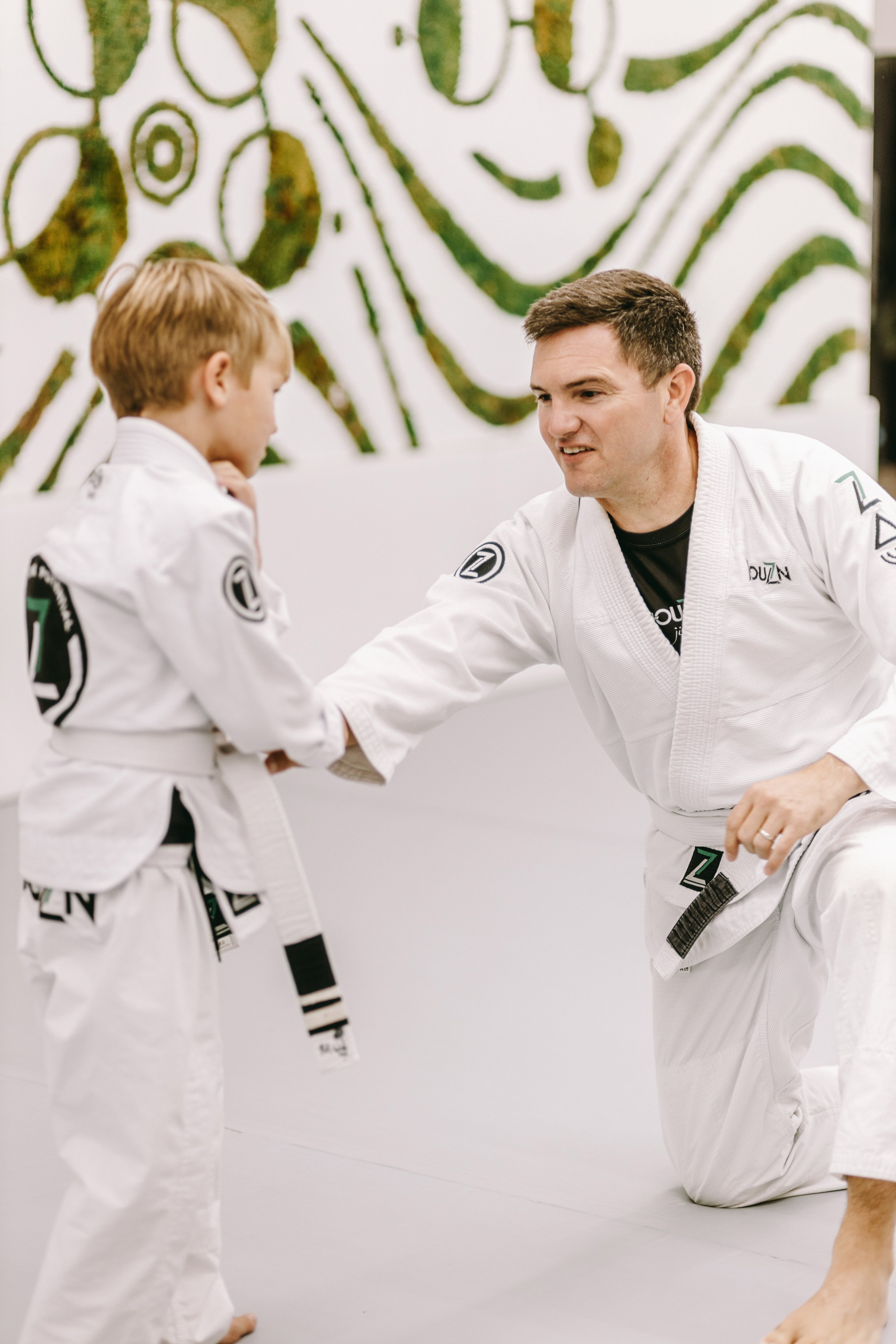
He believes Brazilian Jiu Jitsu is a great tool to expose and teach kids how to deal with real life adversities. Even the most athletic and outgoing kids need to be exposed to adversity in a controlled environment.
That’s a powerful idea for parents, especially in communities like Mount Pleasant where kids can be busy, talented, and still unprepared for pressure when it shows up socially, emotionally, or physically.
A good academy isn’t about turning kids into fighters. It’s about teaching them emotional regulation, boundaries, resilience, and responsibility. It’s about giving them a place to practice being uncomfortable—and learning they can handle it.
Trey appreciates how the academy environment has contributed to the growth in confidence of his kids. Not “hype confidence.” Real confidence—the kind that comes from competence, repetition, and being supported by coaches and teammates.
“Jiu Jitsu for beginners and advanced levels” means culture has to hold both
One thing we care about at Houzn is building a room that works for Jiu Jitsu for beginners and advanced levels at the same time.
That only happens when the culture is clear.
Beginners need to feel safe and welcomed without being treated like they’re fragile. Advanced students need challenging training without turning the room into an ego contest. The bridge between the two is leadership: coaches who set expectations, and teammates who remember what it felt like to start.
Trey fits right into that. He’s new enough to remember the intimidation, but committed enough to be steady. The result is something beginners can feel: a room that’s serious about growth, without being aggressive.
Training as you get older: “better than jogging”
Trey’s goal with Jiu Jitsu is simple and relatable: stay in shape while he gets older.
He’ll tell you it’s better than jogging or something basic. Not because jogging is “bad,” but because Jiu Jitsu keeps you engaged. You’re learning a skill. You’re solving problems. You’re using your body and your mind at the same time.
And there’s something else he values: being part of a community where everyone is striving for a goal.
That’s kind of refreshing right now.
In Mount Pleasant, we serve families from Park West, Old Village, Daniel Island, Carolina Park, Belle Hall, and I’On—and one of the most common things we hear from adults is that they miss community. They miss having a place where people know their name, expect them to show up, and celebrate progress that actually took effort.
That’s what Trey found here. And now his kids get to grow inside it too.
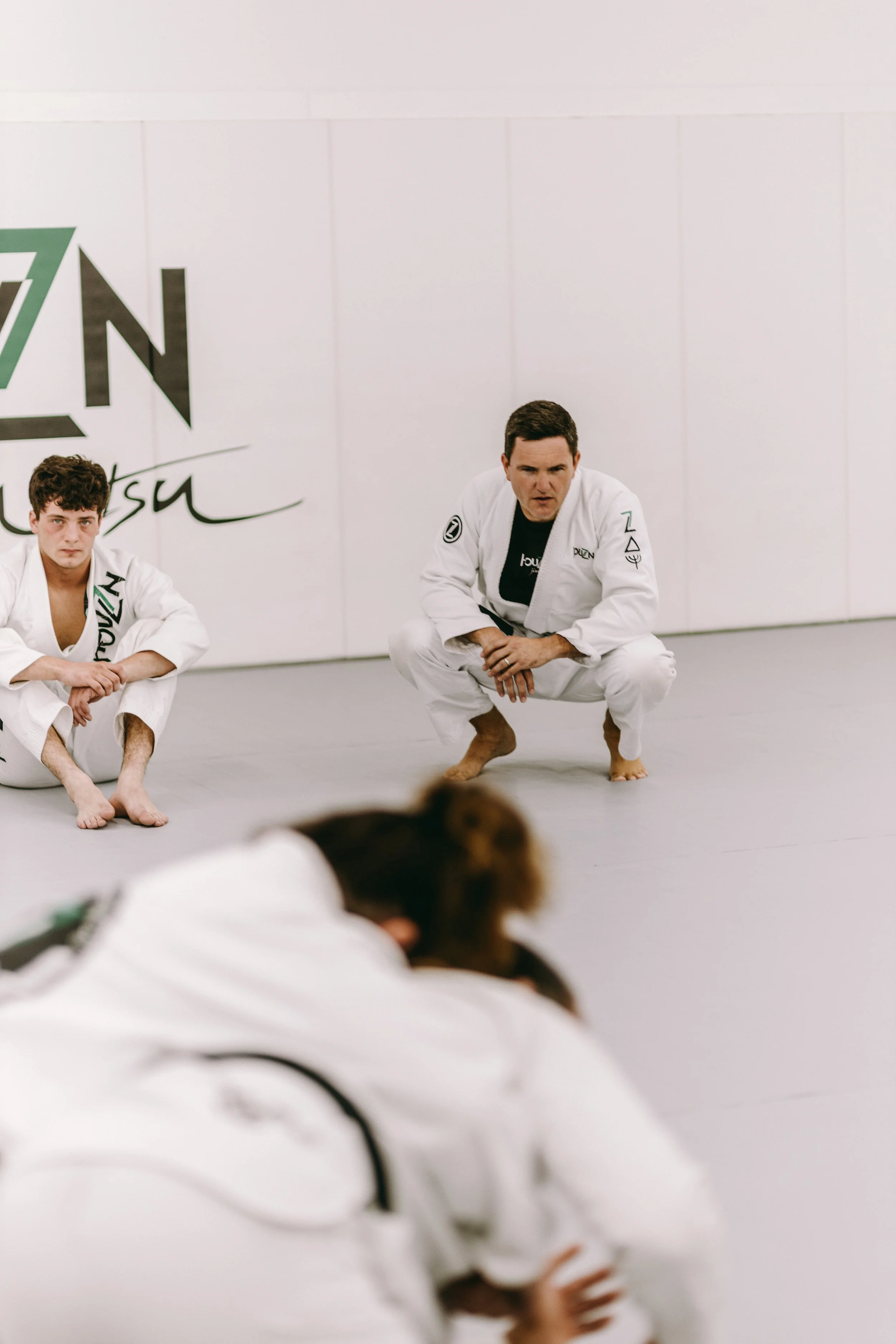
If you’re reading this as a beginner…
If you’re thinking about trying Brazilian Jiu Jitsu, here’s what Trey’s story should tell you:
You don’t have to be fearless. You just have to be willing.
It’s okay if your first goal is simply to survive class. It’s okay if your win is “I showed up.” It’s okay if you tap. It’s okay if you feel awkward. That’s not failure—that’s the process.
And if you’re a parent, you don’t have to choose between “my kid’s activity” and “my health.” You can build a family rhythm that makes everyone stronger.
If you want to connect with Trey beyond the mats, you can follow him on Instagram and TikTok, and you can check out his work and community efforts at treyhelps.com.
If you want to experience Houzn for yourself, come try 1–2 classes. Meet the coaches. Feel the room. Ask questions. We’ll help you find the right starting point.
To get started, visit our “start here guide” and book a trial class. If you’re not sure which class to pick, send us a message.
And if you’re already a Houzn teammate reading this—say what’s up to Trey next time you see him. He’s probably the one smiling, warming up with his kids, and quietly stacking small wins like they matter.
Because they do.