
Brazilian Jiu Jitsu for Kids: Handling Failure and Frustration the Right Way
Most kids don’t need more success. They need a healthier relationship with struggle.
As a parent, it’s hard to watch your child get frustrated. You want them to feel confident. You want them to enjoy what they’re doing. You want them to “win” often enough that they stay motivated.
But confidence that only shows up when things go well is fragile. Real confidence is what stays when your child is tired, confused, or behind. That’s the kind that transfers to school, friendships, and stressful moments at home. And that’s why Brazilian Jiu Jitsu can be such a powerful tool for kids.
Kids Jiu Jitsu creates controlled, coached “micro-failures” every class. That sounds negative, but it’s one of the best parts of training. In a good kids program, your child meets a challenge that’s just hard enough to stretch them, but safe enough to learn from. They make a mistake. They get stuck. They tap. They reset. Then they try again with a little more awareness than they had thirty seconds ago.
That cycle is the work. That cycle is the win.
It’s also the opposite of what a lot of kids experience today. Many environments are built to protect kids from discomfort, and I understand why. The world can be loud and fast and judgmental. But if a child never practices staying steady in discomfort, they don’t build the skill of recovery. Then a tough teacher, a hard test, a social conflict, or a bad sports game can feel like a personal crisis.
In Jiu Jitsu, struggle is normal. We don’t treat it like an emergency. We treat it like a training partner.
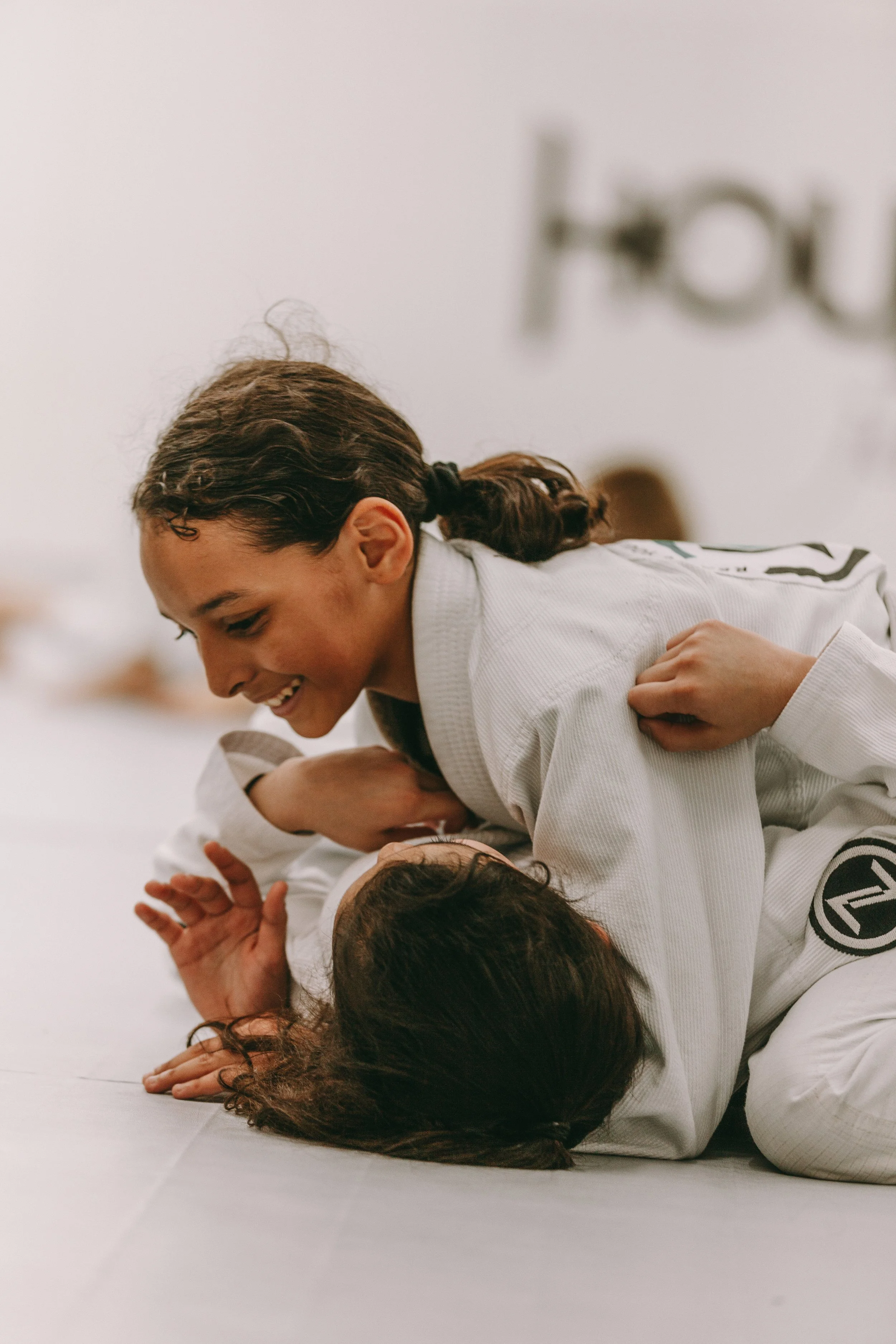
Why kids struggle with losing
Losing can hit kids in a few different places, and it often comes out fast. One moment they’re fine, and the next moment they’re overwhelmed.
Embarrassment shows up when a child thinks everyone saw them mess up, or when they compare themselves to a teammate who seems to “get it” faster. Fear shows up when they decide, in their own mind, that the struggle means they’re not good at this. Anger shows up when they feel a situation is unfair, or when they’re tired and their body is doing something it can’t quite control yet. Avoidance shows up when their brain starts connecting the activity with discomfort, and the simplest solution becomes quitting.
Those reactions are normal. They’re not character flaws. They’re nervous system reactions, and kids don’t always have the words to explain what’s happening inside them. What they do have is behavior, and behavior is communication.
The goal isn’t to eliminate emotion. The goal is to teach recovery.
Recovery means your child can feel something real, and still move forward. It means they can take feedback without collapsing into shame. It means they can have a hard moment and not turn it into a hard identity.
In our kids' classes, we don’t treat losing as a personal label. We treat it as information. If something doesn't work, we get curious. We adjust one piece. Then we try again.
The Jiu Jitsu “reset” is a life skill
Jiu Jitsu has a built-in mechanism that most sports don’t have: the tap.
In Jiu Jitsu, tapping is not a failure. It’s a safety signal and a learning moment. It’s your child saying, “I’m done with this position,” and the other kid immediately stops. That is a big deal. It teaches boundaries in a physical, practical way. It teaches that communication works. It teaches that safety matters more than pride.
And here’s the part parents don’t always realize at first: tapping also gives kids permission to try hard without panic. They don’t need to “survive” a bad spot forever. They just need to stay calm long enough to learn what’s happening, then reset.
When kids tap, they learn, “I can be in a bad spot and stay calm.” They learn, “I can stop safely and restart.” They learn, “I can learn without blaming.” They learn, “I can improve through repetition.”
That’s resilience in action.
Over time, that resilience starts to look like emotional control. A child who used to melt down after getting pinned learns to breathe and listen. A child who used to get angry learns to pause and problem-solve. A child who used to avoid challenges learns that discomfort passes, and that they can handle it.
I’ve seen kids who were nervous to even step on the mat become the kid who helps a new student feel welcome. That doesn’t happen because we hype them up. It happens because they practiced recovery so many times that their confidence became earned.
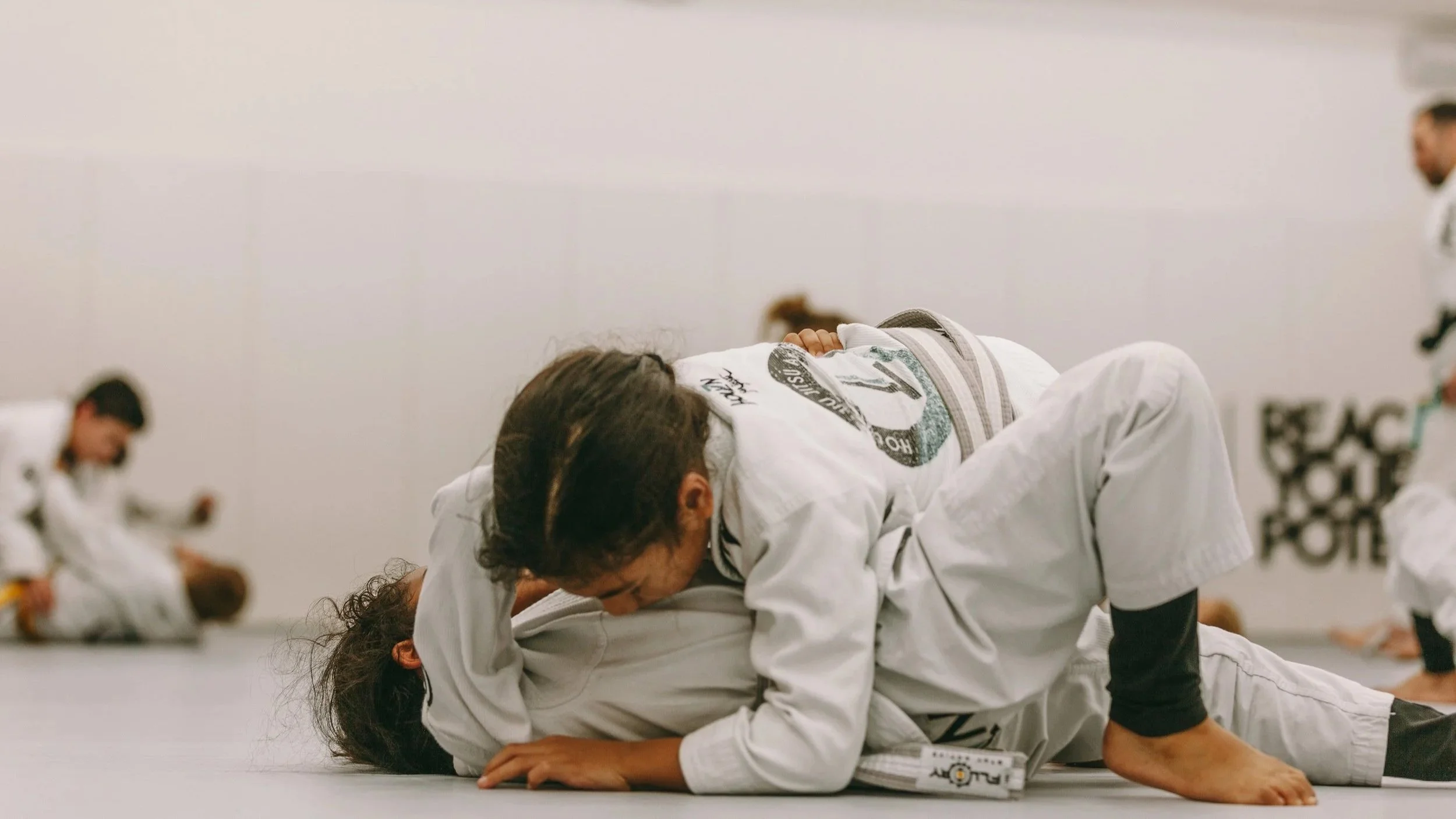
What “micro-failure” looks like in a kids class
Sometimes parents hear “micro-failure” and imagine we’re putting kids in harsh situations. That’s not what we mean. We’re not breaking kids down. We’re building them up with the right dose of challenge.
A micro-failure might be as simple as not being able to finish a movement yet. Maybe they can’t shrimp smoothly, or they forget which way to turn, or they lose balance during a technical stand-up. They try. It doesn’t work. We coach one correction. They try again. That’s a rep of patience.
It might be getting caught in a position during sparring. They feel pressure. They want to push away with straight arms and it doesn’t work. We teach them to frame, breathe, and turn. That’s a rep of composure.
It might be losing a grip fight, getting swept, or tapping to a simple submission that they didn’t recognize yet. That’s a rep of humility and learning.
The point is not the loss. The point is the reset. Jiu Jitsu gives kids a clear routine for what to do after things go wrong: pause, breathe, listen, adjust, and go again.
That routine is gold for kids, especially kids who struggle with frustration tolerance, anxiety, perfectionism, or impulse control.
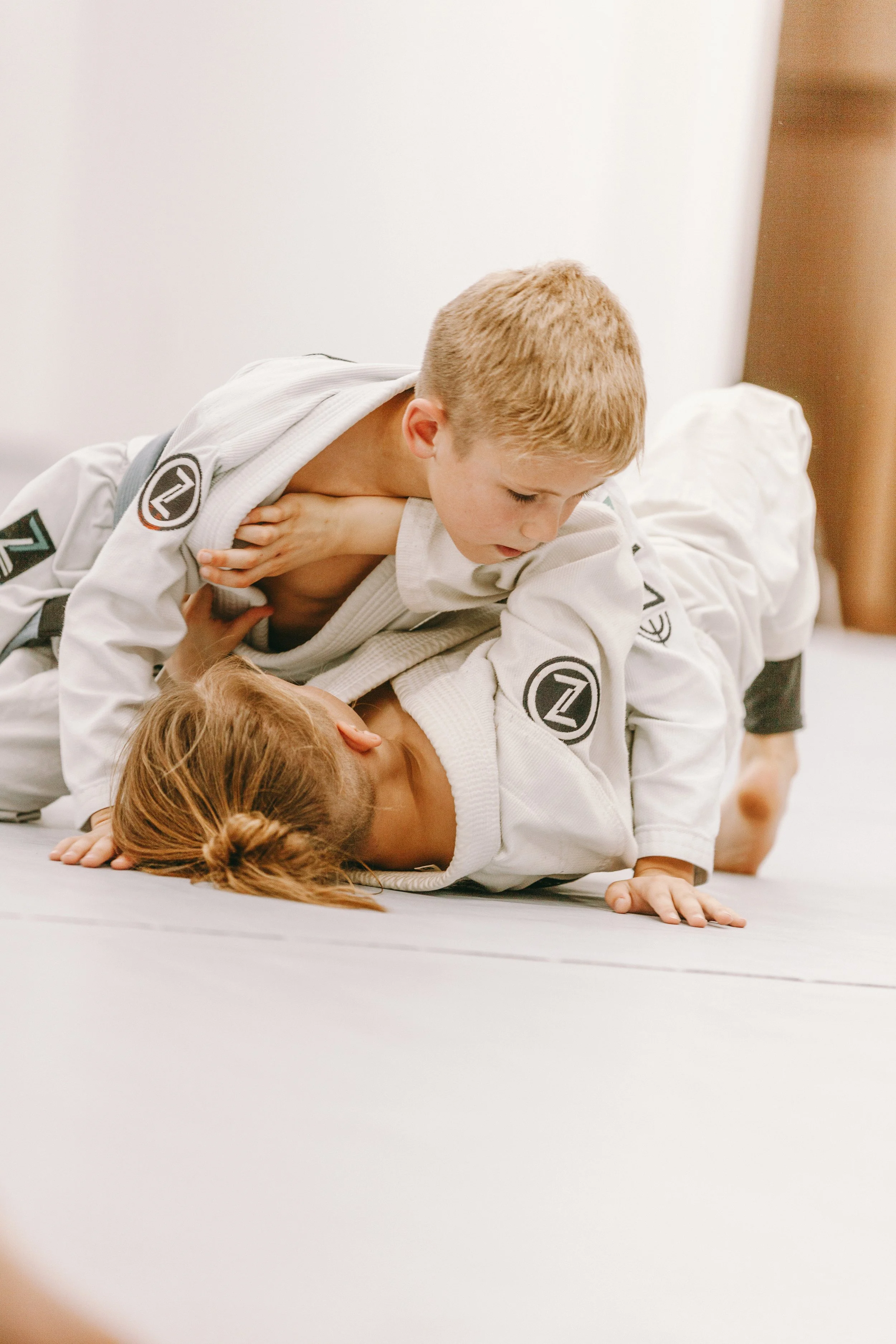
How coaches help kids build resilience
Coaching matters. A lot.
Kids don’t just learn techniques. They learn what struggle means by watching how adults respond to their struggle. If a coach treats mistakes like a problem, kids learn to fear mistakes. If a coach treats mistakes like part of training, kids learn to stay present.
In our Academy, we set expectations early that everyone struggles. That includes the tough kids, the athletic kids, the shy kids, the kids with big feelings, and the kids who seem “naturally good.” Everyone meets a wall at some point. That’s normal.
We also pay attention to what we praise. If we only praise winning, we teach kids to chase outcomes. If we praise effort, focus, and composure, we teach them to build character. I’d rather have a kid lose a round with calm breathing and a good attitude than win a round while panicking or acting disrespectfully. The first kid is learning something that will last.
We normalize mistakes by correcting them without drama. We keep instruction clear and age-appropriate. We match kids with partners who help them learn instead of overwhelming them. We adjust intensity based on maturity and experience, not ego.
And we teach simple tools that kids can actually use: breathe, relax your shoulders, look for one step, not ten. When a child is overwhelmed, their brain can’t hold a long checklist. But they can hold one next step.
That’s how you build resilience without turning the room into a pressure cooker.
What parents can do at home
Parents have more influence here than you might think, and it doesn’t require a long speech. The best thing you can do is reinforce the same language and the same emotional tone you want your child to develop.
When your child has a tough class, try not to rush in with a solution or a rescue. Start by helping them name what happened. “That was hard today.” Then anchor them to process. “Reset. Try again. What did you learn? What’s your next step?”
Those phrases work because they don’t argue with emotion. They guide it. They give your child a path forward.
If your child says, “I’m bad at Jiu Jitsu,” you can gently shift it to, “You’re new at Jiu Jitsu,” or “That position is hard right now.” If they say, “I always lose,” you can say, “You’re learning how to recover. That’s what training is.”
Also, be careful with the well-meaning pressure we sometimes put on kids. Asking, “Did you win?” after every class can turn training into a scoreboard, even if that’s not your intention. A better question is, “What did you work on today?” or “What’s one thing you did better than last week?”
And if your child is having a tough season emotionally, don’t wait until it becomes a bigger thing. Kids go through phases. Sometimes it’s school stress. Sometimes it’s sleep. Sometimes it’s friendship stuff. Sometimes it’s just a developmental leap and their emotions are loud for a while.
That’s normal. We can work with normal.
If your child is having a tough season emotionally, grab your kids coach after class or ask for a conference. We can recommend a clear focus and the right level of challenge for the next stage. Sometimes the answer is more structure. Sometimes it’s a different training partner. Sometimes it’s one specific goal for the next four weeks so your child can feel progress again.
We’re not just teaching kids how to grapple. We’re teaching them how to handle hard moments with respect, discipline, and personal responsibility. That’s bigger than a stripe. And it’s worth training.