Kids Jiu Jitsu and Emotional Regulation: Calm Under Pressure
A calm child isn’t a child who never feels upset. A calm child is a child who can feel upset and still make a good decision.
That’s self-regulation, and it can be trained.
A lot of parents come to us after class with the same concern, even if they say it in different ways. “My kid gets overwhelmed.” “He shuts down the second it gets hard.” “She melts down when she makes a mistake.” “Transitions are a battle.” Sometimes there’s anxiety in the mix. Sometimes it’s big emotions and a strong personality. Sometimes it’s just a nervous system that runs hot.
The good news is that self-regulation isn’t a personality trait you either have or you don’t. It’s a skill. And Brazilian Jiu Jitsu is one of the most natural places to practice that skill, because it trains the mind and the body at the same time.
In kids class, we’re not trying to create emotionless little robots. We’re helping kids build a steady center. We’re teaching them how to notice what they’re feeling, stay safe, and still move forward one good decision at a time.
Jiu Jitsu teaches regulation naturally because it gives kids a healthy dose of pressure in a controlled environment. In real life, stress doesn’t ask permission. It just shows up. A kid gets corrected by a teacher. A friend says something mean. They lose a game. They spill a drink. Their little brother touches their stuff. The nervous system spikes, and if they don’t have tools, the reaction takes over.
On the mats, we can simulate that same spike in a way that’s supervised, age-appropriate, and repeatable. A child gets held down for a second. They lose their balance. They get stuck. They make a mistake in front of others. They feel the frustration of not being able to force the outcome. That’s stress. But it’s “manageable stress.” It’s not trauma. It’s not chaos. It’s a training dose.
And here’s what kids learn very quickly when you repeat that experience with good coaching: panic wastes energy.
When a child panics, they hold their breath, their shoulders rise, their arms push with no plan, their eyes widen, and they burn through their gas tank. When a child stays calm, they breathe, they find posture, and they look for a simple next action. The outcome changes, not because they suddenly got stronger, but because they stayed present.
That’s self-regulation in plain language.
One of the most important things Jiu Jitsu teaches is that you can be uncomfortable and still be safe. You can be upset and still be respectful. You can be losing and still be thinking. You can feel pressure and still make a choice.
That’s a big deal for kids, especially the ones who feel everything intensely.
Now, I want to be clear about something. Regulation doesn’t mean your child will never cry, never get angry, or never have a tough day. Kids are kids. Their brains are still developing. What changes over time is the recovery. The bounce-back. The ability to come back to baseline sooner and make a better decision on the next moment.
That’s what we’re after.
This is also why we coach kids through structure and clear cues. When a child is stressed, their brain doesn’t want a lecture. In a high emotional state, the thinking part of the brain gets quieter and the survival part gets louder. That’s true for adults too. So we don’t try to overwhelm them with ten options. We give them one step.
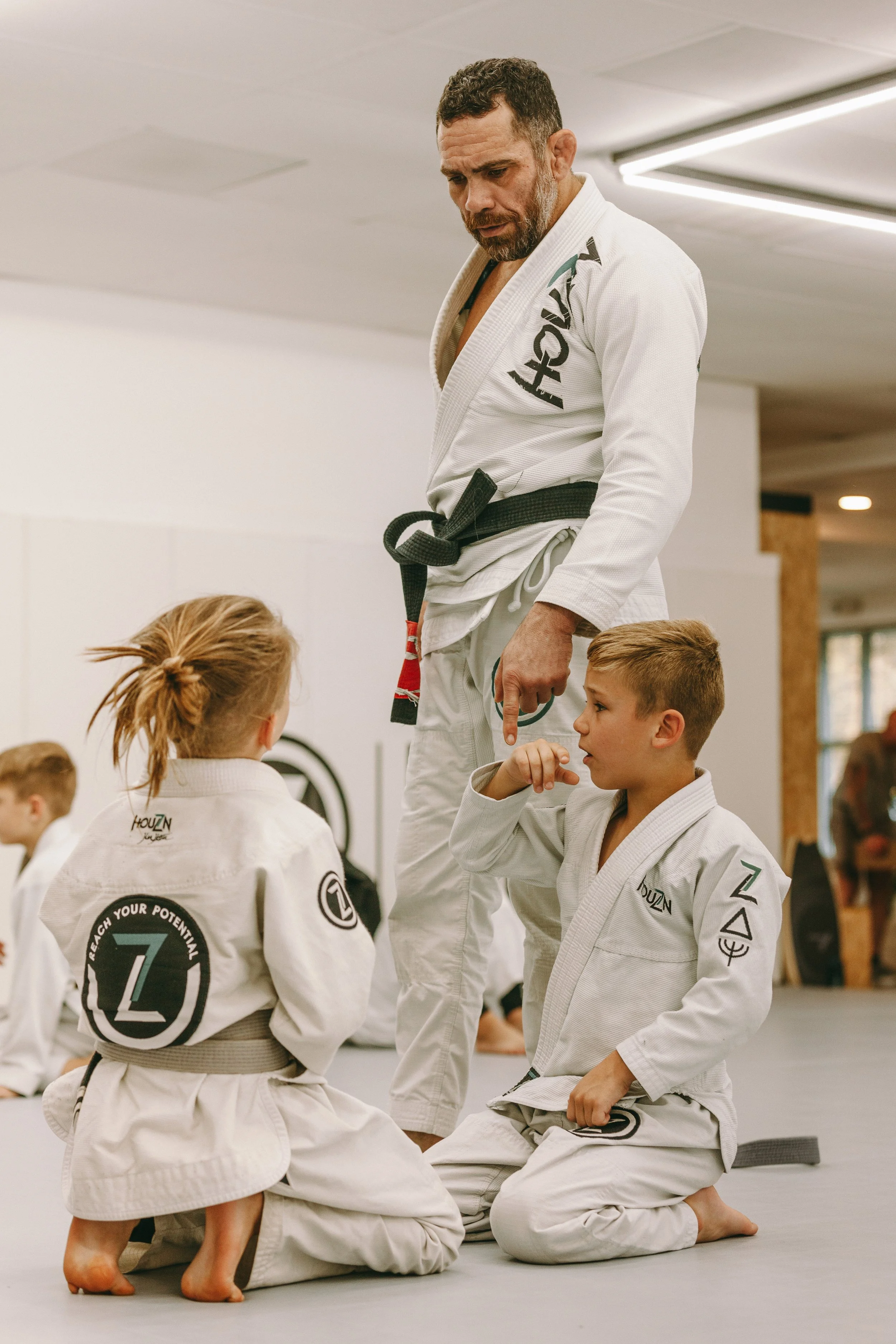
In Jiu Jitsu, the “one step” mindset shows up constantly. “Make frames.” “Get to your side.” “Find space.” “Reset your base.” Those cues sound technical, but they’re also emotional anchors. They narrow focus. They stop the spiral.
If a kid is stuck under someone and their brain starts telling them, “I can’t breathe,” “I’m losing,” “Everyone is watching,” “This is embarrassing,” they can go down fast. But when a coach calmly says, “Frames first,” that child has a job. A single job. The brain goes from panic mode to problem-solving mode.
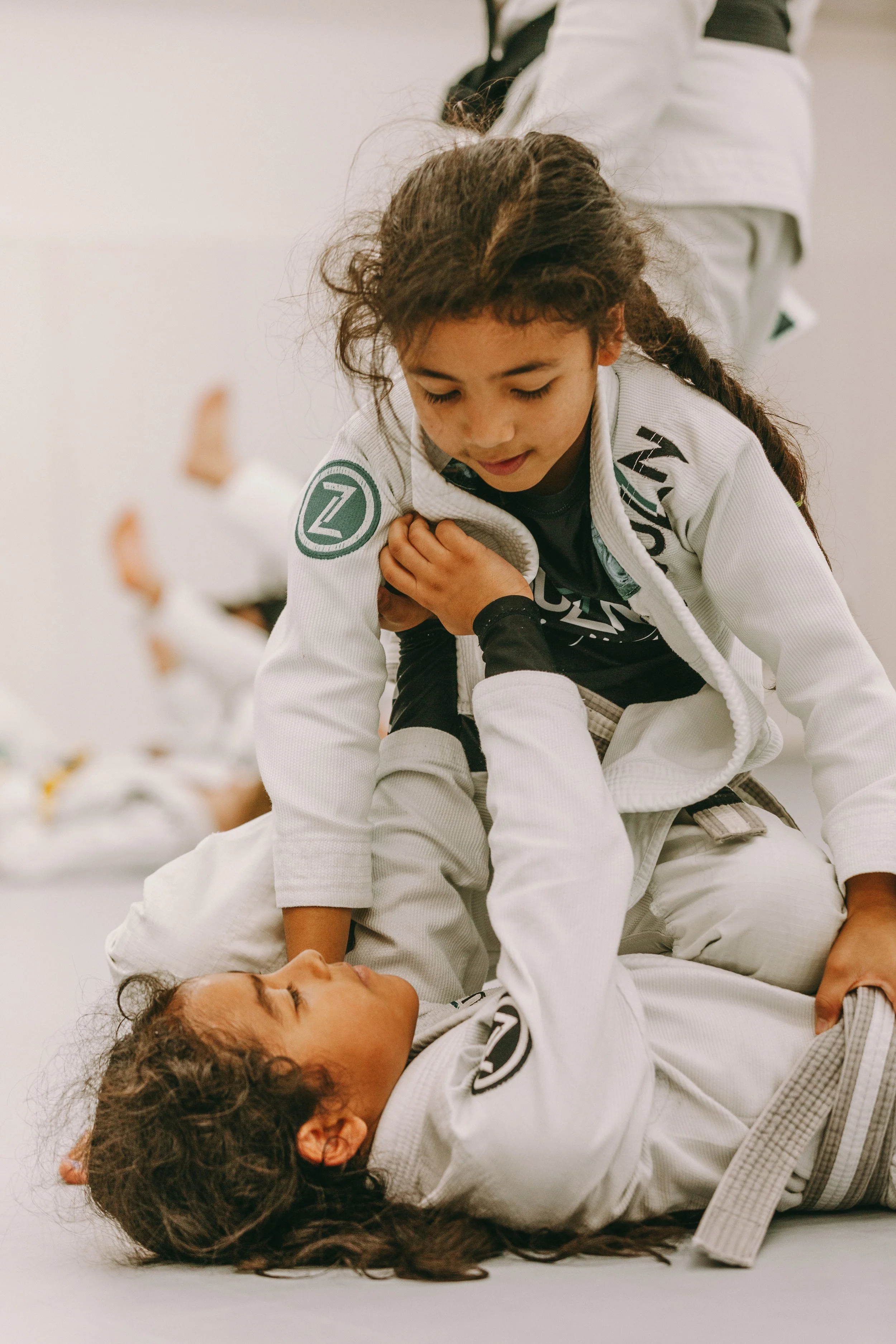
Even better, Jiu Jitsu rewards small wins. A kid might not escape right away, but they can get to their side. They can make space. They can recover guard. They can stand back up. Each step is progress, and their nervous system learns, “I can handle this in pieces.”
That’s how resilience is built. Not with speeches, but with reps.
Another thing Jiu Jitsu does well is teach kids to use their body to regulate their mind. Adults talk about breathing, posture, and “grounding.” Kids don’t always have language for that, but they can feel it. When we teach a child to exhale, relax their shoulders, and build a strong base, we’re giving them a physical switch that calms the system down. Over time, they learn what calm feels like in their own body, not just what it sounds like in someone else’s advice.
This is also why the culture matters. In a good Kids Program, the room is not run by intimidation. It’s run by standards and safety. Kids don’t learn regulation by being yelled into compliance. They learn regulation by being coached with consistency, boundaries, and respect.
At Houzn, we want kids to feel safe enough to try, fail, and try again. That’s not “soft.” That’s how real growth happens. A child who is terrified of being embarrassed will choose avoidance. A child who knows they can mess up and still be supported will choose effort.
And effort is where confidence comes from.
Parents usually start noticing changes at home in small, practical ways before they see anything dramatic. You might see fewer meltdowns, or meltdowns that don’t last as long. You might see smoother transitions, like getting out the door or moving from play time to homework. You might notice your child recovers faster after being corrected. Instead of “I hate you” or “I’m never doing this again,” you may hear a sigh, a pause, and then they keep going.
Some parents tell me their child is more willing to attempt homework or chores after a mistake. That matters, because a lot of “behavior issues” are really frustration tolerance issues. When a child believes mistakes are dangerous, they avoid the task. When a child learns mistakes are information, they stay in it longer.
You might also notice more emotional vocabulary. Not because we’re doing therapy on the mats, but because Jiu Jitsu gives kids real experiences to name. “I felt nervous.” “I got frustrated.” “I wanted to quit, but I didn’t.” That’s powerful. When a child can name the feeling, the feeling has less control.
Another shift you may see is better sibling conflict. Not perfect, but better. Jiu Jitsu teaches children that physical impulse has consequences, and it also teaches them options. They don’t have to go from zero to one hundred. They can pause. They can step back. They can ask for help. They can choose the next right move. Again, not every time. But more often.
So how can you support this at home without turning your living room into a dojo?
The simplest way is to borrow the same concept we use on the mats: one step.
When your child is overwhelmed, it’s tempting to give them the whole solution. “Calm down, it’s not a big deal, just do your homework, you’re fine.” Most kids can’t use that in the moment. It’s too broad. It can feel dismissive even when you mean well.
Instead, bring them back to the body and give them one doable action. You can say, “Take one step.” You can say, “Reset your posture.” You can say, “Let’s breathe once and try again.” You’re not negotiating the standard. You’re coaching the nervous system.
You can also mirror the way we correct in class. In Kids Jiu Jitsu, we try to correct without shame. We separate who the child is from what the child did. At home, that can sound like, “That choice wasn’t okay. Let’s reset and choose again.” The message is firm, but it leaves a door open. Kids who struggle with big reactions often carry a lot of internal shame already. They don’t need more labels. They need tools and consistency.
It helps to praise the process, not just the outcome. If your child was upset but they took a breath before responding, that’s a win worth naming. “I saw you pause. That was strong.” If they wanted to quit but stayed with the task for two more minutes, that’s a win. Regulation is built in inches.
And if you want one practical thing to watch for, watch the recovery time. That’s the scoreboard. A child who can return to baseline faster is building the skill, even if they still have big feelings.
There’s also a pacing piece that matters. Not every child needs the same training intensity. Some kids need to be challenged more so they don’t check out. Some need a slower ramp so they don’t panic and avoid. A good coach will see that and adjust, because the goal is not to “toughen them up” at all costs. The goal is to build them up so they become capable and steady over time.
That’s why I always invite parents to talk to us, especially if your child struggles with anxiety, overwhelm, or big reactions. The best plan is usually simple. We might choose one focus for a few weeks, like breathing under pressure, learning how to safely say “tap,” or practicing a basic escape sequence with extra reassurance. We might pair them with the right training partners. We might slow down the rounds. We might add structure. Those small decisions make a huge difference.
If your child struggles with anxiety, overwhelm, or big reactions, grab your kids coach after class or ask for a conference with the coach. We can help choose a simple focus and the right training pace. We’re not here to push kids through fear. We’re here to guide them through growth, with safety, respect, and standards that make them stronger for life.