Brazilian Jiu Jitsu for Kids: Why the First Months Feel Hard—and Why That’s Healthy
If you’re new to kids jiu jitsu, you might be wondering what you’re supposed to measure. In many sports it’s obvious: points, goals, speed, “starter vs. bench.” In Brazilian jiu jitsu for kids, it’s not that simple—especially in the beginning.
That’s not a problem. It’s one of the reasons jiu jitsu works so well for kids. It teaches them how to build real skill, not just short-term performance.
Why jiu jitsu feels different right away
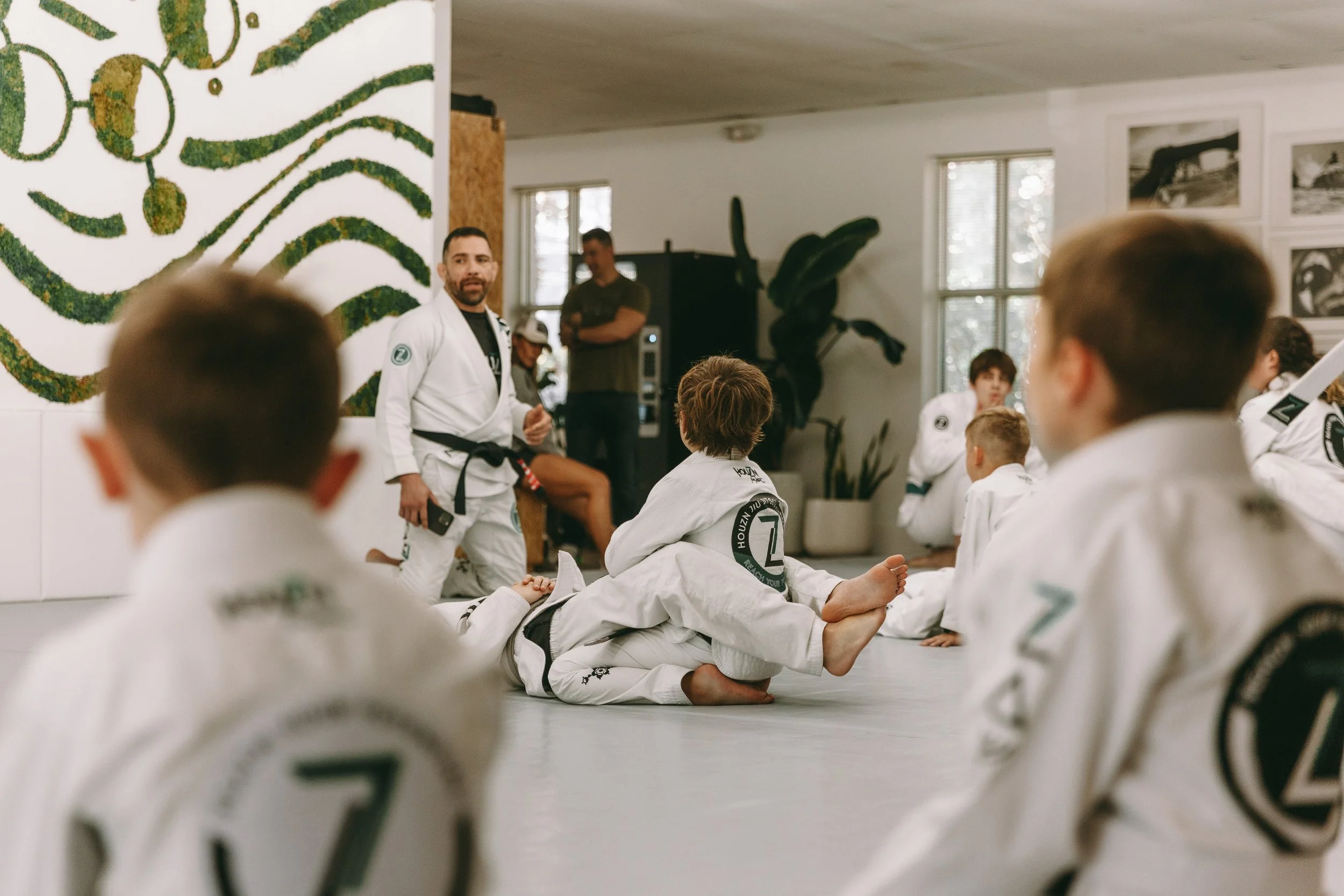
Jiu jitsu puts kids in close, controlled contact with another person. They have to manage their body, their emotions, and their attention all at once. That can be a big adjustment for Little Warriors (3–5), and it can still be a big adjustment for a shy 12-year-old who’s never done a contact sport.
So those early nerves, awkwardness, and “I don’t know if I like it yet” moments are often a sign that jiu jitsu is doing what it’s supposed to do: exposing your child to a challenge in a safe environment.
The biggest misunderstanding: “Progress = winning rounds”
The fastest way for a kid to get discouraged is for the adults around them to focus on wins and losses.
Because in class, “winning” is not a clean metric. Sometimes a child “wins” because their partner is new. Sometimes they “lose” because their partner has trained longer. Sometimes the coach is telling one kid to focus on defense while the other kid is told to focus on offense.
If you measure the wrong thing, you’ll miss real growth.
What coaches look for in the first month
In the first month I’m watching for signs that a child is learning how to learn.
Can they line up and follow directions?
Can they control their hands and feet with a partner?
Can they handle correction without melting down?
Do they try again after a mistake?
Can they be respectful when they’re frustrated?
Those skills matter because they’re the foundation for everything else: self-defense, confidence, and calm under pressure.
A better scoreboard: recovery
A simple way to track progress is to ask: is my child recovering faster?
When they get stuck, do they keep working a little longer?
When they lose a game at home, do they settle sooner?
When they get corrected at school, do they handle it with less drama?
Those are the same “muscles” we train on the mat.
What to say when your child says “I’m not good”
This is common, and it usually means: “This feels hard and I don’t like feeling behind.”
Try:
“Jiu jitsu is hard at first. That’s normal.”
“I’m proud of you for staying with it.”
“What’s one thing you learned today?”
That helps them shift from identity (“I’m not good”) to process (“I’m learning”).
The long game is the benefit
The reason martial arts for kids works isn’t because it’s easy. It’s because it’s structured discomfort. It’s a safe place to practice courage, respect, and frustration tolerance over and over until it becomes part of who they are.
This week, keep it simple—keep showing up. And if you want a clear picture of your child’s progress, grab your kids coach after class or ask for a conference with the coach.