
Why Kids Get Frustrated in Jiu Jitsu (and Why It Helps Them Grow)
Parents often worry when their child comes off the mat frustrated. That makes sense. Nobody wants their kid to feel bad. But in a good kids jiu jitsu program, frustration isn’t a sign the program is failing. It’s often a sign learning is happening.
At Houzn Jiu Jitsu Academy in Mount Pleasant, SC, we see this every week. A kid finishes class with that tight face, or they’re unusually quiet in the car, or they say, “I hate it,” even though you watched them have a solid class. Parents sometimes wonder if we pushed too hard, if their child isn’t built for jiu jitsu, or if the training environment is too intense.
Most of the time, none of those are true. Most of the time, you’re simply seeing a normal part of skill development: the moment a child realizes that wanting to do something and being able to do it are not the same thing yet.
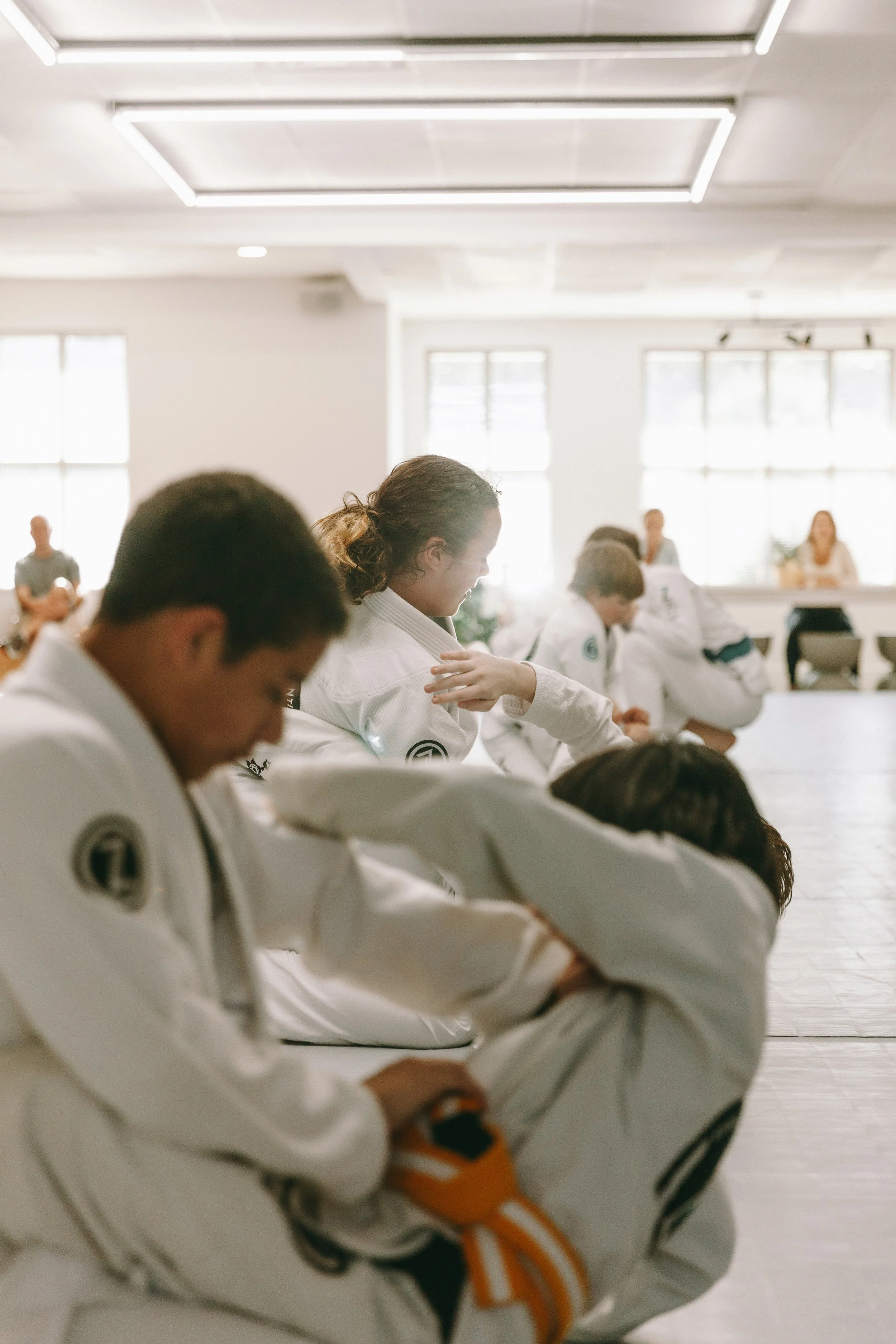
That “yet” is where growth lives.
Jiu jitsu creates an honest kind of learning. There’s no hiding behind being charming, fast-talking, or lucky. If your base is weak, you fall. If your posture breaks, you get controlled. If you reach with your arms, you get off-balanced. That honesty can be frustrating, especially for kids who are used to being good quickly, kids who don’t like being corrected, or kids who feel things strongly.
What matters is what we do with that frustration.
In jiu jitsu, your child meets resistance. Not mean resistance, not bullying, not “toughening them up.” Normal resistance. A partner holds position. A move doesn’t work. A bigger or more experienced student has better timing. A coach gives a correction. The body doesn’t do what the brain wants it to do yet.
That last part is a huge one. Kids often understand the idea before they can perform it. They can repeat the words “elbows in” or “get on your side” and still struggle to make their body cooperate when they’re under pressure. Their brain is trying to run a new program, and their body is still using the old one. That gap is uncomfortable, and kids experience uncomfortable gaps as frustration.
If a child has never had to stay present inside that gap, they’ll try to escape it. Some kids escape by quitting. Some escape by getting silly. Some escape by blaming the partner, blaming the coach, blaming the rules. Some escape by melting down. None of those reactions mean your child is “bad.” They mean your child is human, and they don’t have a practiced strategy for this kind of pressure yet.
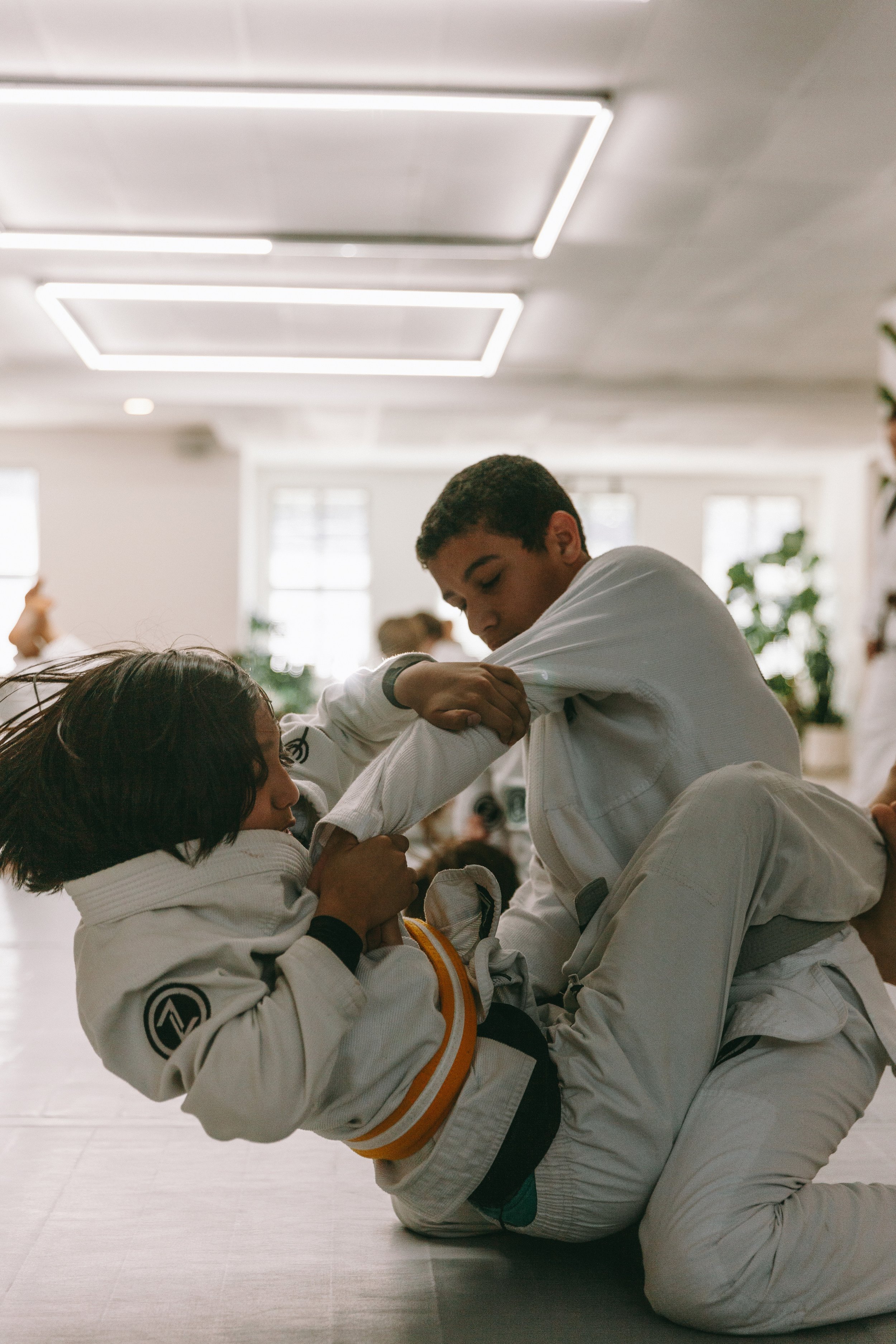
We train a better option: breathe, listen, try again.
A lot of parents think jiu jitsu teaches moves. It does. We teach real technique, and we care about details. But the deeper training is learning how to manage feelings under pressure. That’s the part that transfers to school, sports, friendships, and home life.
When your child is mounted and can’t move, they feel something. When a newer kid passes their guard, they feel something. When we correct them in front of the group, they feel something. They don’t get to avoid that feeling by walking away from the situation. They have to learn to function with it.
That’s emotional control, but it’s not the kind you can lecture into a child. You can’t speech a kid into resilience. You can only give them repeated, safe opportunities to practice being uncomfortable and still staying engaged.
In kids jiu jitsu, that practice happens in small, manageable doses. We show a technique. They try it. It doesn’t work. They feel frustration. We help them adjust. They try again. It works a little better. Their body learns. Their confidence becomes real because it’s tied to competence.
This is also why jiu jitsu can be such a good fit for kids who struggle with confidence. The mat doesn’t reward pretending. It rewards calm effort. Over time, kids start to trust themselves because they’ve been in hard spots and found a way out. That’s not hype. That’s earned.
It also helps to understand that frustration is often the first visible sign that your child has stopped coasting. Early on, many kids can get by on enthusiasm. Everything is new, the coach is fun, and they’re learning simple movements that work on other beginners. Then they hit the next stage, where the room gets more mixed. They roll with kids who have better timing, or they start doing live rounds where things aren’t scripted. Their old tricks stop working. That’s when frustration shows up.
In my experience, that stage is a fork in the road. If the child learns that frustration is a signal to quit, they’ll carry that pattern everywhere. If they learn that frustration is a signal to slow down, breathe, and keep trying, they get a lifelong advantage.
So what should “healthy frustration” look like?
Healthy challenge usually looks like frustration, then re-engagement. Your child might look annoyed for a moment, then they get back in line. They might say, “I can’t do it,” then after a quick correction, they try again. They might lose a round, then immediately ask, “What did I do wrong?” That’s a kid learning.
Overwhelm looks different. Overwhelm is shutdown, panic, or repeated dysregulation that doesn’t improve over time. It might look like a child refusing to participate for long stretches, melting down in a way that takes them a long time to recover from, or becoming so anxious about failing that they stop trying. Overwhelm can also show up as aggression that keeps escalating, especially if the child feels trapped and doesn’t have the tools to regulate.
The difference isn’t always obvious to parents in the moment, because both frustration and overwhelm can look like tears. The clue is what happens next. Does the child return to learning with support? Or do they spiral and stay stuck there?
This is where coaching matters. At Houzn, we’re not just watching technique. We’re watching patterns. We’re watching how a child responds to correction, how they handle losing, how they treat partners when they’re frustrated, and whether they can settle back into the class rhythm. We also match kids carefully in training, because the right partner can create a healthy challenge, and the wrong partner can create unnecessary stress.
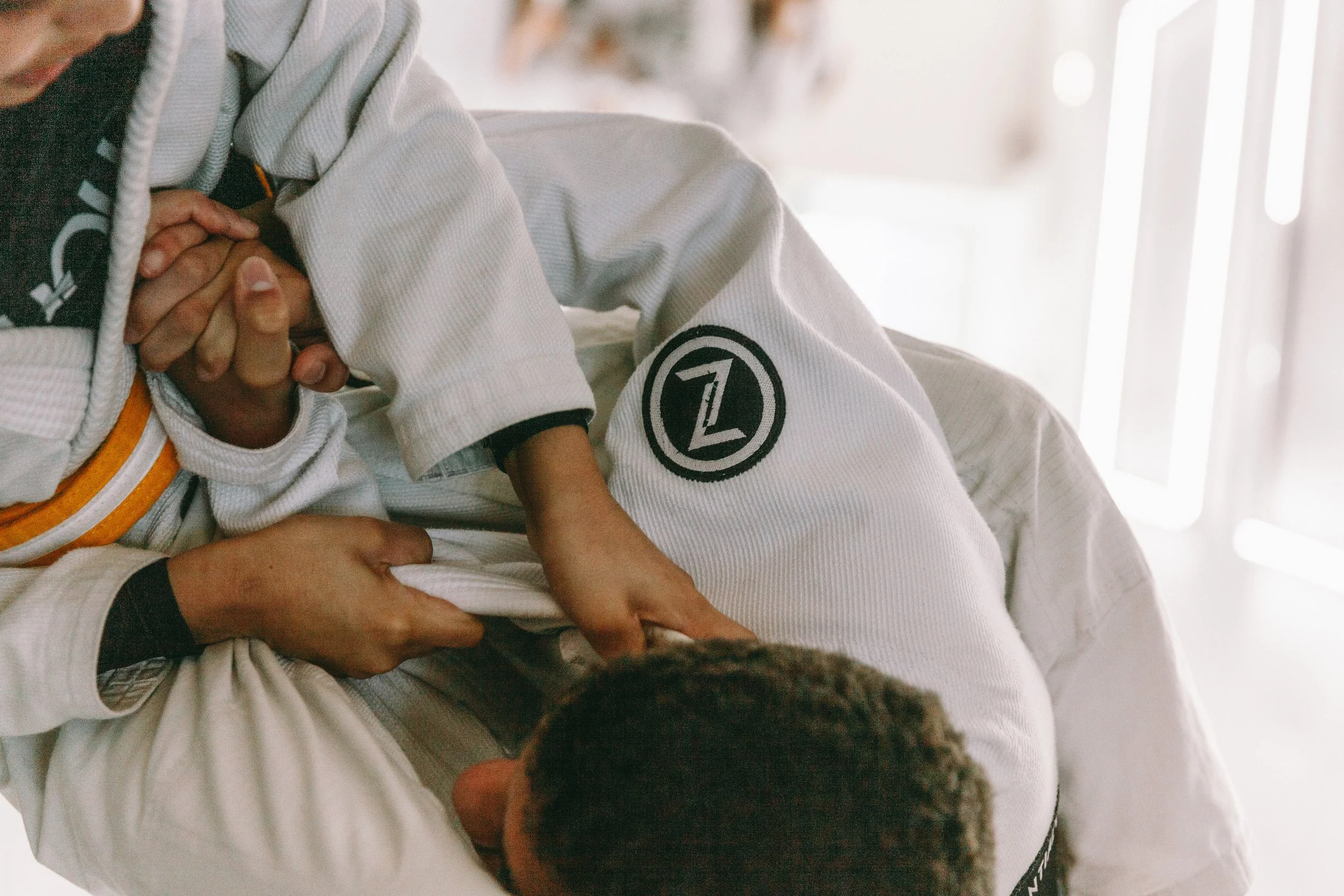
If your child is frustrated, it helps to remember that jiu jitsu is a contact problem-solving sport. It’s not like memorizing spelling words where the answer is either right or wrong. In jiu jitsu, you can do something “right” and still fail because the other person did something right too. That’s a big mental shift for kids, especially kids who are perfectionists.
It’s also why we emphasize process over outcome. The goal is not “win every round.” The goal is to do the right thing more often, with better timing, under more resistance. That’s how skill is built.
There’s another layer here that parents don’t always see: jiu jitsu exposes energy management. A frustrated child often uses too much energy too fast. They hold their breath. They try to muscle out. They thrash. Then they get tired, and fatigue makes emotions worse. When we teach a child to breathe and use frames and move with purpose, we’re not just improving their technique. We’re reducing the emotional spikes that come from exhaustion and panic.
If you want a simple picture, think about how adults feel when they’re stuck in traffic late for something important. The situation isn’t dangerous, but it’s pressure without control. That’s what being pinned can feel like to a kid at first. Jiu Jitsu teaches them, over time, “You’re not trapped. You have steps. Start with the first step.”
That’s why “breathe, listen, try again” is more than a motivational phrase. It’s a practical sequence. Breathing gives the body a chance to calm. Listening gives the brain a direction. Trying again builds the skill. Kids who repeat that sequence for months start doing it automatically, and that automatic response is what parents usually mean when they say, “I want my child to be more resilient.”
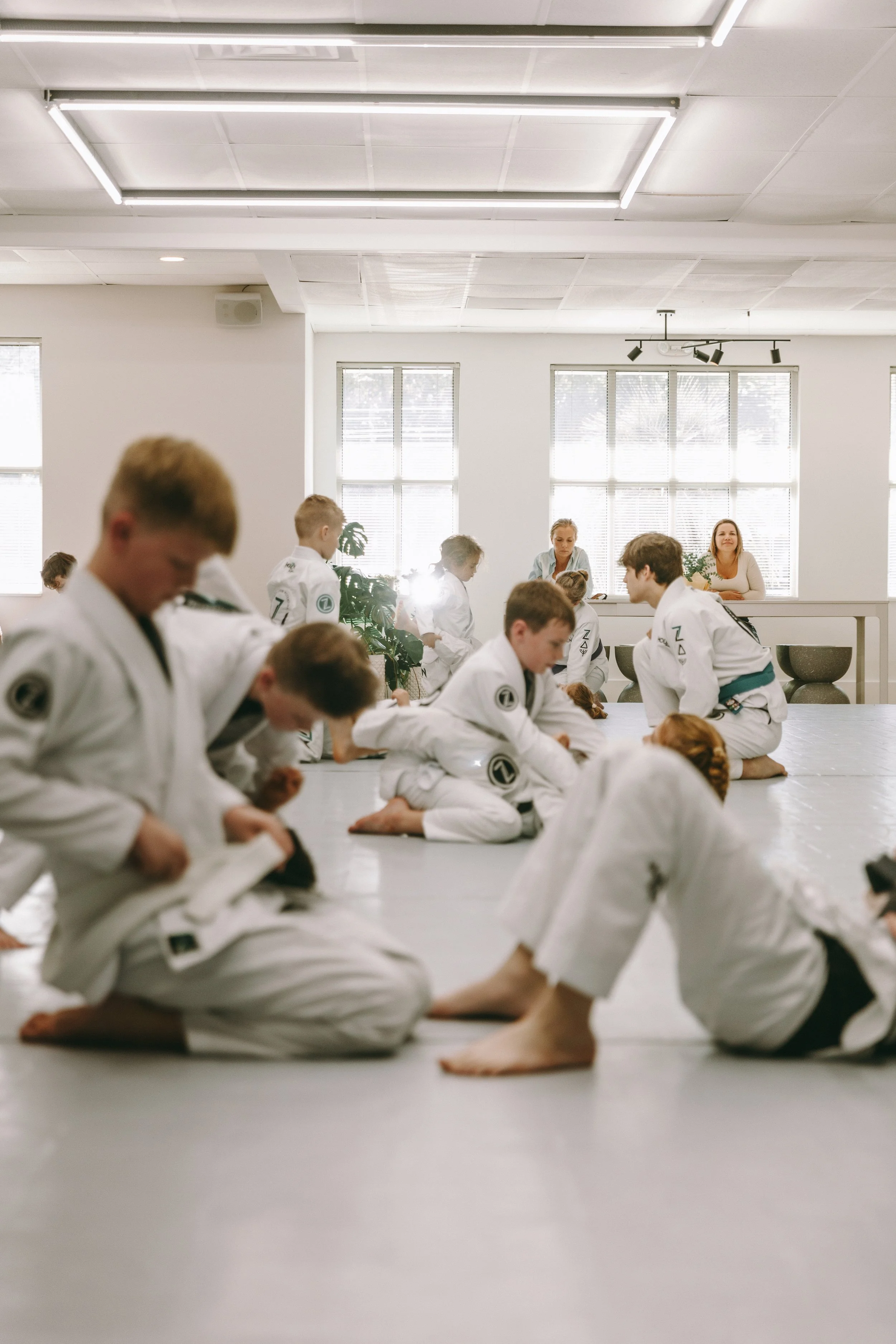
Now, what can you do as a parent when your child is frustrated after class?
First, keep your feedback simple. The car ride home doesn’t need a technical breakdown. It doesn’t need you to solve the whole problem. Most kids are still emotionally “hot” right after training. If you give a long talk, it can feel like piling on. If you criticize, even gently, it can make them feel like they disappointed you. If you over-comfort, it can accidentally teach them that frustration is an emergency.
What works well is calm, short, steady language. You can say, “I saw you work through something hard.” You can say, “I’m proud you didn’t quit.” You can ask, “What did coach tell you to focus on?” That keeps the focus on effort and learning, and it sends a clear message that frustration is normal and manageable.
Second, resist the temptation to negotiate quitting in the moment. Many kids say “I’m done” when they’re frustrated, not because they truly want to quit, but because they want relief. If we teach them that big feelings instantly change the plan, we make it harder for them to build the skill of staying engaged. A better approach is to validate the feeling and keep the routine stable. Something like, “I hear you. That was hard. Let’s get some water and we’ll talk to coach about what to work on next class.”
Third, let the coach coach. If you’re unsure whether your child is dealing with healthy challenge or overwhelm, don’t guess. Grab your kids coach after class or ask for a quick conference. Tell us what you’re seeing at home and what your child says about class. We can tell you what we’re seeing on the mat and adjust the training plan if needed. Sometimes the fix is as simple as pairing them differently, giving them one clear focus for a few weeks, or helping them understand that everyone gets stuck and that it’s part of training.
When frustration is handled well, it becomes one of the biggest reasons kids stay long term. They look back a few months later and realize, “That thing that made me mad doesn’t bother me anymore,” or “I used to get stuck there and now I can escape.” That’s a real confidence builder because it’s measured against their old self, not against someone else.
If you take one idea from this, let it be this: frustration isn’t the enemy. Avoiding frustration is the enemy. Frustration, in the right environment, with the right coaching, is a signal that your child is stretching into new skill.
If frustration is coming home with your child, don’t guess—grab your kids coach after class or ask for a conference with the coach. We’ll help you read what’s happening and give you a simple plan that fits your child.