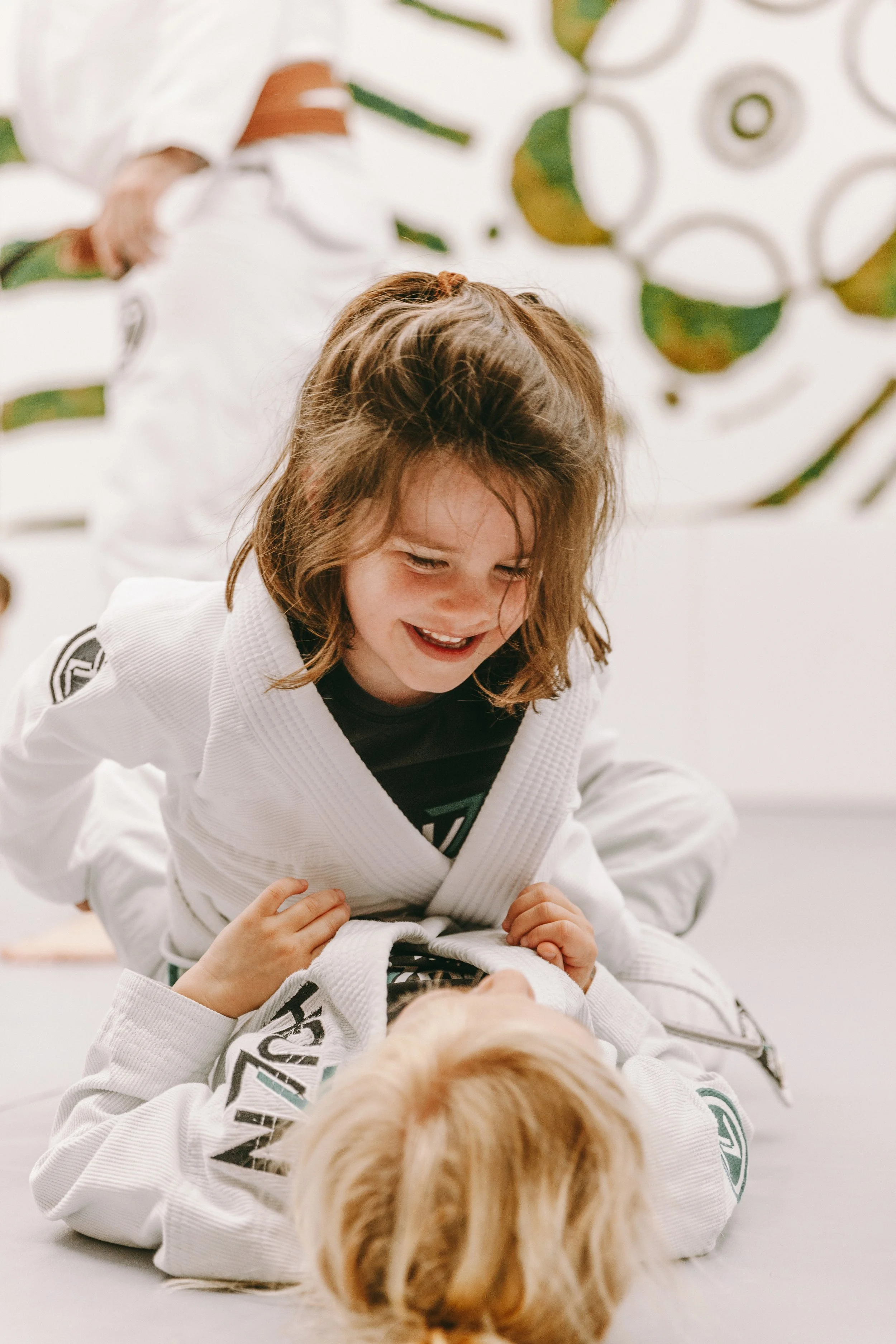
Parents often ask how to help when their child hits a hard moment in kids Jiu Jitsu and immediately looks for an adult to fix it. Sometimes it shows up as “What do I do?” over and over. Sometimes it’s “I can’t,” tears, or asking to switch partners. Those moments are normal. They usually mean a child is uncomfortable, unsure, or overloaded, not that they’re incapable. This week in our series inspired by Raising Mentally Strong Kids (Daniel G. Amen and Charles Fay) is built around a useful balance: support kids without rescuing them. Brazilian Jiu Jitsu for kids can be a practical tool for this, because it gives children small, repeatable problems to solve with coaches nearby to keep things safe and appropriate.
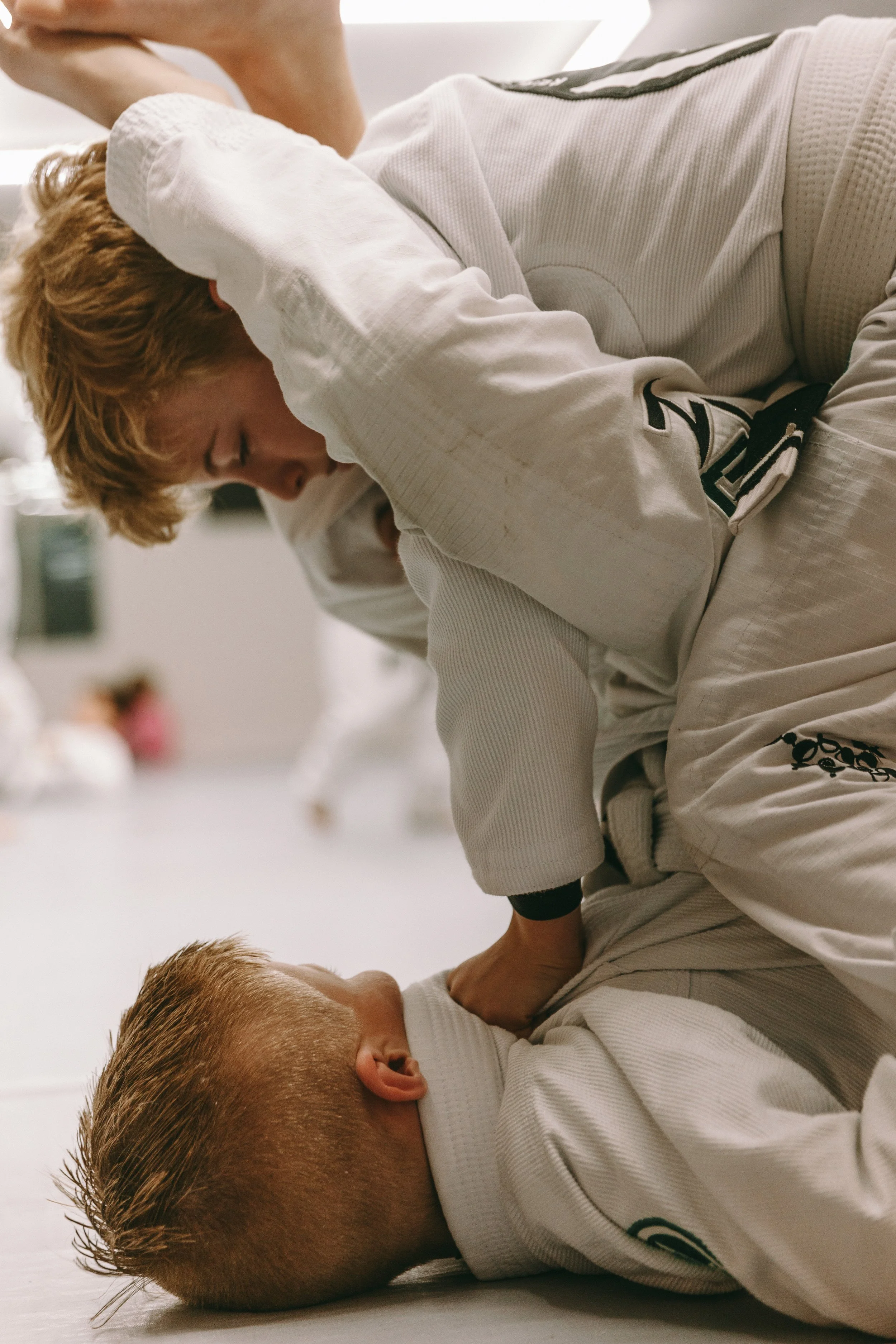
In many activities, kids can stay on the surface and still look like they’re participating. In Jiu Jitsu, a partner forces real decisions. If someone grabs their collar, they have to choose where their hands go. If they’re pinned, they have to decide whether to frame, bridge, shrimp, or recover guard. If their first attempt fails, they have to adjust. That’s exactly where confidence grows. Not from always winning, and not from never needing help, but from learning, “I can try something, I can stay calm enough to think, and I can take the next step.”
The tricky part for parents is that we care, and we don’t like seeing our kids struggle. It’s easy to swing between two unhelpful extremes. One is pressure, where the message becomes “Hard isn’t allowed,” and a child learns to hide discomfort or shut down. The other is rescue, where we remove the discomfort so quickly that the child never has to practice recovery. A healthier middle is what we aim for on the mats and at home: “I’m here, I’m paying attention, and you can do the next small piece.”
This is one reason Jiu Jitsu can support the kinds of lessons parents want their kids to learn in everyday life. In school, a child may be able to avoid challenges by staying quiet, blending in, or refusing to try. In sports, a child can sometimes lean on a coach calling plays or a teammate carrying the moment. On the mat, the feedback is direct. When a plan doesn’t work, your child feels it right away. That directness can be frustrating, but it also makes growth more concrete. Kids don’t have to imagine what “responsibility” means. They practice it.
In class, you’ll often see coaches give very short cues rather than long explanations, especially when a child is frustrated. That isn’t because we don’t want to teach. It’s because an overwhelmed kid can’t process five steps at once. A simple prompt like “Frame first,” “Posture,” “Breathe,” or “Make space” gives them a starting point. Once they try something safe, we can correct and add details. Over time, this becomes a habit. When they don’t know what to do, they don’t panic. They return to the first job, then build from there.
You can use the same approach after class, and it starts with how you interpret what you’re seeing. When a child asks for help immediately, it can look like laziness or lack of grit. More often, it’s a stress response. Their brain is trying to reduce uncertainty fast. They want the answer because the feeling of not knowing is uncomfortable. If we always remove that discomfort for them, they never build tolerance for it. If we respond with pressure or shame, they learn that struggling is dangerous. The better path is patient structure: acknowledge, steady, then guide toward the next step.
If your child says, “I’m bad at Jiu Jitsu,” it’s usually not the right moment for a debate or a lecture. It helps more to slow things down and get specific. You can say, “What part was hardest today?” If they don’t know, that’s okay. Many kids can’t sort it out right away. You can offer a couple options to choose from instead of giving a full solution: “Was it getting stuck under side control, or was it when someone grabbed your head?” The goal is not to analyze every round. It’s to guide them toward problem-solving language rather than global labels.
Those global labels are a big deal. “I got stuck today” is specific. “I’m terrible” is identity. Identity statements tend to end effort because they make the problem feel permanent. And when effort ends, learning ends. A simple way to help is to keep bringing the conversation back to what happened and what can be tried next. You’re not denying feelings; you’re building accuracy. Accuracy is calming. It gives kids something they can do.
A practical rule that works for many families is: don’t do for your child what they can do next. If they can take one small step, let them take it. That step might be trying the first movement of an escape before asking the coach to repeat it. It might be taking a breath and rejoining the drill line instead of sitting out. It might be asking a more useful question than “I can’t,” like “Where do my hands go?” or “How do I make space?” Those small choices are exactly what builds responsibility, and responsibility is a major ingredient in mental strength.
The key phrase there is “what they can do next.” We’re not talking about leaving kids alone with big fear, pain, or unsafe situations. We’re talking about the small, appropriate step that is within reach. Kids gain confidence when they feel themselves doing something real. They don’t need to do everything. They just need to do the next doable thing.
If you want a simple way to practice this at home, you can use a light, two-part prompt: “What did you try?” and “What will you try first next time?” Even if your child’s answer is imperfect, you’re building a habit of reflection and planning. Over time, that habit becomes their internal voice. They start hearing themselves think, “Okay, what’s my first job?” instead of “Someone help me.”
This also helps with the emotional side of training. If your child is upset, it’s normal to want to make the feeling disappear. But if we always rescue the feeling away, kids don’t learn that emotions rise and fall and that they can recover. A steadier approach is to acknowledge the frustration, help them settle, and then guide them toward the next step. That could sound like, “That looked frustrating. Want a minute, or do you want to talk now?” and later, “What do you think you could try first next time?” You’re not ignoring their feelings, and you’re not turning class into a performance review. You’re helping them move from emotion to action.
One small adjustment that helps many families is delaying the post-class “analysis.” Some kids need a short reset before they can talk. Hunger and fatigue make everything bigger. If your child is dysregulated, the best parenting move might be a quiet ride home, a snack, and a little space. Then later, when they’re calm, you can ask one or two questions. It’s not avoidance; its timing. The calmer the body, the better the brain works.
It’s also helpful to remember that kids’ questions aren’t always really questions. “What do I do?” can mean “I’m nervous.” “Can I switch partners?” can mean “I feel outmatched.” “I can’t” can mean “I don’t want to feel embarrassed.” If you treat the words literally, you might miss the need underneath. If you treat the moment as information, you can respond more effectively. You can say, “Show me your best guess,” or “Try your first job,” or “Let’s ask the coach one specific question after class.” That keeps responsibility in the child’s hands without leaving them alone.
Another part of this week’s post is learning the difference between asking for help and handing off the job. Asking for help is healthy. It’s a life skill. Handing off the job is when a child expects someone else to do the thinking, the effort, or the emotional recovery. On the mat, we want kids to learn to attempt, then ask. Try something safe first, then get coaching. That pattern is powerful because it turns a child into an active learner. Instead of waiting to be told, they explore, get feedback, and improve faster.
If you listen to how kids talk after a hard day, you can often hear which pattern they’re building. A child who is practicing responsibility says things like, “I kept getting stuck in mount,” or “I forgot what to do when they grabbed my head,” or “I didn’t know where to put my hands.” A child who is handing off the job says things like, “He was cheating,” “It’s not fair,” or “Coach didn’t help me.” Sometimes those statements contain a real concern, so it’s important not to dismiss them. But it’s also important to gently steer the conversation toward what they can control next.
A simple script that works well is: “That sounds hard. What part can you control?” You may need to help them find an answer at first. You can offer two choices. You can keep it small. You can say, “You can control your breathing and your first move,” or “You can control asking one good question.” This teaches the child to locate their power in the situation, which is a big part of confidence.
It’s worth saying clearly that problem-solving in Jiu Jitsu is not about “winning.” A child can make great decisions and still get tapped by someone stronger or more experienced. That’s normal. In fact, it’s one reason the sport can be helpful for character development when coached well. It gives kids repeated practice dealing with moments that aren’t fair in the short term, while still rewarding effort and learning in the long term. The win we care about is that your child stays engaged, stays respectful, and keeps trying.
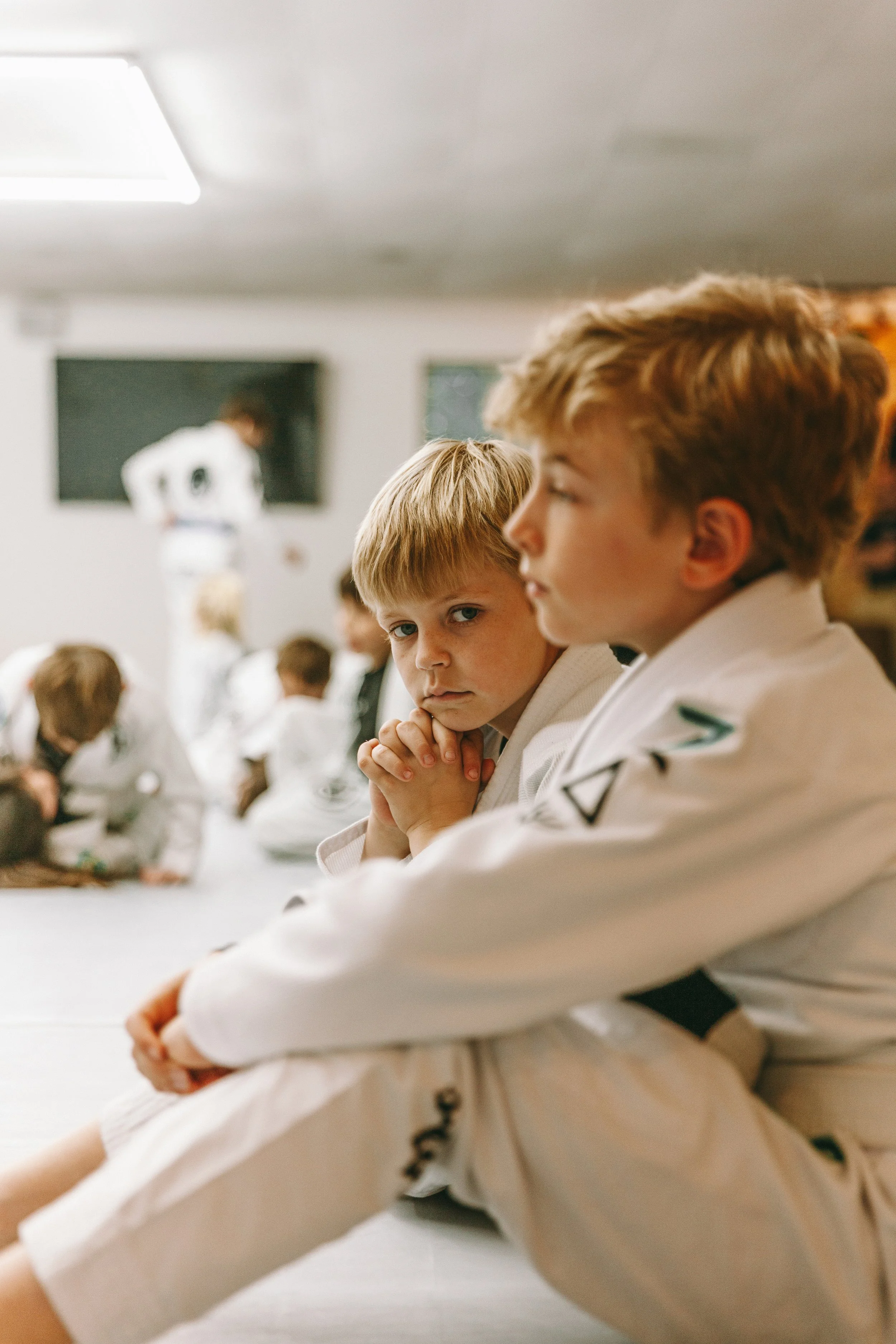
Progress here is often quiet. It might look like your child will try twice before asking for help. It might look like them staying in a tough position a little longer without panicking. It might look like them accepting coaching without taking it personally. It might even look like them realizing they need help and asking in a calmer, more specific way. Those are meaningful wins, even if they still “lost” a round.
You can reinforce those wins with specific praise. Instead of “You were awesome,” try “I liked how you kept trying,” or “I saw you take a breath and restart,” or “Good job asking the coach a specific question.” This kind of feedback tells your child what to repeat. It also keeps the focus on behaviors they control, which reduces anxiety.
At the same time, keep your expectations realistic. Some days your child will do great. Some days they’ll be tired, emotional, or distracted. That doesn’t mean the lessons aren’t working. Mental strength is built by repetition, not by a single perfect response. If your child has a meltdown, the lesson might simply be recovery: calming down, apologizing if needed, and returning to the nextf class. That’s still growth.
If your child keeps getting stuck in the same place or repeatedly wants to avoid sparring, it’s worth talking with a coach. Often we can give one “starter solution” that matches what we’re teaching right now, and that single focus can reduce pressure quickly. It also gives you a simple way to reinforce the same message at home without trying to become their instructor: “What’s your first job again?” or “Try your starter solution first, then ask for help if you need it.”
This is also where the right guardrails matter. Problem-solving should never override safety. If your child is consistently anxious about a particular partner, worried about getting hurt, or coming home with unexplained pain, bring it up. Good training environments adjust pairings, intensity, and expectations so kids can learn without feeling threatened. Learning to “handle hard things” is not the same as being pushed through fear or pain.
If you’d like support with this, grab a coach after class and tell us what your child seems to struggle with most—getting pinned, fear of making mistakes, frustration with partners, or not knowing what to do next. We’ll help you choose one small, realistic focus so your child can practice solving it, one rep at a time.