
Kids Jiu Jitsu for Shy or Unathletic Kids
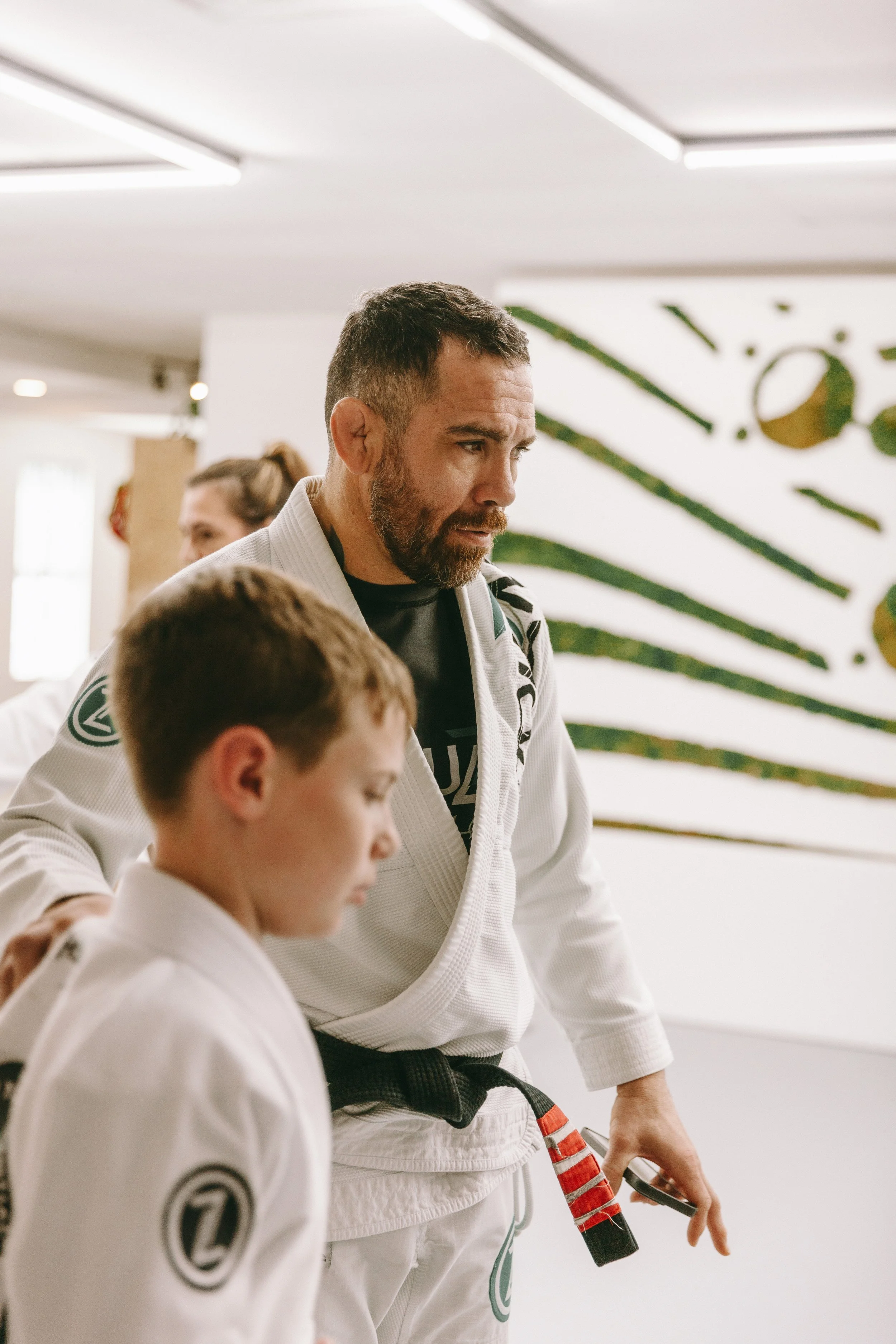
If your child is shy, uncoordinated, or just not naturally athletic, starting any new activity can feel like walking into the deep end. As a parent, you’re trying to do the right thing. You want them to move their body, make friends, and build confidence. But you also don’t want them to feel embarrassed, left behind, or singled out as “the kid who can’t keep up.”
We’ve coached enough kids to tell you this clearly: in kids Jiu Jitsu, the “not athletic” label often stops making sense after a few weeks. Not because we magically change a child’s personality, and not because we lower the standard. It changes because Jiu Jitsu is built differently than most youth sports. It rewards learnable habits over natural speed, and it gives kids a clear path forward even if they start out unsure.
A lot of parents come in with a picture in their head of what “good” looks like. They imagine the kids who run fast, catch well, or already look coordinated. Those kids can do well in Jiu Jitsu too. But they aren’t the only ones who succeed, and they’re not even always the ones who stick with it. Jiu Jitsu has a way of leveling things out over time, because the skills that matter most are not the ones kids are born with. They’re the ones they practice.
Jiu Jitsu rewards timing, balance, attention, patience, and composure. Those aren’t personality traits you either have or don’t have. They’re trainable. Timing is something we build by repeating the same movements in a consistent way until the body starts to recognize patterns. Balance improves when a child learns how to place their weight and how to move without rushing. Attention gets better when the environment is structured, the expectations are clear, and the coach helps them return to the task without shame. Patience is a skill. Composure is a skill. And honestly, those are the skills most kids need more than a bigger vertical jump.
This is why many kids who don’t shine in fast-paced ball sports end up doing well in Jiu Jitsu. Ball sports can be chaotic for some kids. Things are moving quickly, the rules change based on the situation, and a child might only touch the ball a few times in an entire game. If they miss, everyone sees it. In Jiu Jitsu class, we can slow things down. We can repeat. We can isolate one movement. We can give a child a “job” to do that makes sense, and then build from there. That structure matters, especially for kids who feel overwhelmed easily.
You might also notice that in Jiu Jitsu, success doesn’t depend on being the fastest kid in the room. It depends on using your body in a smart way. A smaller or less athletic child can learn to create strong frames, manage distance, and stay safe under pressure. They learn how to survive first, then how to escape, then how to control, and only after that do we spend more time on submissions. That order is intentional. It protects the child physically, and it protects them emotionally too. When a kid knows how to get out from underneath, they stop feeling trapped. When they stop feeling trapped, they stop panicking. When they stop panicking, they can actually learn.
Something else happens for “late bloomers” that many parents don’t expect. A child who struggles early often ends up building a stronger foundation than the child who wins early without understanding why. When things don’t come easily, the child has to learn real fundamentals. They have to learn how to move their body safely. They have to learn how to breathe when they’re uncomfortable. They have to learn how to listen and apply coaching, not just rely on natural coordination. They learn how to problem-solve instead of freeze.
Over time, that becomes an advantage.
We’ve watched plenty of kids start out awkward and unsure, and six months later they’re the ones with the cleanest movement and the best control. Not because they turned into a different person, but because they built their game on basics. Basics hold up under pressure. Basics don’t disappear when you get nervous. Basics are what make a child feel steady.
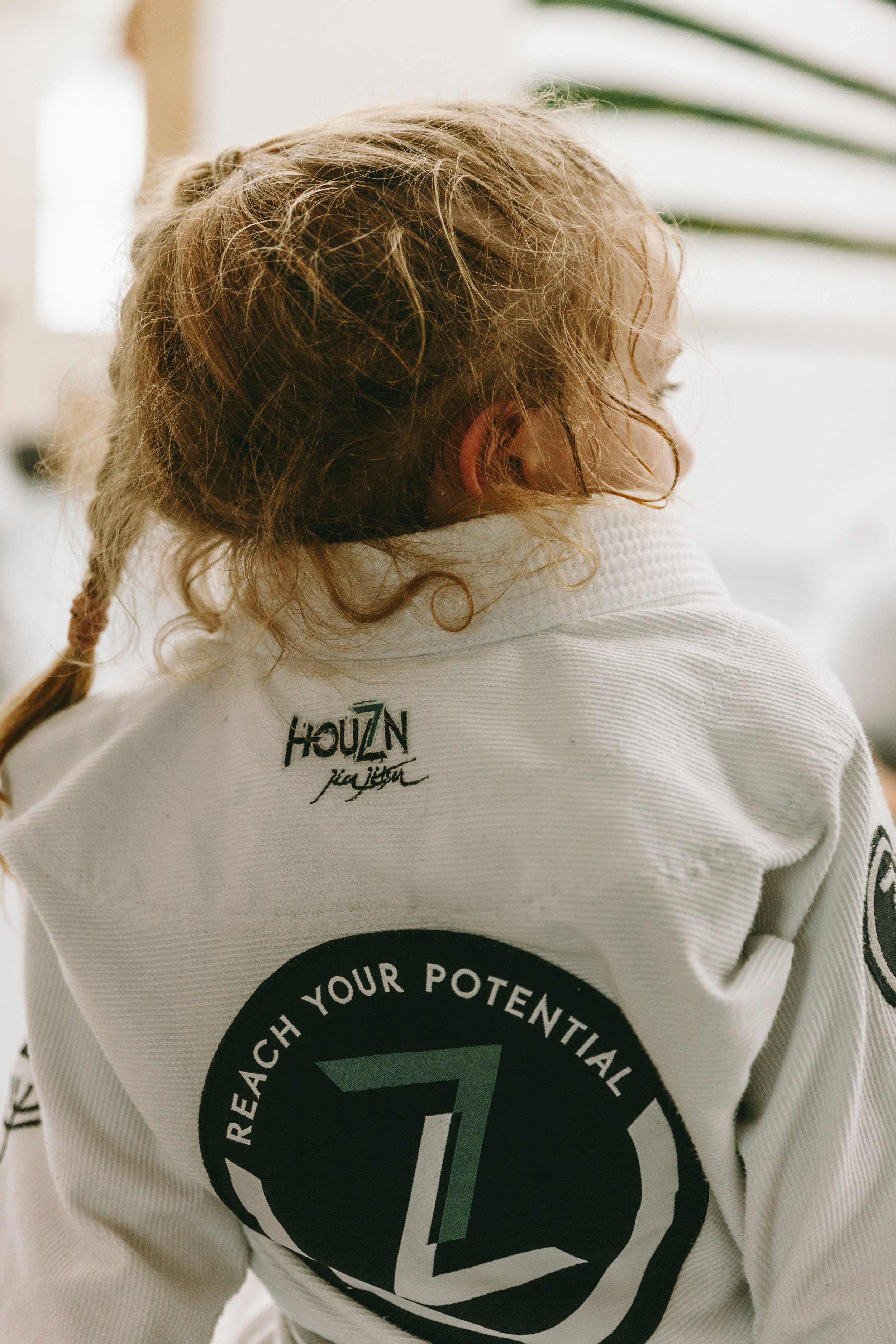
If your child is shy, Jiu Jitsu can be a good fit for another reason: it gives them a safe way to interact without having to be loud or extroverted. They don’t have to “perform.” They don’t have to be the funniest or most talkative kid to belong. In a good kids program, the routine stays familiar. They line up, they warm up, they drill, they spar in a controlled way, they line up again. That predictability helps shy kids settle in. And as they get comfortable, the social part tends to grow naturally. They start to recognize teammates. They share small moments of success. They start to feel like they have a place in the room.
A question we hear a lot is, “What if my kid gets discouraged because other kids are ahead?” That’s a real concern, and it’s why we pay close attention to the culture we build.
Comparison is the enemy of long-term training. Kids will compare no matter what, but the way a school structures progress can either fuel that comparison or calm it down. At Houzn, we use stripes to mark progress in a way that fits the child’s consistency, skill application, and behavior. It’s not a rigid calendar where everyone moves up just because time passed. It’s also not a mystery where kids feel like they’re invisible. We want kids to see that their actions matter. Showing up matters. Trying matters. Listening matters. Using the technique the right way matters. Being a good teammate matters.
That approach helps kids stay motivated without feeling like they’re in a race. It also helps parents, because you can see progress without turning every class into a test. A stripe is not “you’re the best.” It’s “you’re growing.” And for a shy or unathletic child, that message is important. They need to feel improvement without needing to dominate anyone.
It also helps to understand what “progress” looks like in kids Jiu Jitsu, because it’s not always obvious from the outside. Sometimes the biggest improvement is that a child who used to quit when they were frustrated now takes a breath and tries again. Sometimes it’s that they used to fall over during drills and now they can keep their base. Sometimes it’s that they used to avoid partner work and now they can pair up without melting down. Those wins matter. They’re not as flashy as winning a match, but they’re the wins that shape who your child becomes.
As a parent, you can support that process in a few simple ways.
Consistency is the big one. Most kids don’t feel comfortable in the first class. Many don’t feel comfortable in the first month. If your child is shy or unsure, the early stage is mainly about becoming familiar with the room, the coach, and the structure. The more consistent the routine is, the faster that comfort builds. If classes are random and spaced out, it can feel like starting over every time.
Praise effort more than outcomes. If you only celebrate “winning,” a child who isn’t naturally athletic will feel like they’re failing even when they’re improving. Instead, look for controllable things: they showed up, they tried the drill, they listened, they stayed calm, they asked for help, they kept going after making a mistake. Those are the exact habits that create confident students over time.
Avoid labels, even when you think you’re being honest. “You’re not athletic” lands heavy on a child. Even “it’s okay, you’re not a sports kid” can become a story they carry into every challenge. A better approach is to describe what you see in a way that leaves room for growth. You can say, “You’re learning how to move your body,” or “You’re getting more comfortable,” or “You kept trying even when it was hard.” Those phrases build identity around improvement.
And ask better questions after class. Instead of “Did you win?” try “What did you learn today?” or “What was hard today?” or “What are you working on right now?” That tells your child that learning matters more than ranking, and it gives them a chance to reflect. Reflection is part of how kids turn practice into skill.
One more thing I’ll say, because it’s important: a good kids Jiu Jitsu program should feel challenging but not chaotic. Your child should be safe physically, and they should be handled with care emotionally. They can be pushed, but they shouldn’t be shamed. They can be corrected, but they shouldn’t be embarrassed. If a child is shy or uncoordinated, the coach’s job is to guide them with clarity and patience, not to pressure them into being someone else.
If you want a coach’s view of how your child is progressing, grab your kids coach after class or ask for a conference with the coach. We’ll give you a simple, specific answer about what they’re doing well, what they’re working on, and how you can support them at home without turning it into homework.