Respect in Kids Jiu Jitsu: What It Really Means
Respect is one of those words that sounds simple until you try to teach it.
Most parents aren’t really asking for “politeness.” They’re asking for something deeper: a child who can manage themselves around other people. A child who can handle being corrected without snapping. A child who can be excited without being out of control. A child who can feel frustrated without taking it out on whoever is closest.
That’s exactly what Kids Jiu Jitsu trains, when it’s taught the right way.
At Houzn Jiu Jitsu Academy, we work with kids across a wide range of ages and personalities. Some are naturally gentle. Some are intense. Some are shy and cautious. Some come in like a firecracker. Respect matters for all of them, but the “why” can look different from child to child.
In Jiu Jitsu, respect isn’t a speech. It’s not a poster on the wall. It’s a daily practice. It’s built into the structure of class, the way we pair partners, the way we correct behavior, and the way kids learn to share space with other bodies moving at full speed.
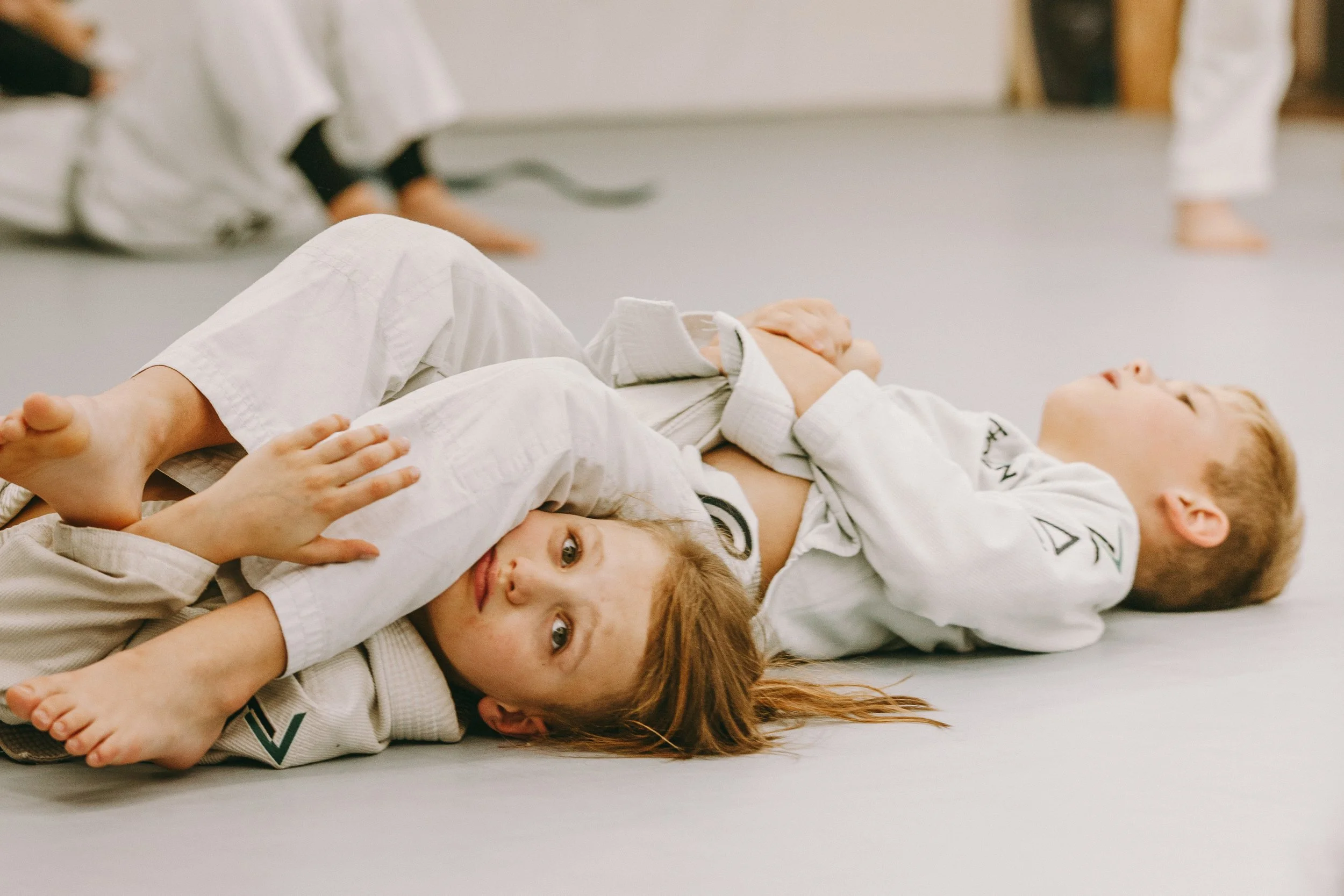
The reason Jiu Jitsu can shape respect so well is that it makes respect practical. It makes it real. If a child is careless, somebody gets hurt. If a child refuses to listen, they can’t train safely. If a child can’t control themselves when they’re frustrated, they lose the trust of the room.
So the mat becomes a safe, guided place to learn the social skill underneath the word “respect”: self-control in relationship with other people.
When parents ask us about respect, we usually start with one simple idea. Respect starts with safety.
Because Jiu Jitsu involves physical contact, the first form of respect is learning how to keep your partner safe while still training hard. A child can’t be “respectful” in the Jiu Jitsu sense if they are rough, careless, or unpredictable. It doesn’t matter if they say “yes sir” with perfect manners. On the mat, respect shows up in their hands, their pressure, their pace, and their ability to stop immediately.
That’s why in a good kids program, the first lessons aren’t flashy submissions. The first lessons are things like controlling your body, understanding space, and learning what “too much” feels like.
Kids don’t naturally know where that line is. Some kids are naturally cautious and need permission to apply appropriate pressure. Other kids come in with lots of intensity and need to learn how to dial it back without feeling like they’re being punished for having energy. We coach both.
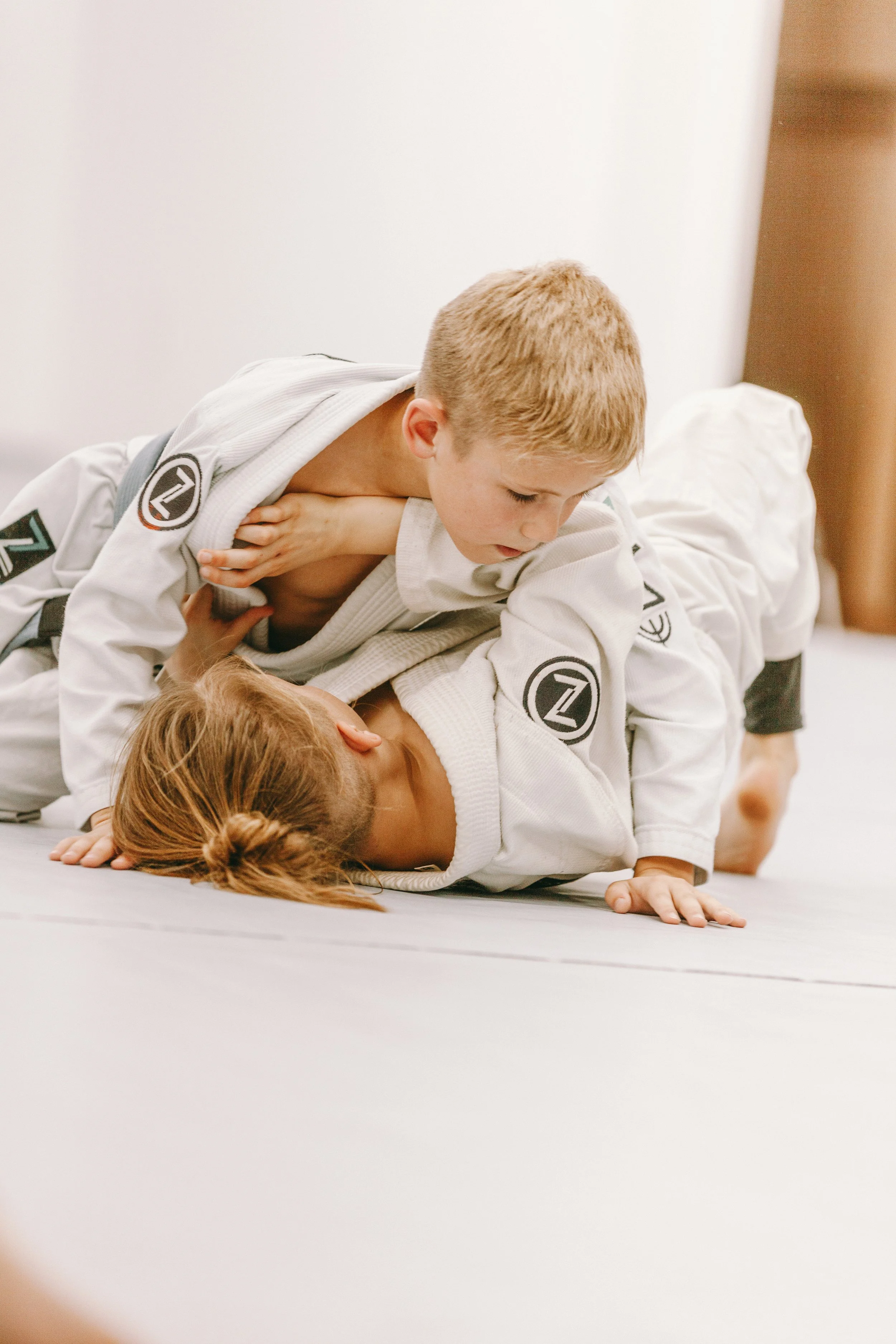
A respectful child doesn’t crank or yank. They don’t treat their partner like a training dummy. They learn to use steady pressure instead of sudden force. They learn that speed without control is not impressive. They learn to stop when told, right away, even if they think they were “about to win.” They learn to match intensity appropriately, which is a fancy way of saying they learn to play the same game their partner is playing.
Most importantly, they learn to treat every partner like a teammate.
That idea changes kids. In most areas of life, kids get taught “don’t hit” or “be nice,” but they don’t get many structured reps of what it means to be safe while still being physical. Jiu Jitsu gives them those reps every class. They learn that being a good partner is part of being good at Jiu Jitsu.
This is also why behavior matters for stripes at Houzn. We follow the IBJJF kids belt system, and stripes are not just about technique. We’re looking at a few things over time: hours of practice, whether a child can apply what we’re teaching with a real partner, and whether their behavior supports a safe training room. Four stripes are needed before a belt change, and we’re honest about what that means. Skill without control isn’t the goal. In Kids Jiu Jitsu, control is the foundation.
If you’re a parent, that should be reassuring. It means we’re not rewarding a child for being “good at fighting.” We’re rewarding them for being a safe, respectful student who is actually learning.
Respect is also coachability.
Coachability is one of those words that can sound abstract until you see it on the mat. Coachability is listening when the coach explains. It’s looking up instead of fooling around. It’s accepting corrections without taking it personally. It’s trying the move the way it’s taught, even if you think you already have a better idea.
That last part is important for kids. A lot of kids are used to environments where they can negotiate, debate, or avoid. They’re smart, and they test boundaries. That’s normal. But when it comes to learning a physical skill safely, the ability to follow direction matters. If a coach says, “Keep your elbow tight,” and a child ignores it, they might get their arm extended in a way that hurts. If a coach says, “Slow down,” and a child speeds up, they might collide with another pair.
So on the mat, listening isn’t about obedience for its own sake. It’s about safety and progress.
Over time, kids who become coachable on the mat tend to become more coachable at home and at school. Not perfect, but improved. Parents tell us they notice quicker responses when they ask their child to stop. They notice less arguing about every small direction. They notice a child who can take feedback without spiraling. That’s not because Jiu Jitsu magically fixes personality. It’s because coachability is trained as a skill.
A coachable kid has practiced doing something that’s hard: letting an adult guide them while their ego is involved. Jiu jitsu naturally brings ego up, because there’s winning and losing, and kids compare themselves. We use that moment to teach humility and learning. The message becomes, “Correction isn’t criticism. It’s information.”
That lesson transfers.
Respect during frustration is where most parents really want help, even if they don’t say it that way.
It’s easy to be respectful when you’re winning, comfortable, and in control. The hard kind of respect is respectful behavior during disappointment.
In Jiu Jitsu, kids get put in uncomfortable positions and they don’t always like it. They get pinned. They get stuck. They get their favorite move shut down. They lose to a smaller kid who has more time on the mat. They get corrected when they were sure they were doing it right. Those moments bring up real emotion.
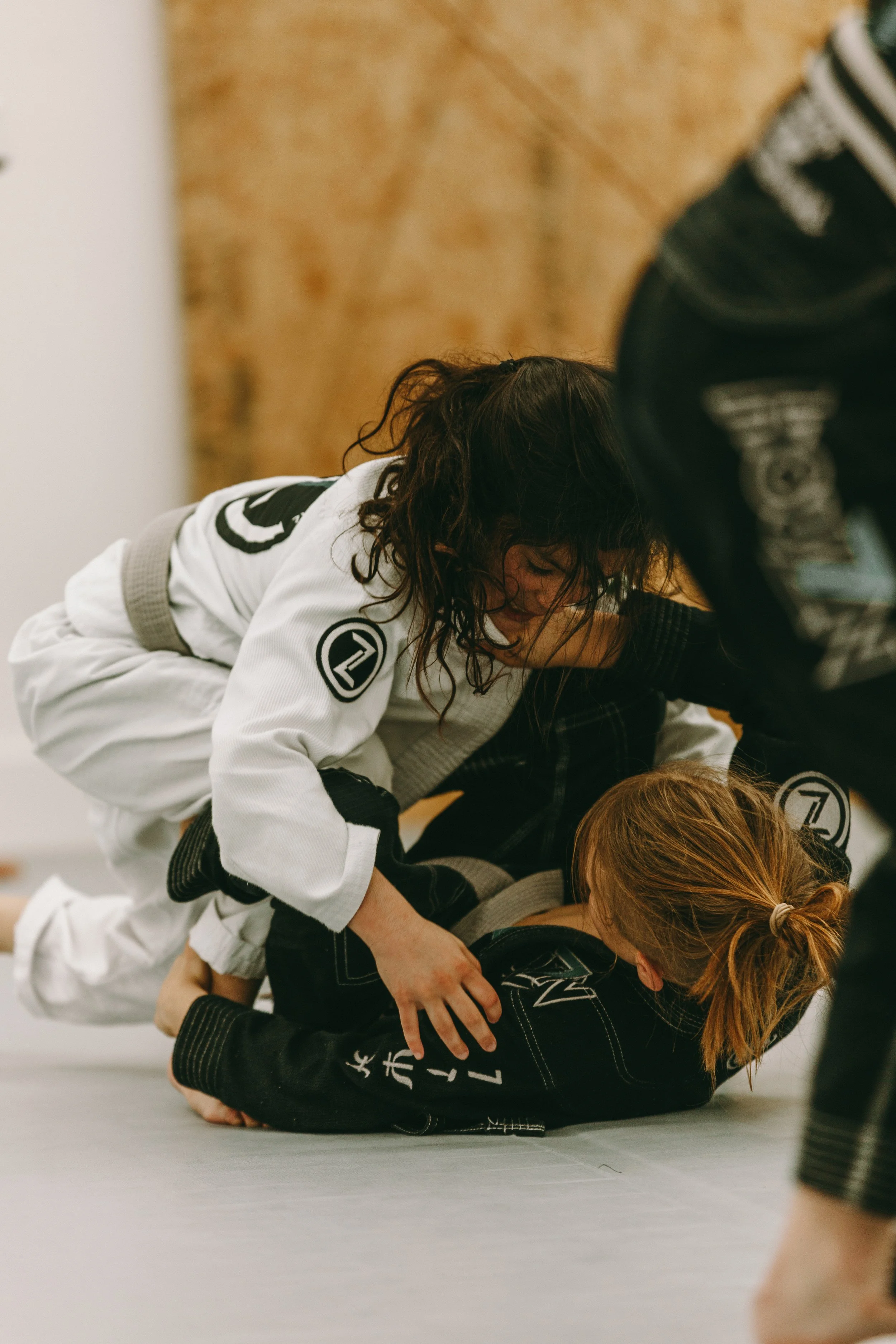
If a child’s default is to react physically when they’re upset, Jiu Jitsu gives us a clear and safe place to address it. We teach them to keep their hands safe anyway. We teach them to pause, breathe, and reset. We teach them that they can feel a big emotion and still be in control of their body.
That is respect in its most useful form: self-control under stress.
Parents sometimes ask, “Are they going to get more aggressive doing Jiu Jitsu?” In a room with poor coaching and loose standards, that can happen. In a room with strong standards and good culture, the opposite tends to happen. Kids learn that intensity is not the same thing as aggression. They learn that you can train hard and still be safe. They learn that losing is not an emergency. They learn to separate frustration from behavior.
That’s why we’re picky about how kids roll, who they roll with, and what we allow in live training. Live rounds are valuable, but only when kids can do them with control. We want the room to be challenging, but we also want it to be predictable and safe.
It’s also worth saying out loud that Jiu Jitsu is one of the few places where kids regularly practice consent and boundaries in a physical setting. Kids learn to ask, “Are you okay?” They learn to respect the tap. They learn that when someone says stop, we stop. They learn that we don’t keep going just because we want to finish. Those are simple lessons, but they’re powerful.
A child who truly understands “stop means stop” in a physical sport tends to understand it better everywhere else.
When respect is trained this way, parents usually notice it at home in a few familiar areas.
One is siblings. You might still see conflict, because siblings are siblings, but you often see fewer aggressive reactions. You see a child who can de-escalate faster, or who can walk away sooner, or who can play rough without crossing the line into unsafe. You may hear them say things like, “I’m not doing that,” or “Stop,” with a clearer voice. That’s boundaries.
Another area is the ability to stop when asked. In Jiu Jitsu, kids hear “pause” and “stop” often, and they practice responding immediately. That becomes a trained reflex. So when you say, “Hey, I need you to stop,” it’s not a brand-new idea. Their nervous system has reps with that cue.
Parents also mention improved tone when corrected. Correction is hard for kids because it can feel like rejection. On the mat, correction is normal and constant. Kids learn that being corrected doesn’t mean they’re bad; it means they’re learning. So they begin to handle feedback with less defensiveness.
And finally, you often see a stronger sense of boundaries. Kids learn what respectful touch is. They learn that partners are not toys. They learn that play has rules. That boundary awareness is one of the best “real life” benefits of Kids Jiu Jitsu, especially as kids get older and social situations get more complex.
Now, a quick note for parents who want to support this without turning it into a constant lecture.
The most effective support is usually simple, specific praise when you see the behavior you want. If you notice your child stopping quickly when asked, tell them. If you notice them handling corrections better, point it out calmly. If you notice them being a good teammate, acknowledge it. Kids repeat what gets reinforced.
It also helps to use the same language we use on the mat. When a child is escalated, long explanations usually don’t land. Short cues do. “Hands safe.” “Breathe.” “Reset.” Those are useful at home too, because they’re neutral and action-oriented.
Respect doesn’t mean your child becomes quiet and compliant. Respect means they learn how to live around other people without making the environment unsafe or unpleasant. It means they can be strong without being reckless. It means they can be upset without being disrespectful. It means they can take direction and still keep their personality.
That’s a worthwhile goal, and it’s very trainable.
If you’re curious how your child is doing in the “good teammate” category, grab your kids coach after class to ask. We’ll give you a clear, honest read on what we’re seeing, and one simple focus to work on over the next few weeks.
Looking for kids jiu jitsu in Mount Pleasant, SC that teaches real respect? Learn how Houzn Jiu Jitsu trains safety, coachability, and self-control under frustration so kids become better teammates at the Academy and at home.