
Learning to Lose in Kids Jiu Jitsu (A Healthy Skill for School and Life)
Many parents want their child to feel confident, but they also hate seeing their child “lose.” That’s a normal parent reaction. We’ve had that same conversation hundreds of times here at Houzn Jiu Jitsu. A mom or dad will hang back after class and say, quietly, “Coach… my kid gets really upset when they get tapped,” or “They hate being on the bottom,” or “They did great until someone beat them, and now they don’t want to come back.”
If that’s your situation, I want you to know two things. First, your child isn’t broken. Second, neither are you for feeling protective. Watching your kid struggle hits a different nerve than watching an adult struggle. It can feel like the world is putting weight on their chest and you can’t lift it off fast enough.
Jiu jitsu approaches confidence differently than most activities. We don’t build it by creating a path where a child always wins. We build it by showing them they can survive hard moments, stay respectful, make good decisions under pressure, and come back again. That’s the kind of confidence that lasts, because it isn’t based on being the best kid in the room. It’s based on becoming the kind of kid who can handle the room.
When parents hear that, they usually nod, but the emotional part is still there. So let’s make it simple and real: what does “losing” actually mean in kids jiu jitsu, and why do we lean into it instead of avoiding it?
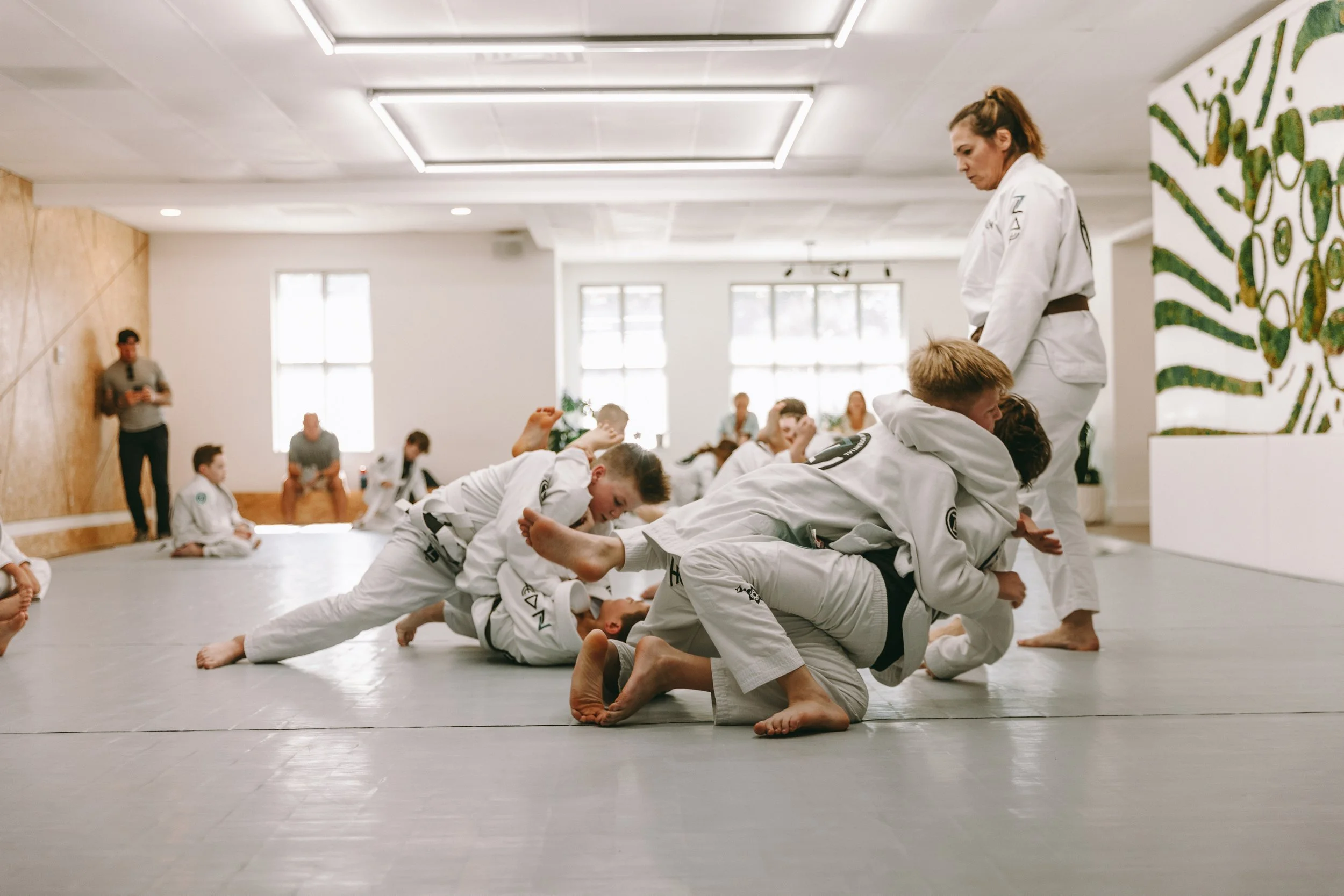
In a kids class, losing doesn’t look like a scoreboard. It looks like getting stuck in a position and not knowing how to move. It looks like getting swept and ending up underneath. It looks like being controlled by a training partner who feels stronger or more technical. And sometimes it looks like getting tapped.
For a lot of kids, especially early on, those moments feel personal. A child doesn’t think, “I lost a position.” They think, “I lost.” And when you’re seven, nine, or eleven, “I lost” can quickly turn into “I’m not good at this,” or “Everybody saw me,” or “Coach is disappointed,” even when none of that is true.
This is where the culture of the room matters. At Houzn, we’re serious about safety and we’re serious about character. We don’t allow the mat to become a place where kids get laughed at, singled out, or treated like their value depends on their performance. Jiu jitsu is a proving ground, but it’s not a humiliation ritual. It’s a place to build personal responsibility, self-control, and a steady kind of courage.
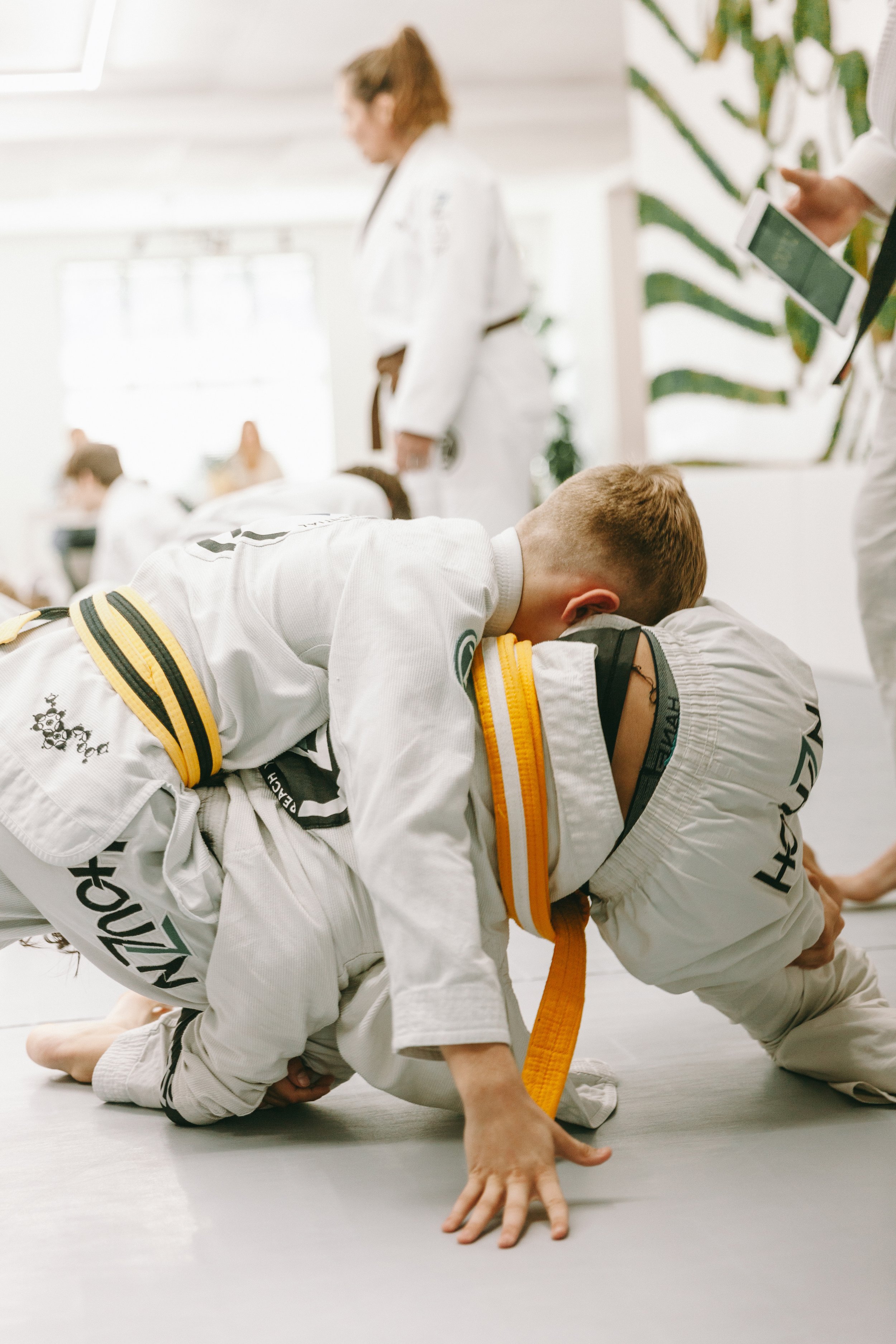
Over time, if your child stays consistent, something shifts. They start to understand what those tough moments actually are. They’re feedback. If your child keeps getting stuck in side control, it doesn’t mean they’re weak. It means they’re missing a detail. If they keep getting swept when they stand up, it doesn’t mean they’re hopeless. It means their base and posture need work. If they keep getting caught in the same submission, it doesn’t mean they “can’t do jiu jitsu.” It means we now know exactly what to practice.
That’s one of the reasons jiu jitsu is so effective for building confidence. It’s honest. It gives instant information. And when you train in a healthy environment, that honesty doesn’t tear you down. It builds you.
Now let’s talk about the tap, because this is the part that parents either love right away or worry about at first.
In jiu jitsu, tapping is how we say, clearly and safely, “That’s enough.” It’s the simplest safety system in martial arts, and it’s also one of the best life skills a child can learn. When a child learns to tap early and tap without shame, they’re learning how to recognize a limit before something breaks. They’re learning how to communicate under pressure. They’re learning that you can be calm even when you’re uncomfortable. And they’re learning how to reset and keep going without turning it into drama.
That “reset” piece is huge. Most kids don’t need more intensity in their life. They need better emotional control. They need practice in the middle space between exploding and quitting.
A lot of kids, when they feel behind, go one of two ways. They go into panic mode and fight harder and harder until they get frustrated, angry, or reckless. Or they shut down and check out because it hurts to try when you might fail. Neither of those habits helps a child in school, in friendships, or later in life. Tapping teaches a third option. You acknowledge reality, you choose safety, and you start again.
Some parents hear “tap” and worry it teaches their child to give up. It doesn’t. The kid who taps appropriately usually becomes more resilient, because they’re not carrying fear. They know they have choices. They learn that a bad position isn’t the end of the world; it’s just a problem to solve. And they learn that there is no shame in protecting your body and trying again.
There’s also a deeper layer that shows up as kids mature. Tapping teaches boundaries. A child learns that they are allowed to say “stop” in a clear way, and that good people respect it. That is a powerful lesson, especially in a world where kids often feel like they have to tolerate discomfort to fit in. On our mats, they learn respect for others and respect for themselves at the same time.
This is also why we don’t chase “always winning” as the goal.
When a kid always wins early, they often stop exploring. They stick with whatever works and avoid the places where they feel uncertain. They can become dependent on being “the good one,” which sounds nice until the day they aren’t. Then the whole identity gets shaky. Their confidence was built on results, not on growth.
The kids who struggle and stay with it often become the most capable long-term. They learn problem-solving because they have to. They learn patience because there is no shortcut. They learn composure because the mats keep asking them to breathe and think when they’d rather rush. And they learn humility, which isn’t about being small; it’s about being teachable.
That’s one of our core values at Houzn. Discipline is the road to achievement. Not the kind of discipline that feels like punishment, but the kind that builds a person from the inside. A child who learns to show up, listen, practice, and improve one piece at a time is learning how to create their own results. That lesson goes way beyond jiu jitsu.
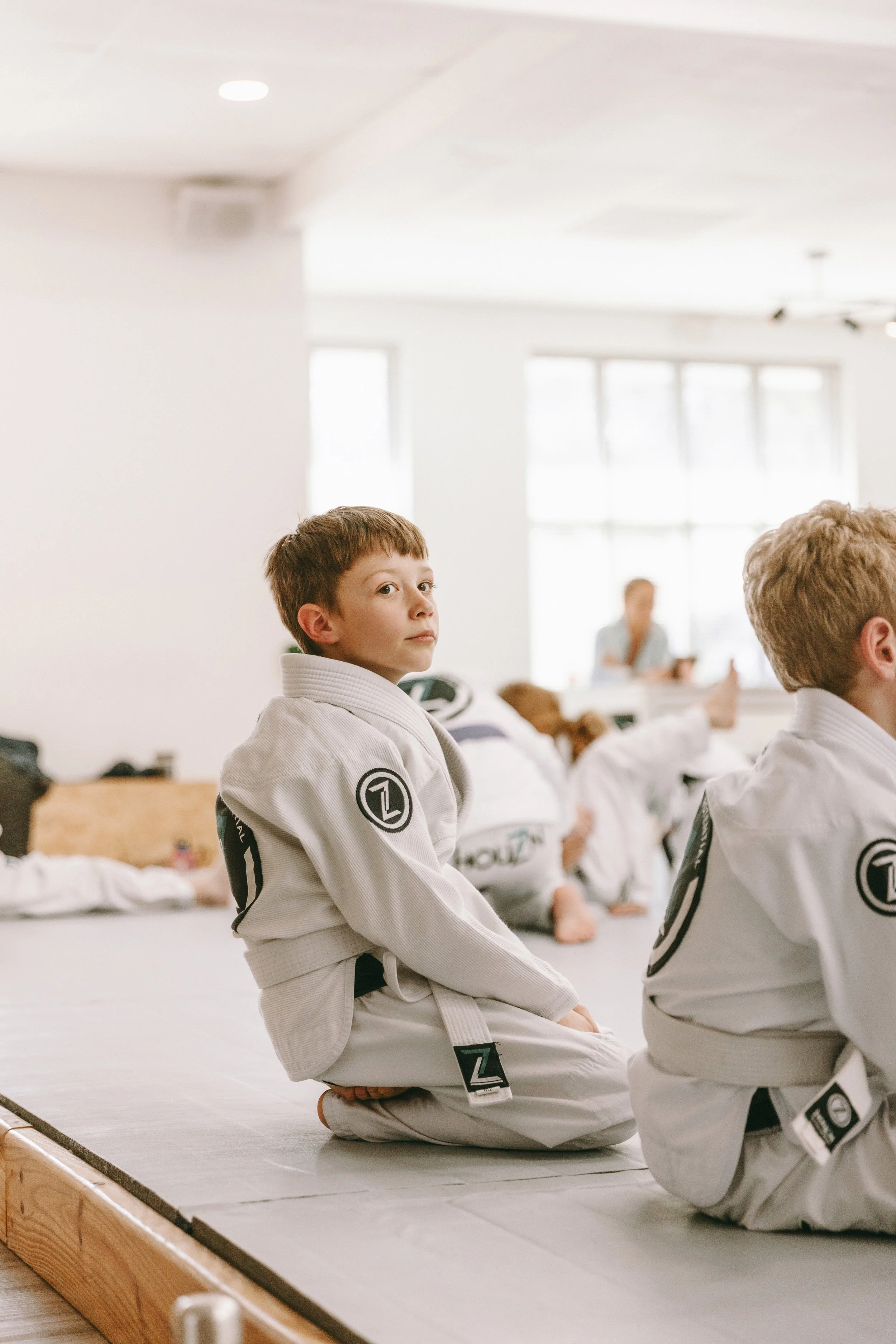
If your child is sensitive, you may need a little more guidance around how to talk about losing. Sensitive kids usually aren’t trying to be difficult. They’re often highly aware, highly self-critical, and quick to feel embarrassment. When they get tapped, they might feel like they disappointed you. Even if you didn’t say a word, they might still carry that story.
The best thing you can do is normalize it in a calm, matter-of-fact way. “Everyone gets tapped” is one of the most helpful sentences you can say, as long as you say it gently. You’re not dismissing their feelings. You’re taking them out of the spotlight. You’re reminding them they’re part of the process, not the exception to it.
The next thing is to praise the right moments. Praise recovery. If they got tapped and re-engaged, that’s a win. If they were frustrated and still finished the round respectfully, that’s a win. If they tried the escape you’ve been working on, even if it didn’t work, that’s a win. When you praise effort and decision-making, you help them build process-based confidence. Process-based confidence doesn’t collapse when things go wrong.
What tends to backfire is turning the drive home into an interrogation. I understand why parents do it. You want to help. You want information. But for many kids, a detailed play-by-play feels like reliving the worst parts of class. They might not have the words to explain what happened, or they might feel like they’re being evaluated. That can turn a normal tough day into a bigger emotional event.
A better approach is to keep it simple. Ask one question and then let them lead. “What did you work on today?” or “What was one thing you did better?” If they want to talk, listen. If they don’t, let the class be the class and let home be home. Your job isn’t to be their second coach. Your job is to be their safe place.
As coaches, our job is to challenge them without overwhelming them. A well-run kids program doesn’t throw a child into chaos and call it toughness. We scale the room. We match partners carefully. We teach rules that protect everyone. We correct behavior, not with shame, but with clear expectations. We create an environment where kids can learn personal responsibility and still feel supported.
One practical tool that helps a lot is giving a child a single focus for a few weeks. Not “win more.” Not “don’t get tapped.” Something they can control, like breathing before they move, keeping their elbows in, building their frames on bottom, or standing up with posture. A child who has one clear job shows up differently. They’re less likely to spiral because they’re not trying to solve everything at once. They’re building a brick, not trying to build the whole house in one night.
If you’re wondering when you’ll see the benefits at home, you’ll usually notice them in ordinary moments first. Your child might quit less quickly at homework. They might handle losing a game with less intensity. They might take feedback from a teacher without melting down. They might still get frustrated, but the recovery is faster. They might even start using the language of training without realizing it: “I’m going to try again,” or “I need to practice,” or “That was hard, but it’s okay.”
That’s the real transfer. Jiu jitsu becomes a framework for life. Pressure happens, you breathe, you find a solution, you reset, you keep going. That’s what we mean when we say confidence is trained. It’s not a pep talk. It’s a skill.
There’s also something important happening beneath the surface. In a healthy program, kids learn morality and truth in a practical way. They learn what it means to be honest about where they are, without making excuses. They learn that personal responsibility isn’t a punishment; it’s freedom. When a child realizes, “If I practice this one thing, I get better,” they start to understand that they are not stuck. They can create change. That’s a powerful idea for a kid to carry.
So if losing is becoming a sticking point, don’t wait until it turns into “I don’t want to go anymore.” Grab your kids coach after class or ask for a quick conference. We can help you choose a simple focus for the next few weeks, and we can adjust how we coach your child inside the room so they’re challenged in a way that builds them instead of flooding them.
Most of the time, the solution isn’t making the training easier. It’s making the training clearer. Clear goals, good partners, steady coaching, and the right words at home. That’s how a sensitive child becomes a strong one, without losing who they are.
At Houzn Jiu Jitsu Academy, we’re here to help your child reach their potential, not just on the mat, but in the way they carry themselves through life. And sometimes that starts with learning how to lose one small moment, take a breath, and come back.