
How Kids Earn Stripes in Brazilian Jiu Jitsu: Practice Hours, Skill, and Behavior
One of the most common parent questions in kids jiu jitsu is: “When do they get their next stripe?”
It’s a fair question. Most parents aren’t asking because they’re impatient or trying to rush anything. They’re asking because they care. They want to know their child is learning, growing, and not getting left behind. They also want something they can point to that feels concrete, especially when jiu jitsu can look messy from the outside. Kids tumble, scramble, laugh, sometimes freeze, sometimes surprise you. It doesn’t always look like “progress” the way a school grade or a soccer goal looks like progress.
So let’s make it simple and clear. At Houzn, stripes are not mysterious, and they’re not random. They’re a way for us to recognize real development in a way kids can feel and understand.
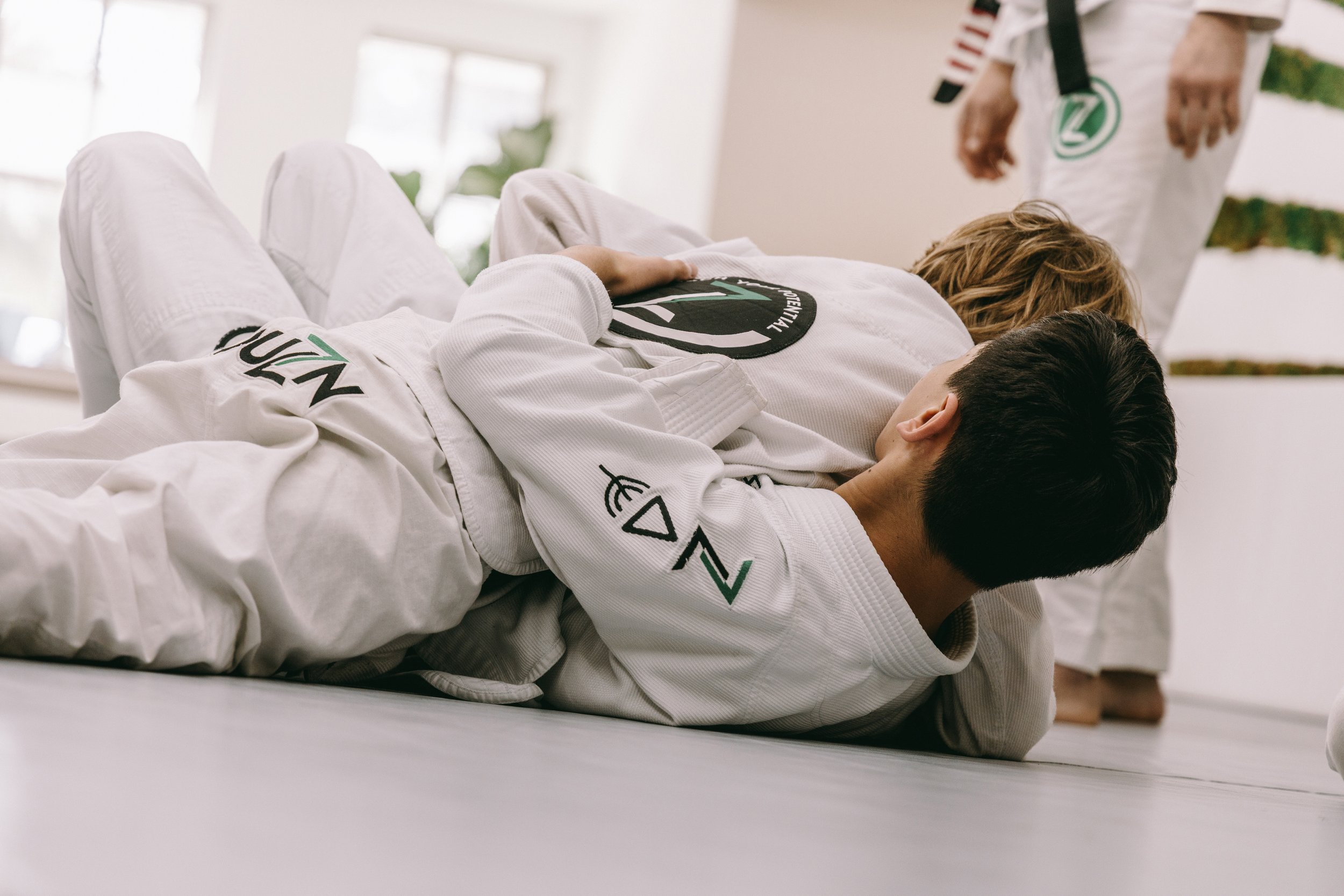
Stripes are not a popularity contest. They’re not about who is naturally athletic. They’re not about who “wins” the most rounds in class. And they’re definitely not something we hand out to keep families happy. That kind of system might feel good for a week, but it hurts kids in the long run because it teaches them that rewards come from being seen, not from building skills and character.
Stripes are a tool. They help kids stay motivated through a long learning curve while we reinforce the habits that actually make them better on the mat and more confident off the mat. When we put a stripe on a belt, what we’re really saying is: I see your effort. I see your improvement. I see your maturity. That last part matters more than most people realize. Kids don’t just “learn jiu jitsu.” They learn how to handle challenge, frustration, close contact, and feedback. Those things are part of the art, whether we say it out loud or not.
At Houzn, we use the IBJJF kids belt colors. That matters because it gives families a structure that’s respected and consistent across Brazilian jiu jitsu. If you move, travel, visit another academy, or compete, you’ll recognize the system and they’ll recognize yours. It keeps things honest and it keeps expectations realistic.
Between belts, we use stripes, and a child earns four stripes before moving to the next belt. Think of stripes as mile markers. Kids need them. Jiu jitsu takes time. There’s a lot to learn, and progress often happens in little jumps. If a child trains for months and feels like nothing changes, they start to wonder if they’re “bad at it.” Stripes help prevent that. They create a rhythm of acknowledgment while we keep our standards steady.
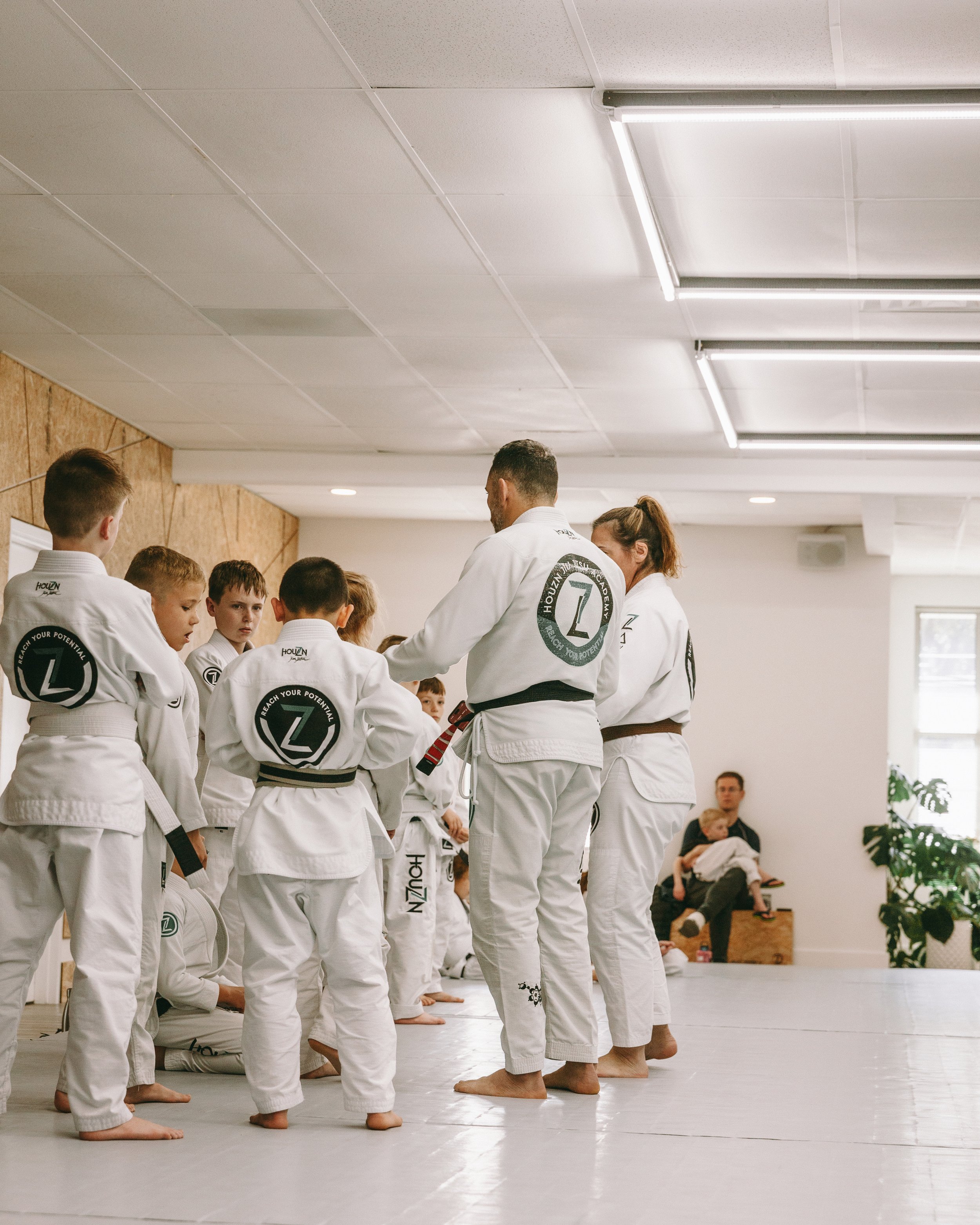
Now, what does it actually take to earn a stripe at Houzn?
We look at three main criteria. We don’t treat them as separate “boxes” where a kid can ignore one and make up for it with another. We look at the whole picture.
First, we look for at least 24 hours of practice.
We do this because it protects kids from what I call “promotion by calendar.” Skills require repetition. There’s no shortcut around time on the mat. Two kids could both have been enrolled for three months, but one trains once a week and the other trains three times a week. If we promoted them the same just because the calendar says so, the stripe would stop meaning anything.
Tracking hours is also fairer for families. Some weeks you’re traveling. Some weeks school is heavy. Sometimes a kid is sick. Life happens. Hours give us a better measurement of actual training exposure, and over time it smooths out the ups and downs.
Second, we look for the ability to apply skills learned.
This part is important, and it’s also where parents sometimes misunderstand what we’re looking for. We are not looking for perfect technique. We’re not looking for a child to move like an adult. Kids’ bodies are still developing. Their attention is still developing. Their emotional regulation is still developing. Expecting “perfect” would be unfair, and honestly it would make training tense instead of fun.
What we look for is recognition and intent. Do they recognize the situation we’ve been working on? Do they attempt the right response with real effort? If they get the move “wrong” but they clearly understood the goal and tried to solve the problem the way we taught, that’s progress. That’s learning. On the other hand, if a child can demonstrate a move when the coach is watching but can’t even attempt it during live rounds, that usually means they don’t own it yet. We help them get there.
A simple example: if we’ve been working on escaping from bottom position, I don’t need to see a flawless escape every time. I want to see them try the right frames, turn the right direction, and keep working even when it’s uncomfortable. That tells me they’re building real jiu jitsu, not just memorizing steps.
Respect shows up in small moments. Do they line up when asked? Do they keep their hands to themselves when the coach is talking? Do they stop when a partner taps? Do they help a smaller teammate feel safe? Do they recover well after losing a round, or do they melt down and quit? These are jiu jitsu skills too, because they’re the skills that let a kid keep training for years.
If you’re wondering why two kids can be the same age and still be on different stripe timelines, that’s normal.
Training frequency matters, but it’s not the only factor. Temperament matters. Some kids are naturally comfortable with close contact and physical problem-solving. Others need time to adjust to the feeling of being held down or squeezed, even when it’s safe. Comfort level matters a lot in the early months.
Growth spurts matter too. A kid who grows three inches in a short period often looks “clumsy” for a while. Their balance changes. Their timing changes. Their coordination needs time to catch up. That doesn’t mean they’re regressing. It means their body is updating and their brain is recalibrating.
Sleep and school stress matter more than people think. A tired kid learns differently. A kid who had a hard day at school may be more emotional on the mat. That doesn’t make them weak. It makes them human. We coach the whole child, not just the technique.
This is why comparing kids is a trap. It’s also why you’ll sometimes see a child who looks “quiet” get promoted before a child who looks “dominant” in sparring. The quiet child might be consistent, coachable, safe, and steadily improving. The dominant child might be relying on strength, avoiding learning, or struggling with control. In a good martial arts program for kids, progress is personal and it’s measured with care.
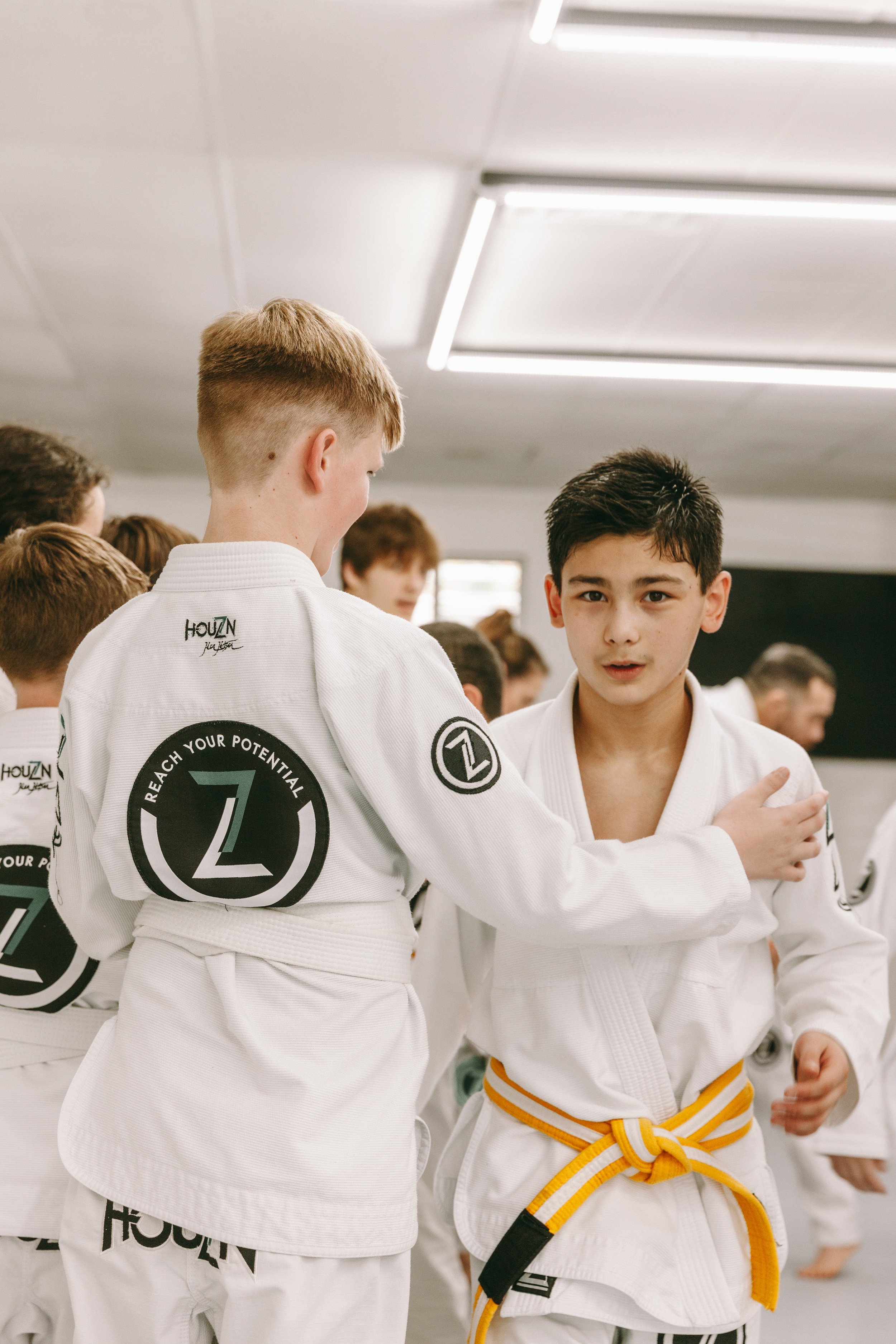
Now, the home question: what can parents do to support stripe progress?
You do not need to coach technique. In fact, most kids do better when their parent stays in the parent role and lets the coach be the coach. What helps the most is supporting routines and mindset.
If you can, protect training days as a normal weekly rhythm. When kids know that jiu jitsu is simply “what we do on Mondays and Wednesdays,” they stop negotiating with themselves. Consistency turns into confidence.
Praise effort and coachability more than outcomes. If a child hears “Good job” only when they win, they’ll start avoiding hard partners and hard situations. If they hear “I’m proud of how you kept trying” or “I liked how you listened and tried again,” they learn to stay steady under pressure. That’s the kind of confidence that lasts.
Ask what they learned, not who they beat. That one small change does a lot. “Who did you roll with?” is fine. “What did coach teach today?” is better. It keeps their attention on learning instead of status.
And celebrate small wins that adults often miss. Listening well. Trying again after getting stuck. Remembering to tap. Being kind to a newer teammate. These are the building blocks that lead to stripes, belts, and real growth.
One last thing that helps: if you’re ever unsure where your child stands, just ask us. You don’t have to guess, and you don’t have to read into what you see from the sidelines.
If you want to know what your child needs for their next stripe, grab your kids coach after class or ask for a short conference. We’ll give you a simple, specific answer based on your child, not based on a generic timeline. And if you’d like, tell us how many days a week you realistically want to train, and we can help you set expectations that feel calm and achievable for your family.