
How to Tell If Your Child Is Improving in Jiu Jitsu—Beyond Belts and Stripes
How to Tell If Your Child Is Improving in Jiu Jitsu—Beyond Belts and Stripes
Your child can be improving in Jiu Jitsu without earning a new stripe or getting the better of a training partner. Look for specific changes: recognizing a position, remembering part of a technique, responding to a correction, asking for help, or practicing with more control.
These signs do not replace technical development. They help you see it more clearly.
For our current families at Houzn Jiu Jitsu Academy in Mount Pleasant, SC, we want progress to be something you can discuss and understand—not something you have to guess at by watching a belt.
A promotion is a visible moment. Much of the learning that makes it possible is quieter.
Why progress can be hard to see
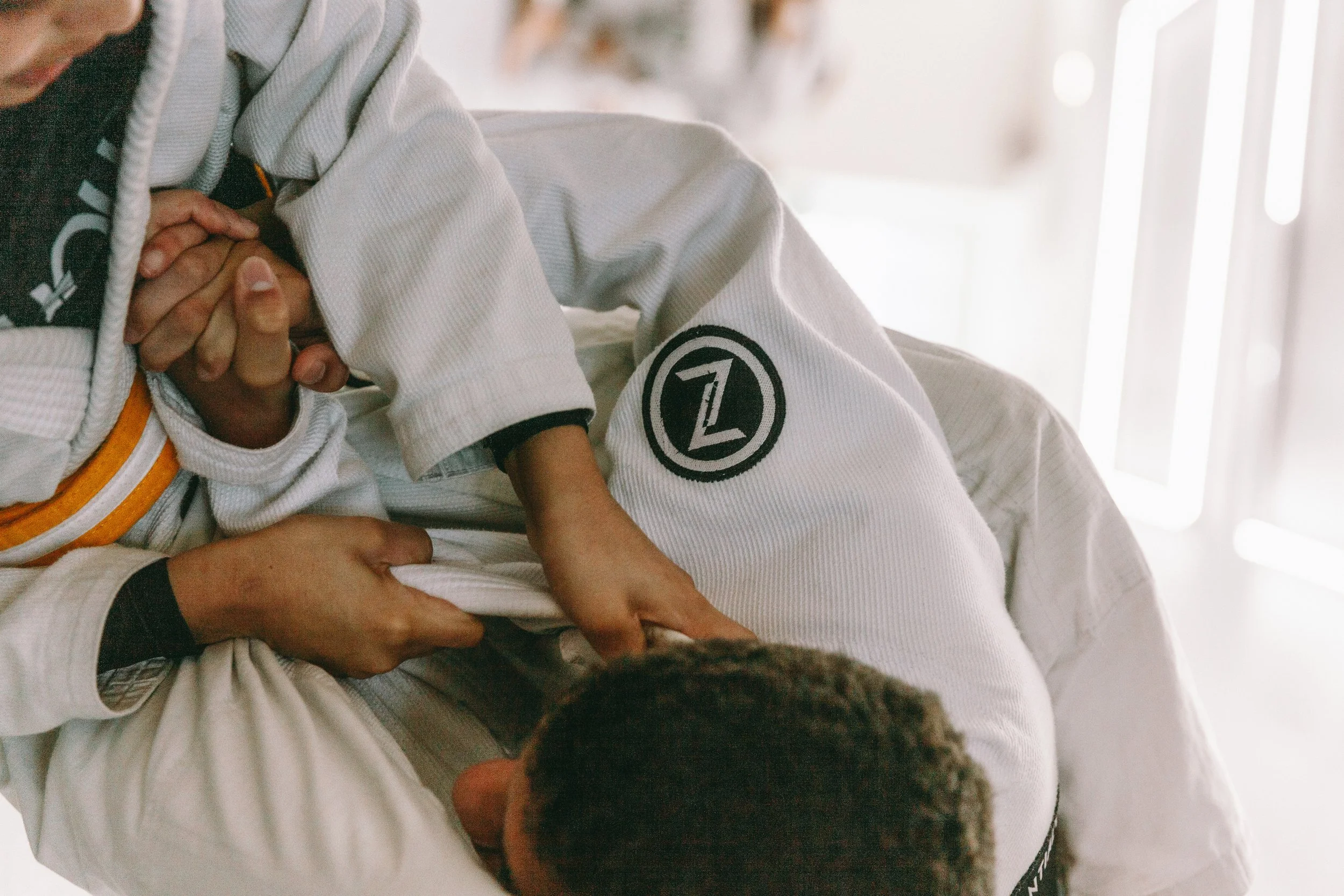
Brazilian Jiu Jitsu asks a child to manage several things at once. They are learning where to put their hands and feet, how to move their body, what their partner is doing, and when to change direction.
A movement may make sense during a demonstration but become difficult when it is their turn. It may work with a cooperative partner and disappear when that partner starts offering resistance.
That difference does not automatically mean the lesson failed. Remembering a movement and using it against resistance are different demands.
A child might understand the starting position this week but still forget the next step. Later, they may connect those steps during practice. Applying them during a moving round can take longer.
From the sidelines, all three stages can look like a child who has not yet completed an escape. From a teaching perspective, there are important differences between them.
Look for something your child can do more independently
One useful idea in the book Raising Mentally Strong Kids by Daniel G. Amen and Charles Fay is that confidence develops through competence and contribution.
In plain language, children benefit from learning to do things and having meaningful ways to help. Encouragement supports that process, but it does not replace the experience of becoming more capable.
For kids Jiu Jitsu, a practical question is: what can your child now do with less help?
Perhaps they previously needed an instructor to place their arms during a drill. Now they find the starting position after one reminder. Perhaps they used to wait silently when confused. Now they ask which direction to turn.
Neither example means the skill is finished. Both give us something concrete to recognize.
Independence also does not mean never needing help. Recognizing a problem and asking a useful question can be a step forward.
A round’s outcome tells only part of the story
It is understandable to watch a round and notice who ended up on top. That is often the easiest part to follow.
But a practice round is not a complete assessment of either child.
Partners differ in size, experience, familiarity with the position, and how much resistance they provide. The task matters too. A child working on an unfamiliar escape may look less successful than when using a movement they already know.
Consider a student practicing from underneath a partner. They may not complete the escape, but they might remember to create space with their arms rather than simply push harder. That is a technical improvement, even if the final position looks unchanged.
This does not mean every difficult round should be described as a success. Some attempts reveal confusion or show that the task needs adjusting. The point is to identify what actually happened rather than reduce the whole experience to winning or losing.
Partner care belongs in the picture
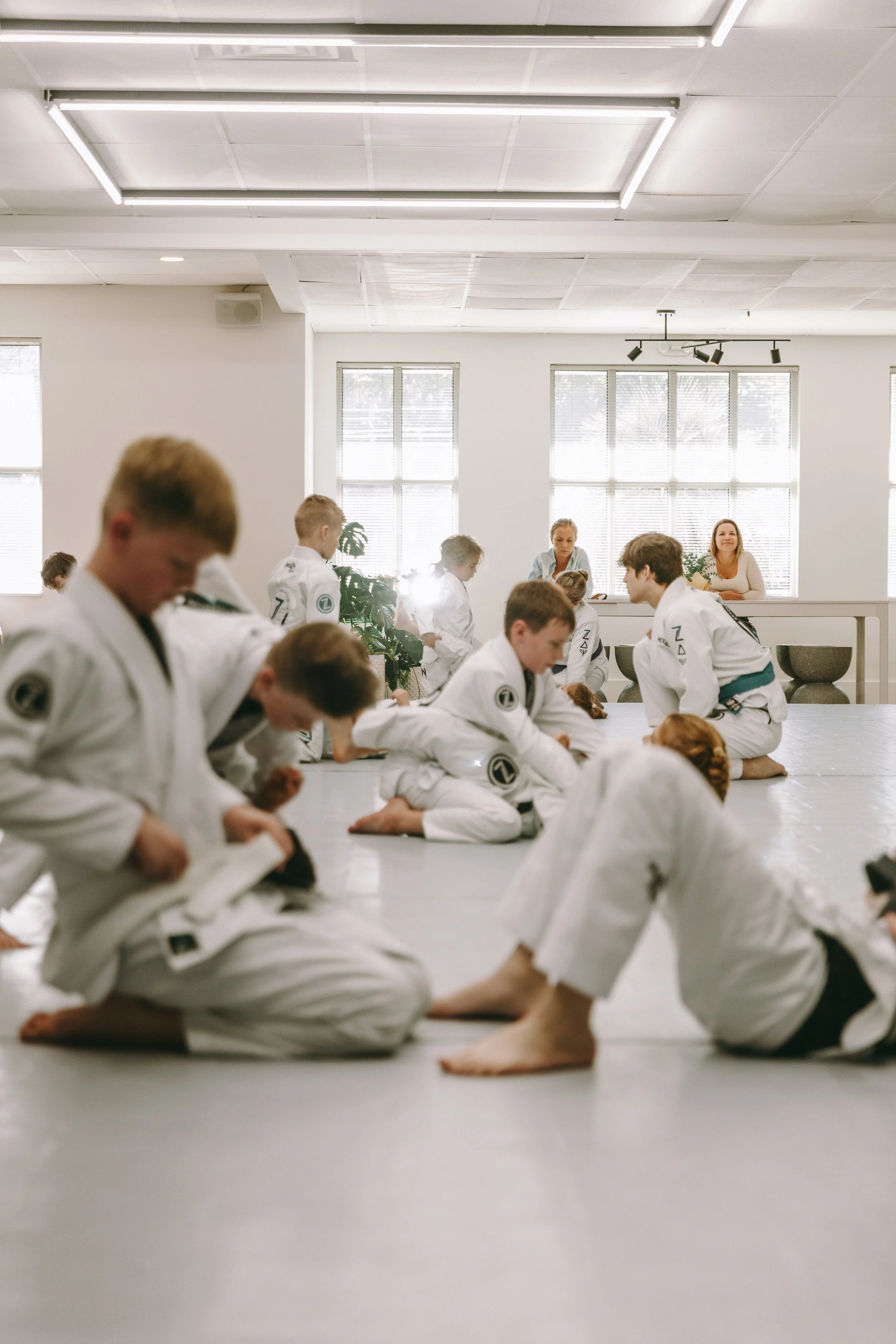
Jiu Jitsu is practiced with another person. Learning to train responsibly is part of learning the activity.
Releasing immediately when a partner taps, stopping when directed, and controlling a movement all matter. So does giving a partner the opportunity to practice instead of turning every drill into a contest.
These behaviors should not be treated as substitutes for technique. They are part of learning how to use technique responsibly.
A child who performs a movement with more control is developing something valuable, even if speed or effectiveness still needs work.
For parents considering what progress in martial arts for kids should include, this is worth remembering: being a trustworthy training partner matters alongside being a capable one.
Notice specifically, without grading every class
There is a difference between helping a child recognize progress and making them feel constantly evaluated.
A detailed review after every class can make training feel like another performance they need to explain. Children may also be tired, hungry, or simply ready to talk about something else.
A short, accurate observation is often enough. You might mention that they remembered the starting position or asked for another demonstration when they were unsure.
Keep the observation tied to something you actually saw. If you could not follow the activity from the sidelines, there is no need to manufacture praise.
You can invite your child to share what felt more familiar, but they do not owe you a lesson summary after every class. Sometimes the most helpful response is to listen—or let the conversation wait.
Give the same idea room at home
You do not need to coach Jiu Jitsu techniques at home to support this week’s theme. Household routines provide simpler opportunities to practice competence and responsibility.
A younger child might take responsibility for putting one item in their training bag, with an adult checking afterward. A child ready for more independence might prepare the bag and ask for help if something is missing.
The useful part is not getting the task perfect immediately. It is learning the steps and gradually needing less guidance.
You might notice the same pattern in an unrelated task: putting materials away, helping prepare for dinner, or beginning homework with an appropriate amount of support.
These are not guaranteed results of training. They are separate opportunities to reinforce a shared idea: children can learn useful skills when adults provide clear expectations, manageable responsibility, and patient help.
Avoid making basic care a test of toughness. A forgotten water bottle, for example, is a planning problem to work on—not a reason to deny water.
What if progress still seems stalled?
Sometimes a child needs more repetition. Sometimes they need a smaller task, a different explanation, or help with something that is making class difficult.
Patience matters, but patience should not mean ignoring a concern.
If you are unsure how your child is doing, ask an instructor for a specific example of something becoming more consistent and something that still needs support. That creates a more useful conversation than comparing your child’s belt with another student’s.
You can also share what your child is telling you. An instructor may see participation on the mats while a parent hears discouragement afterward. Both perspectives matter.
Repeated distress, pain, or a safety concern should not be dismissed as part of the learning curve. Those concerns deserve attention in their own right.
Take the longer view without missing today’s details
There is no fixed timetable for every child to become comfortable, coordinated, or technically consistent. A skill may appear one day and need reminders the next.
That is why it helps to look across several classes rather than ask each class to prove that training is working.
The longer view is not a promise that time alone solves every difficulty. It is a way to notice patterns while staying open to adjustments.
A belt matters. So does the growing ability to understand a position, respond to coaching, and practice responsibly with another person.
This week, look for one specific change in what your child can do or understand. If you are unsure what to look for, ask an instructor to help you identify one skill worth noticing.