
Why Does My Child Say They’re Bad at Jiu Jitsu?
When a child says, “I’m bad at Jiu Jitsu,” they may be describing how one difficult moment felt—not making an accurate judgment about their ability to learn. Parents can help by acknowledging the disappointment and gently making the description more specific: What part was hard? What did they try? What might they need help with next?
That does not mean telling a child to “just be positive” or insisting that every class went well. It means helping them look at what happened without turning one unsuccessful attempt into a judgment about who they are.
At Houzn Jiu Jitsu Academy in Mount Pleasant, SC, we see learning as a gradual process. A child may understand a movement during a demonstration and still have trouble using it with a partner. That difficulty is real. It also doesn’t tell the whole story of what the child can learn.
Why one hard class can feel like a verdict
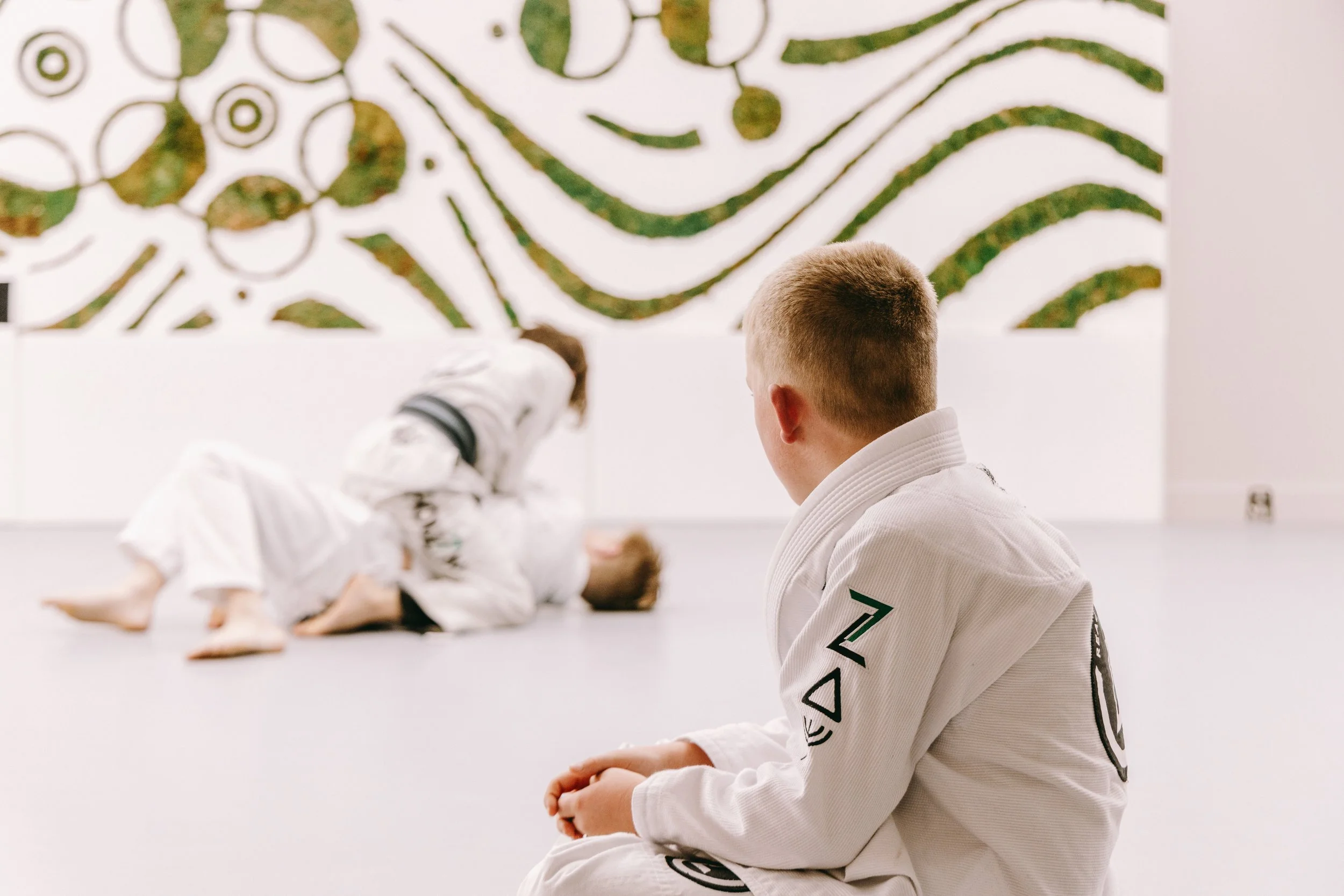
Jiu Jitsu asks children to notice a partner’s position, move their own body, remember a sequence, and respond as things change. A movement that seemed clear while watching an instructor may feel unfamiliar when it is time to try it. During partner practice, the partner may move in an unexpected way. In a round, the child may be focused on several things at once.
When all of that feels difficult, a child might summarize the experience with a broad statement: “I can’t do it,” “I’m the worst,” or “I’m bad at Jiu Jitsu.” Those words can sound like a final conclusion, but they may be an immediate reaction to confusion, embarrassment, fatigue, or frustration.
Adults can be quick to reassure. “You’re great at Jiu Jitsu!” may be offered with care, but if a child feels stuck, they may not believe it. Telling them they are wrong about how they feel can also make it harder for them to explain what happened.
A more helpful starting point is to acknowledge their experience without agreeing with the sweeping conclusion. You might say, “That sounds frustrating. Which part felt hardest?” The aim isn’t to make the child feel better on the spot. It’s to understand what the words are pointing to.
Help make the thought more accurate
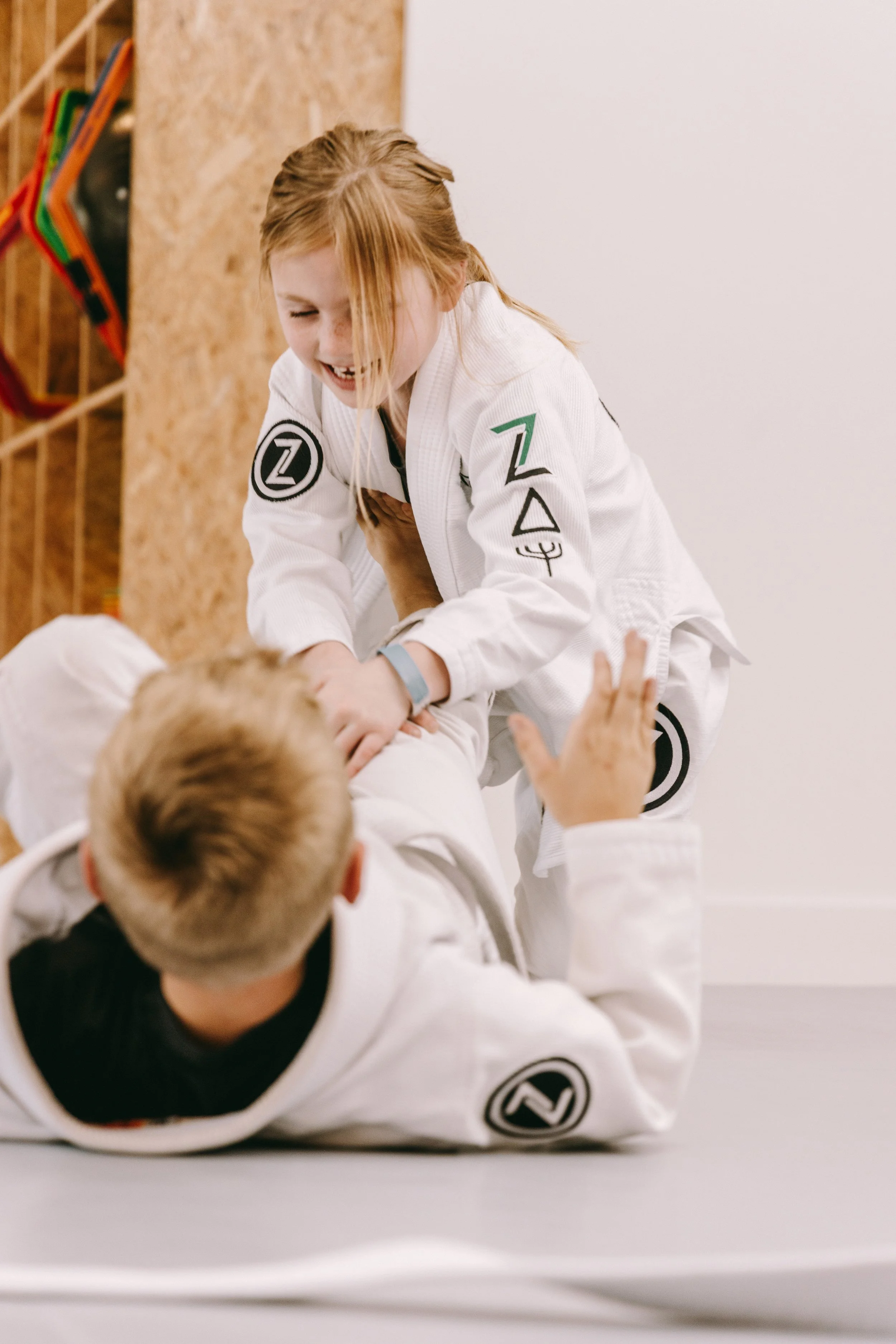
One practical idea from Raising Mentally Strong Kids by Daniel G. Amen and Charles Fay is to help children notice when a negative thought may not tell the full story. The goal is not forced optimism. It is helping a child find a more accurate way to describe the experience.
There is a meaningful difference between “I’m bad at Jiu Jitsu” and “I couldn’t remember the next step in that escape.” The first makes a judgment about the child’s whole ability. The second names a particular challenge. A specific challenge is easier for a child, parent, and instructor to discuss.
Try to keep the conversation grounded in what actually happened. If you did not see the class, you don’t need to guess which technique caused the frustration. You can ask your child to explain, or simply say, “It sounds like class felt hard today. I’m listening if you want to tell me about it.”
If your child is ready to talk, questions like “What part made sense?” or “Where did you get stuck?” may help them look at the experience in smaller pieces. If they aren’t ready, let the conversation rest. The goal is to offer a way to reflect, not to make them complete an interview after every class.
Remembering a technique and using it are different skills
Parents sometimes wonder why a child can perform a technique in a drill but not use it during a round. These are different situations, with different demands.
In a demonstration, a child can watch the instructor and follow one step at a time. In a cooperative drill, their partner may give them time and space to try the movement. When a partner adds movement or resistance, the child has to recognize what is happening and adjust. That can make a familiar technique feel unfamiliar again.
A child may remember the starting position but forget what comes next. They may know to create space but push in a way that does not help. They may begin an escape, then need a reminder about where their hips should go. Those are specific parts of learning that can be practiced.
An unsuccessful attempt doesn’t automatically mean a child has failed to learn. It may reveal which piece is still unclear. At the same time, we should not call every difficult experience progress just to make it sound positive. Sometimes a student is confused, overwhelmed, or in need of a different explanation. Being honest about that helps us respond appropriately.
Notice learning without turning class into a scorecard
A child’s progress is not limited to whether they “won” a round. They might listen to a correction and try it on the next attempt. They might ask an instructor to show a movement again. They might recognize where a partner is holding them and remember one safe step to begin an escape.
These moments are useful to notice because they point to something concrete. They also help parents avoid judging the whole class by its most difficult moment.
This doesn’t mean every class needs a progress report. If your child looks tired or isn’t ready to talk, you can leave space. If you do comment, keep it specific and honest: “I saw you ask for the next step when you were unsure.” That is different from telling them they were amazing at something you did not see.
Comparing one child’s progress with another’s often makes the conversation less useful. Children may have different experience, comfort with partner work, or familiarity with a particular movement. A teammate’s belt or success in a round cannot explain exactly what your child is learning.
If you have questions, an instructor can offer a clearer picture of the skills being practiced and what support may help. That is more useful than guessing from the sidelines or assuming that one tough class means the child is falling behind.
Jiu Jitsu can be a place to practice responding to difficulty
Ideas from Raising Mentally Strong Kids can be connected to Jiu Jitsu as practical skills children may practice: noticing an unhelpful thought, describing a challenge more accurately, asking for help, and considering what to try next. These are not automatic results of training, and Jiu Jitsu is not a substitute for support a child may need elsewhere.
On the mats, a child might learn to say, “I’m stuck here,” rather than push harder without knowing what to do. An instructor can then help with a cue, demonstrate again, or adjust the task. That interaction gives the child an opportunity to practice explaining the problem and receiving help.
There is a balance to maintain. Children need chances to think and make manageable attempts, but they should not be left struggling with something beyond their current ability. Good coaching means noticing when a student needs more support, a simpler step, a pause, or a different activity.
The same applies to safety and emotional wellbeing. A child’s pain, repeated distress, or concern about a training partner deserves attention. We should not dismiss those concerns as a lack of confidence or tell children that being mentally strong means ignoring discomfort.
Support the same idea at home—without coaching every moment
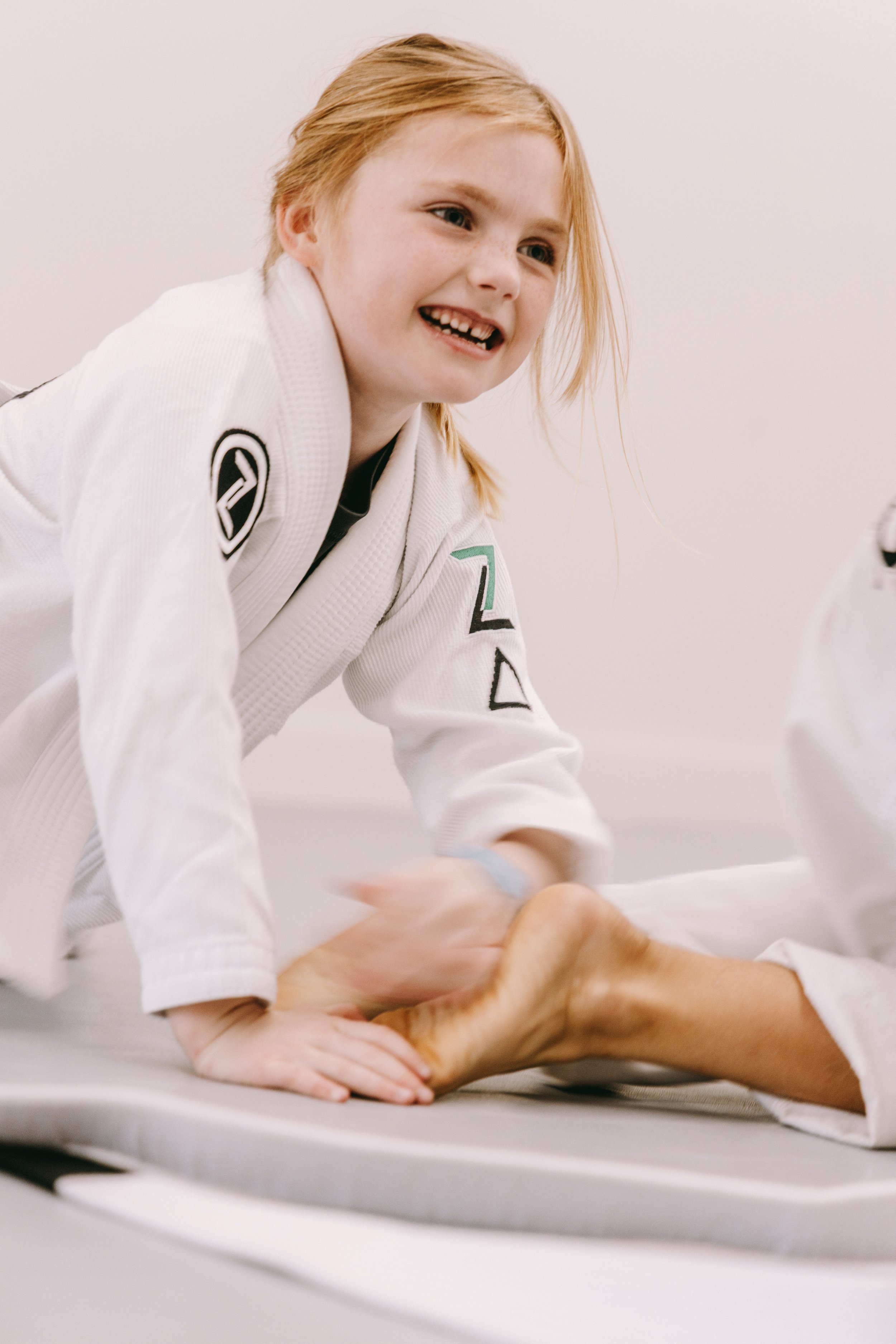
Parents do not need to teach Jiu Jitsu techniques at home to help a child put this idea into practice. Everyday situations can also give children opportunities to describe a problem accurately and consider a next step.
If your child says, “I can’t do my homework,” you might respond, “Which part feels confusing?” If they say, “I never get anything right,” you can acknowledge that they feel discouraged and help separate the current task from a judgment about everything they do.
You don’t have to rush into fixing the problem. You can ask whether they want help thinking through a next step, or whether they would like to try first. If the difficulty is too much for them to manage alone, step in. Providing support is not the same as taking away every opportunity to learn.
The connection between home and training is an idea to reinforce, not a promise that Jiu Jitsu will change a child’s behavior outside class. Children may respond differently in different settings, and there can be many reasons a child is having a difficult day. Sleep, hunger, stress, and overstimulation can all affect how much patience or focus they have.
When to check in with an instructor
A hard class now and then is part of learning a challenging activity. A pattern of distress, however, is worth discussing. If your child regularly dreads class, describes pain, feels unsafe, or worries about a partner, talk with an instructor. These concerns deserve a practical response, not a lecture about perseverance.
You can also check in if your child wants to continue but seems discouraged. Share what they have been saying and ask what the instructor sees on the mats. The instructor may be able to name a specific skill being practiced, explain where a child is getting stuck, or suggest a manageable focus.
That conversation does not need to lead to a promise about when your child will feel confident or earn a promotion. Its purpose is to better understand the situation and decide whether any adjustment or additional support is appropriate.
One hard moment is information, not a complete definition
Children will have classes that feel smooth and classes that feel frustrating. Some techniques take repeated practice. A child may make progress in one area while continuing to need help in another. That is part of learning a complicated physical skill with a partner.
When your child says, “I’m bad at Jiu Jitsu,” you don’t need to agree, argue, or force a positive interpretation. Start by hearing them. If they’re open to it, help them find the specific part that felt difficult. That gives the child a clearer way to understand the experience and gives you a better place to offer support.
If you would like help understanding what your child is working on, talk with a Houzn instructor after class. A simple question about the skill they are practicing can help make the learning process clearer.